

Living in Wesley Heights DC: Between Glover-Archbold Park and American University
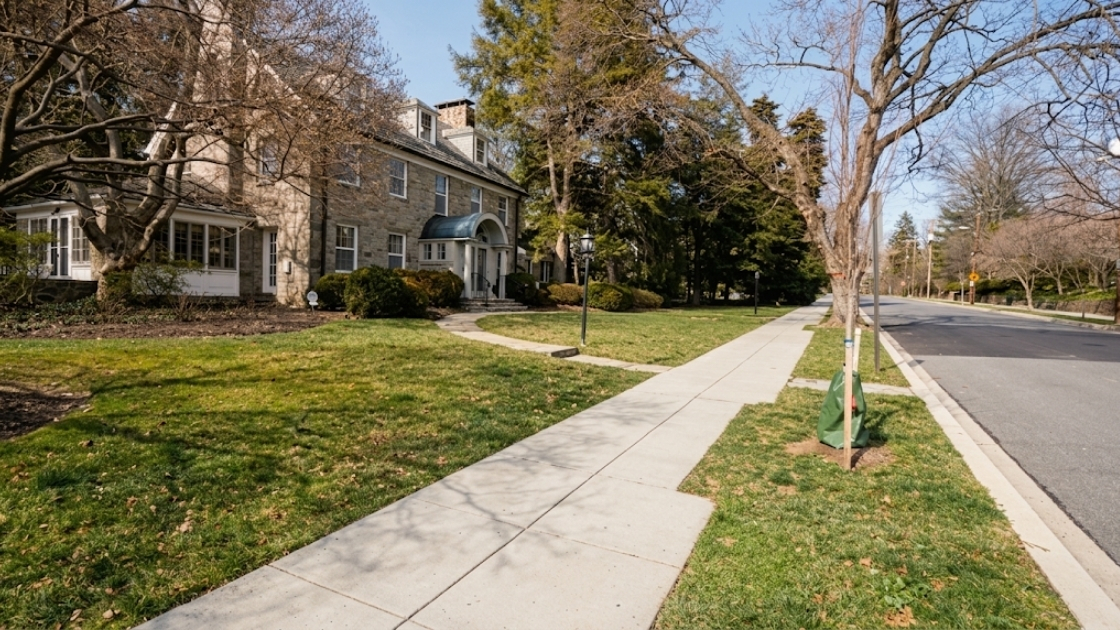
Wesley Heights is a residential neighborhood in Northwest Washington, DC 20016, just south of Spring Valley, where American University’s main campus sits. It is commonly described as bounded by Nebraska Avenue to the north, Massachusetts Avenue to the east, Battery Kemble Park to the west, and Glover Parkway to the south, although published descriptions of its edges vary slightly. Foxhall Road and New Mexico Avenue are the main roadways through the neighborhood, and it falls in Ward 3 under Advisory Neighborhood Commission 3D, which also represents Berkley, Foxhall, Kent, the Palisades, and Spring Valley.
The university to the north and the parkland nearby shape how a day tends to unfold here. This guide from Matt Cheney of Compass walks through a typical day in three parts, morning, afternoon, and evening, so that buyers and sellers can picture the daily routines near American University and Glover-Archbold Park. Wesley Heights is one of seven neighborhoods in the West of Glover-Archbold corridor, alongside Spring Valley, Berkley, Foxhall, the Palisades, Burleith, and Cathedral Heights.
Wesley Heights DC History and Housing Stock at a Glance
According to published histories, Wesley Heights was founded in 1890 by an investor group led by real estate broker John Waggaman and financed primarily by Charles C. Glover. The name honors Methodist leader John Wesley, and the developers marketed the area to Methodist buyers during the years when American University, chartered by Congress in 1893 under Methodist Bishop John Fletcher Hurst, was taking shape nearby. Growth was slow for years afterward.
The neighborhood’s major build-out came in the 1920s, when the brothers William C. and Allison N. Miller bought about 80 acres and developed it as a planned community, working with landscape architect John Small and architect Gordon MacNeil, as described in a Washington Post neighborhood profile. Public histories note that the original plan included a community clubhouse and a shuttle to the Wisconsin Avenue streetcar line. The Miller company began publishing a community newsletter, The Leaves of Wesley Heights, in 1925, and American University’s archives hold issues from 1928 through 2006.
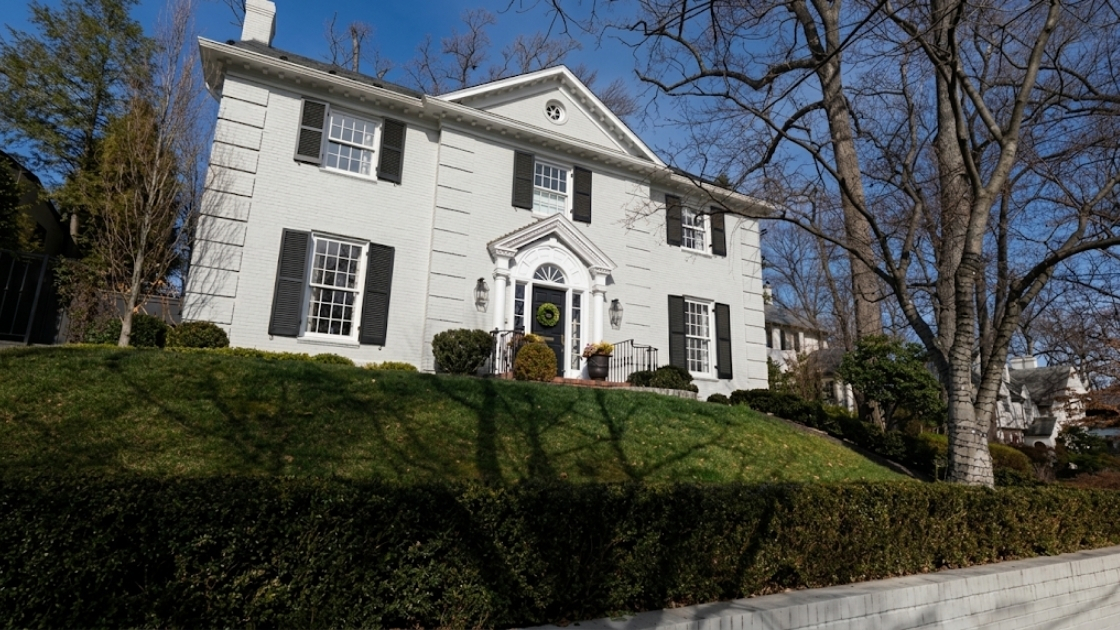
Today the housing stock commonly includes Tudors, Colonials, bungalows, and Cape Cods, generally on large rectangular lots, with some newer custom-built homes mixed in.
One detail matters for anyone thinking about an addition or renovation. The DC Zoning Commission adopted the Wesley Heights Zoning Overlay on July 13, 1992, at the urging of the Wesley Heights Historical Society, to limit development and protect the character of the neighborhood. Since 2016 it has been part of the District’s zoning regulations as the Wesley Heights residential house zones, R-14 and R-15. Among its provisions, a residential building must have a front setback at least equal to the average setback of the structures on the same side of the street in its block. Because the rules for additions and new construction are specific, buyers should confirm with the District’s zoning officials how they apply to a particular property.
A Morning in Wesley Heights: Glover-Archbold Park Trails and the Commute
For many residents, the morning can start outdoors. A Washington Post neighborhood profile described Wesley Heights as a collection of residences set among the parks of Northwest DC, including Glover-Archbold Park, and Battery Kemble Park lies along its western side. Glover-Archbold is a stream valley park managed by the National Park Service. It stretches from Van Ness Street NW to Canal Road NW, and its trail runs nearly 2.5 miles from Van Ness Street to the Foundry Branch Park trail, which connects to the C&O Canal towpath.
A few practical points from the National Park Service are worth knowing before building a morning routine around the park:
- The paths are rugged dirt meant for foot traffic, and bicycling is not allowed.
- There is no central parking area, and parking is available on several nearby streets with restrictions.
- Several major streets cut through the park, so walkers need to use caution crossing from one section to the next.
For the weekday commute, the Tenleytown-AU station on the Metro Red Line is the closest rail stop to American University, and the university runs a shuttle between the station, at the corner of Albemarle and 40th Street, and campus, with buses every 10 to 15 minutes according to AU.
AU’s visitor information also lists Metrobus route D96 on Massachusetts Avenue and routes C81 and D90 on Nebraska Avenue at Ward Circle. Because bus routes and schedules change, riders should confirm current service directly with WMATA before relying on any specific route. Transit information in this post reflects publicly available details at the time of writing and may not reflect current service. Georgetown lies roughly two miles to the south. Because distances differ from one address to the next, buyers may want to test the actual route from a specific home at the hour they would normally leave.
An Afternoon Near American University: Katzen Arts Center and Battery Kemble Park
By midday, the university is the neighborhood’s most visible neighbor. American University’s main campus is on Ward Circle, mostly within Spring Valley, and the Katzen Arts Center at 4400 Massachusetts Avenue NW stands on high ground that, according to the university, once held the Civil War era Fort Gaines. The Katzen houses the AU Museum, an outdoor sculpture garden, the Abramson Family Recital Hall, and theatre and dance spaces.
According to American University’s published visitor information (verify current hours at american.edu before publishing), the museum and store have been open Wednesday through Sunday from 11 a.m. to 4 p.m. except during exhibit installations, and the Katzen’s underground garage, entered from Massachusetts Avenue, has operated from 8 a.m. to 10 p.m. seven days a week with payment by phone app or kiosk. Hours and parking terms change, so visitors should confirm current details directly with the university before planning a trip.
The Katzen has also taken part in Tenleytown Main Street’s Art All Night, an annual free arts festival along Wisconsin Avenue in Tenleytown, in which the museum opens after hours. American University’s student newspaper covered the 2025 edition, held in September.
For a different kind of afternoon, Battery Kemble Park offers history. Bounded by Chain Bridge Road, MacArthur Boulevard, 49th Street, and Nebraska Avenue, the park preserves the site of a Union Army battery completed in the autumn of 1861 as part of the Civil War Defenses of Washington, also known as the Fort Circle. The battery was named for Gouverneur Kemble and was armed with two 100-pounder Parrott rifles, and the National Park Service notes that the parapet and gun positions remain fairly well preserved. A footpath from the Glover-Archbold trail leads toward Battery Kemble.
You may also like:
- Living West of Glover-Archbold Park: A DC Neighborhood Guide
- DC Neighborhoods With Large Lots and Privacy
- Georgetown vs. Wesley Heights: Which Northwest DC Neighborhood Is Right for You?
A university neighbor also brings its own calendar. Move-in periods, commencement, and campus events can change traffic and parking on nearby streets. Buyers evaluating Wesley Heights may find it useful to visit on an ordinary weekday and again during a busy campus week to understand the range.
An Evening in Wesley Heights: Residential Streets, Campus Events, and Community Groups
As the day winds down, the neighborhood’s residential character is easiest to see on its own streets, where homes dating largely from the 1920s onward sit on hilly, tree-lined blocks. Foxhall Road and New Mexico Avenue are the main roads through the neighborhood, so buyers weighing a specific address may want to see how traffic feels on that block. Visiting at different times of day, including a weekday evening, gives the fullest picture.
Evening options extend in several directions. The Katzen Arts Center presents performances in its recital hall and theatre spaces, with the box office open Monday through Friday from 11 a.m. to 4 p.m. and one hour before performances, according to the university. Georgetown is roughly two miles away for dinner and weekend outings, and Tenleytown’s Wisconsin Avenue corridor sits close to the university.
The neighborhood also has organized civic life. The Wesley Heights Historical Society, which pushed for the zoning overlay, and the longstanding Spring Valley-Wesley Heights Citizens Association are part of the community picture, and Advisory Neighborhood Commission 3D is the elected body that represents the area on matters before the District government.
Wesley Heights DC Home Market: Questions Buyers and Sellers Should Ask
Pricing, days on market, and list-to-sale ratios in Wesley Heights shift from month to month, and a single average rarely captures a neighborhood where lot size, age, and renovation history vary so much from one address to the next. Anyone who wants current Bright MLS figures for Wesley Heights is welcome to contact Matt Cheney directly at (202) 465-0707.
In the meantime, buyers comparing Wesley Heights homes can build a useful checklist from the features that define the neighborhood:
- Lot size and how the home sits on it, including its relationship to nearby parkland.
- Original construction details versus later additions, and whether any planned work fits the zoning overlay.
- Parking and traffic on the specific block, especially for homes nearer Massachusetts Avenue and Nebraska Avenue.
- Trail and park access, noting that Glover-Archbold Park has no central parking area.
- Commute options, including Metro, bus, and driving routes at the times that matter.
Sellers preparing to list can benefit from gathering permits, renovation records, and any documentation tied to the zoning overlay before going to market. Preparation can improve buyer response, but results vary by property, price point, condition, timing, and market competition. No specific return is guaranteed.
Wesley Heights Within the West of Glover-Archbold Corridor
Wesley Heights is one piece of a larger geography that Matt Cheney covers closely, the neighborhoods west of Glover-Archbold Park. Each of the seven corridor neighborhoods has its own street pattern, housing mix, and relationship to nearby parks and institutions. Buyers who are still deciding where to focus often compare two or three of them side by side, weighing priorities such as commute, parks, housing type, and long-term flexibility.
Frequently Asked Questions About Living in Wesley Heights DC
Where is Wesley Heights located in Washington, DC?
Wesley Heights is a residential neighborhood in Northwest Washington, DC 20016, just south of Spring Valley, where American University’s main campus is located. It is commonly described as bounded by Nebraska Avenue to the north, Massachusetts Avenue to the east, Battery Kemble Park to the west, and Glover Parkway to the south, with Foxhall Road and New Mexico Avenue as the main roads through it. It falls in Ward 3 and Advisory Neighborhood Commission 3D.
How do residents get from Wesley Heights to the Tenleytown-AU Metro station?
The Tenleytown-AU station on the Metro Red Line is the closest rail stop to American University, and the university runs a shuttle that connects the station with campus. Distances and travel times vary by address, so buyers should test the route from a specific home at the times they would normally travel.
What is Glover-Archbold Park like near Wesley Heights?
Glover-Archbold Park is a National Park Service stream valley park, and its trail runs nearly 2.5 miles from Van Ness Street NW to the Foundry Branch Park trail, which connects to the C&O Canal towpath. The paths are rugged dirt meant for foot traffic, bicycling is not allowed, and there is no central parking area. Buyers should confirm current rules and access points with the National Park Service.
What types of homes are found in Wesley Heights?
Housing in Wesley Heights commonly includes Tudors, Colonials, bungalows, and Cape Cods, generally on large rectangular lots, with some newer custom-built homes mixed in. Much of the neighborhood was developed in the 1920s. Lot sizes, ages, and renovation histories vary, so buyers should compare each property on its own details.
What should buyers know about the Wesley Heights zoning overlay?
The DC Zoning Commission adopted the Wesley Heights Zoning Overlay on July 13, 1992, to limit development and protect the neighborhood’s character, and it is now part of the District’s zoning regulations as the Wesley Heights residential house zones. Among its provisions, a home’s front setback must be at least the average of the structures on the same side of the street in that block. Buyers planning an addition or renovation should confirm how the rules apply to a specific property with the District’s zoning officials.
Matt Cheney | Compass Real Estate is committed to the principles of the Fair Housing Act and the Equal Opportunity Act. All real estate services are provided without regard to race, color, national origin, religion, sex, familial status, or disability.
About Matt Cheney
Matt Cheney is a top-producing real estate advisor with Compass in Washington, DC, Bethesda, Maryland, and McLean Virginia, guiding buyers and sellers across DC, Maryland, and Virginia through high-stakes moves, from luxury sales to estates, downsizing, luxury condominiums and divorce-related transactions. With over $780 million in career sales volume and 23+ years of experience, Matt is consistently ranked in the Top 1.5% of agents nationally by RealTrends America’s Best and has been named a Washingtonian Top Agent five years running. He is known for calm, strategic guidance and a straightforward approach to complex and sensitive real estate situations.