

An Update on Bethesda’s 20816 Corridor, Along Mass Ave
Back in early 2023, Matt Cheney put together a market look at the stretch of Bethesda that runs along Massachusetts Avenue, from the DC border out toward Goldsboro Road. It’s the collection of neighborhoods that includes Glen Echo Heights, Fort Sumner, Sumner, Springfield, Westmoreland Hills, and Westhaven. That video is now a few years old, and the pricing and sales numbers in it reflect conditions from early 2023, so this update pairs the neighborhood overview with figures current as of 2026.
This part of Bethesda doesn’t get talked about as much as some of the bigger-name pockets of Montgomery County, but it’s one Matt gets asked about often. Buyers coming from DC neighborhoods like the Palisades or American University Park often end up looking here because it’s close, familiar in feel, and just across the line into Maryland. Matt has over $79M in career sales volume in zip code 20007, which covers Georgetown and the Palisades, so he understands this buyer profile well and what draws them across the district line.
What’s Changed Since the Original Video
The original episode was built around one year of sales data for the 20816 zip code, average price, days on market, top sales, and a condo breakdown. A sales average from three years ago reflects conditions as of that time, and days-on-market figures shift each quarter with rates, inventory, and the season, so this update pairs the neighborhood overview with current numbers.
Instead of reusing any of those older numbers here, they’ve been replaced with a current, dated source below. Buyers who want a precise, current breakdown specific to 20816 can contact Matt directly for a current market analysis and recent sales data rather than relying on a public aggregator.
Where This Corner of Bethesda Sits
The easiest way to picture this area is as a band running along both sides of Massachusetts Avenue, starting right at the DC border and extending out to Goldsboro Road. Glen Echo Park and the Potomac River palisades sit to the south and west. To the east, you’re a short drive from downtown Bethesda and the Bethesda Metro station on the Red Line.
The Capital Crescent Trail runs near the broader area as well, which matters if you’re a buyer who bikes or walks into DC instead of driving. Access to River Road and MacArthur Boulevard rounds out the main routes in and out, and most of the neighborhoods here are a straightforward drive to either downtown Bethesda or into DC proper, depending on which end of the corridor you’re in.
What stands out most about this stretch, compared to more central Bethesda, is the lot size and the residential character. You are close to the city, but the streets are lined with mature trees, have lower traffic volume than major arterials, and include a mix of long-established homes alongside properties that have turned over and been updated in recent years.
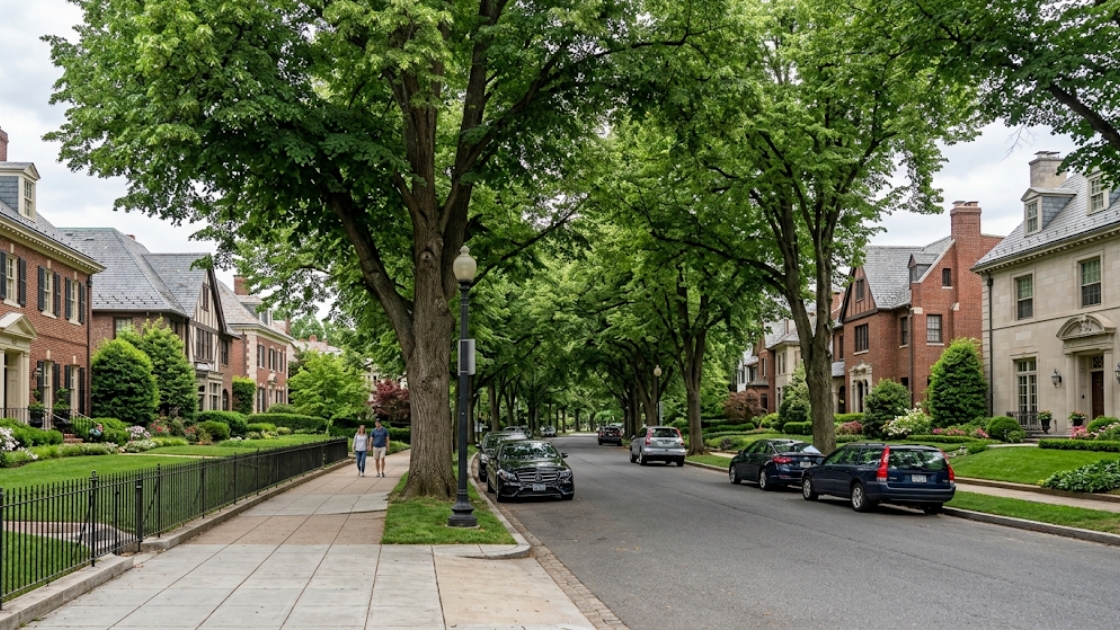
The Neighborhoods Along This Stretch
Glen Echo Heights
Glen Echo Heights sits closest to Glen Echo Park and the river side of the corridor. It is a more wooded pocket with lower through-traffic volume, and it has seen a fair amount of new construction and renovation activity over the past several years as older homes get replaced or updated. Lot sizes here tend to run larger than what you’ll find closer to downtown Bethesda, which is part of why this neighborhood attracts buyers looking to build or renovate rather than buy something turnkey.
Fort Sumner
Fort Sumner takes its name from the Civil War-era fort that once stood in the area, part of the ring of defenses built around Washington during the war. Today it’s a well-established neighborhood of single-family homes on tree-lined streets, and it’s stayed fairly consistent in character over the years rather than seeing a lot of teardown activity. Buyers who want an established feel without a lot of construction noise on the block often consider Fort Sumner, depending on their priorities and what is available at the time they are searching.
Sumner
Sumner sits just off Mass Ave and includes both single-family streets and Sumner Village, a condo community that gives buyers a lower-maintenance option without leaving the area. It’s a useful illustration of how this corridor isn’t purely a single-family market. There is real variety here in housing type and price point, which broadens the range of buyers who can realistically consider it.
Springfield
Springfield is one of the smaller neighborhoods in this stretch. It’s mostly single-family homes, and it tends to fly a little under the radar compared to its neighbors, which can work in a buyer’s favor when it comes to competition on a given listing.
Westmoreland Hills
Westmoreland Hills runs right up to the DC border near Westmoreland Circle, putting it within walking distance of American University Park on the DC side. The housing stock is a mix of older colonials and updated or rebuilt homes, and its location right on the district line makes it a common cross-shopping option for buyers who are also looking at DC.
Westhaven
Westhaven rounds out the corridor and shares a lot of the same character as Westmoreland Hills, established streets, mature trees, and a straightforward commute into DC. It’s a smaller neighborhood, so inventory here can be limited at any given time.
Parks, Trails, and Green Space
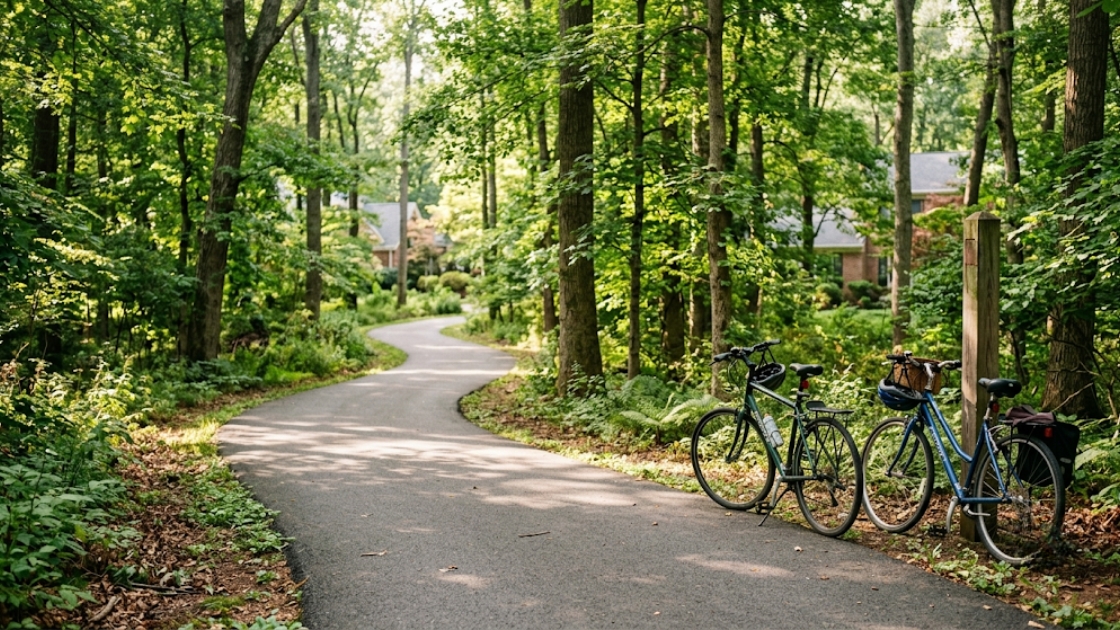
Glen Echo Park anchors the western edge of this corridor, with its historic carousel, art studios, and trail connections along the Potomac. The Capital Crescent Trail is the other major amenity for anyone who wants to bike or walk toward Bethesda or into DC without dealing with car traffic. There are also smaller stream valley parks tucked through the area that give the neighborhoods here more green space than you’d find in denser parts of the county.
None of this is unique to one neighborhood in the corridor. The whole stretch benefits from being close to the river and away from the busier commercial strips.
Getting Around: Commute and Access
For anyone weighing this area against DC neighborhoods on the other side of the line, the commute math is usually the deciding factor. Massachusetts Avenue and Western Avenue both feed directly into upper Northwest DC, and River Road and MacArthur Boulevard cover the western routes toward the Palisades and Georgetown. The Bethesda Metro station is a drive or a longer walk depending on where in the corridor you are, and the Capital Crescent Trail gives another option for getting into DC without a car.
Actual commute times vary depending on your destination and the time of day, so it is worth knowing the main routes before you start touring homes here. No specific result is guaranteed.
A Note on Schools
This corridor falls within Montgomery County Public Schools, and school options are one of the factors buyers often evaluate when comparing neighborhoods here. School assignments, boundaries, and program availability can change. Buyers should verify information directly with the school system and evaluate schools based on their own priorities, rather than relying on a general area description.
You may also like: The Best Luxury Neighborhoods in Maryland and Virginia, The Best Suburban Walkable Downtowns in Maryland and Virginia, and Best DC Area Neighborhoods Known for Large Lots and Privacy
Why Buyers Cross the Line From DC Into This Corridor
A good share of the interest Matt sees in this stretch of Bethesda comes from buyers who already live in upper Northwest DC, the Palisades, Spring Valley, American University Park, or Wesley Heights, and are looking for more space without giving up the same general commute or feel. Crossing the district line into Maryland here doesn’t change the character of the neighborhood much. The tree cover, the lot sizes, and the quiet residential streets carry over from one side of the border to the other.
What does change is the school system, the tax structure, and some of the local regulations around things like renovations and permitting, since you’re moving from DC into Montgomery County. None of that makes one side better than the other, it just means the comparison isn’t purely about the house. It’s worth factoring in early rather than after you’ve already fallen for a specific property.
A Few Practical Notes Before You Tour Homes Here
A handful of things come up often enough with buyers touring this corridor that they’re worth mentioning upfront. First, because several of these neighborhoods have a mix of older homes and newer construction on the same block, it’s worth asking directly whether a home has been substantially renovated, rebuilt, or is a true original from its construction era, the answer changes what you should expect on inspection. Second, lot sizes vary more within this corridor than the neighborhood names might suggest, so don’t assume Glen Echo Heights and Sumner have the same typical lot simply because they’re both part of the same general area. Third, if commute route matters to you, drive it yourself at the time of day you’d actually be using it before you commit, Massachusetts Avenue in particular can behave very differently at rush hour than it does midday.
What’s Actually Selling in This Area Right Now
The figures Matt shared in that earlier video reflect market conditions from January 2023, so here’s an updated look using current data for comparison.
Single-Family Homes
Back in the year ending January 2023, 195 single-family homes sold in 20816 for an average price of $1,529,000, with an average of 12 days on the market. As of June 2026, according to Bright MLS, 192 single-family homes sold in the zip code over the past year for an average price of $1,747,093, an increase of roughly 14 percent, with an average of 20 days on the market.
The top 10 sales in the zip code tell a similar story. In the year ending January 2023, the average among the top 10 sales was $2,845,000. As of June 2026, that figure stands at $3,754,200, an increase of roughly 32 percent.
Condos and Co-Ops
In the year ending January 2023, 46 condo and co-op units traded in 20816 for an average price of $506,000, with an average of 32 days on the market. As of June 2026, according to Bright MLS, 33 units sold for an average price of $639,052, an increase of roughly 26 percent, with an average of 41 days on the market.
What That Tells Us
Prices in 20816 have climbed meaningfully across both single-family homes and condos since early 2023, while days on market have lengthened in both categories as well. That combination often points to a market that remains competitive at the top end while giving buyers somewhat more room to negotiate than they had a few years ago. Buyers and sellers who want a breakdown specific to a particular neighborhood within 20816, such as Glen Echo Heights or Westmoreland Hills, are welcome to reach out to Matt Cheney directly for current, tailored figures.
Condos and Townhomes in the Area
Sumner Village remains the main condo option inside this corridor, and it’s worth a look for anyone who wants the location without the maintenance of a detached home. A current, dated sales figure for that building specifically isn’t available here; buyers for whom that’s relevant can ask Matt to pull the latest sold data before discussing numbers.
For Buyers Considering This Corridor
If you’re cross-shopping this stretch of Bethesda against DC neighborhoods just across the line, take a look at how Bethesda compares to other move-up markets like McLean. The main things to weigh are lot size, school options buyers often evaluate, and how much renovation or new-construction activity you’re comfortable with in a given neighborhood.
It also helps to think about which routes you’d actually use day to day. A buyer who bikes the Capital Crescent Trail into DC has different priorities than one who’s driving Massachusetts Avenue every morning, and that can point you toward one neighborhood over another even within this small corridor.
For Sellers Thinking About This Market
Homes in this corridor tend to draw buyers who already know they want to be near the DC line, so the buyer pool is often smaller but more targeted than in bigger, more central Bethesda neighborhoods. Pricing and prep decisions depend on the specific property, so it’s worth walking through your home in person before settling on a number or a punch list.
As of the time this was written, days on market had ticked up slightly across Bethesda, making pricing discipline and presentation an important factor to discuss with your agent given current conditions. That doesn’t mean every home needs major work before listing, it depends on the property, the price point, and what’s already on the market nearby.
One thing worth knowing if you’re on an older, unrenovated lot in Glen Echo Heights or Westmoreland Hills specifically: builders and renovators are active buyers in this corridor, alongside traditional owner-occupant buyers. That widens your pool in some cases, but it also means pricing conversations can look different depending on whether the likely buyer is planning to live in the home as-is or rebuild it. Worth discussing directly rather than assuming one path or the other.
Is 20816 part of Bethesda, or is it a separate town?
20816 is a Bethesda zip code in Montgomery County, Maryland. It’s unincorporated, like most of Bethesda, so there’s no separate town government, just the zip code and neighborhood names that residents use day to day.
What’s the commute like from this area into Washington, DC?
It depends on the neighborhood and destination, but Massachusetts Avenue, Western Avenue, River Road, and MacArthur Boulevard are the main routes, and the Capital Crescent Trail is an option for biking or walking. Actual commute times vary by traffic and time of day.
Are teardowns and new construction common in this part of Bethesda?
Some neighborhoods here, particularly Glen Echo Heights and Westmoreland Hills, have seen more of this activity than others. Fort Sumner and Springfield have stayed more consistent in character. This can change street by street, so it’s worth asking about a specific block if that’s a factor for you.
How does this corridor compare to nearby DC neighborhoods on price?
It varies by street and property type, and a side-by-side figure for this corridor versus specific DC neighborhoods isn’t included here, as those comparisons are best run directly against live MLS data for accuracy. Buyers comparing this corridor to a specific DC neighborhood can ask Matt to run that comparison with current data rather than a general estimate.
Is now a good time to sell in this area?
That depends on your property, your timing, and your goals. Days on market have ticked up slightly across Bethesda over the past year, which can mean that more preparation and pricing discipline matter more than they did in a faster market. Matt is happy to walk through what that looks like for a specific home.
What should I do if I want the most current 20816-specific numbers?
Reach out to Matt directly. The figures in this post reflect the broader Bethesda market as of June 2026 because a verified, zip-specific dated figure wasn’t available at the time of writing. Matt would rather share that plainly than guess, and he can pull the exact 20816 numbers from MLS whenever a buyer is ready to look closer.
About Matt Cheney
Matt Cheney is a top-producing real estate advisor with Compass in Washington, DC, Bethesda, Maryland, and McLean Virginia, guiding buyers and sellers across DC, Maryland, and Virginia through high-stakes moves, from luxury sales to estates, downsizing, luxury condominiums and divorce-related transactions. With over $780 million in career sales volume and 23+ years of experience, Matt is consistently ranked in the Top 1.5% of agents nationally by RealTrends America’s Best and has been named a Washingtonian Top Agent five years running. He is known for calm, strategic guidance and a straightforward approach to complex and sensitive real estate situations.
Matt Cheney | Compass Real Estate is committed to the principles of the Fair Housing Act and the Equal Opportunity Act. All real estate services are provided without regard to race, color, national origin, religion, sex, familial status, or disability.