

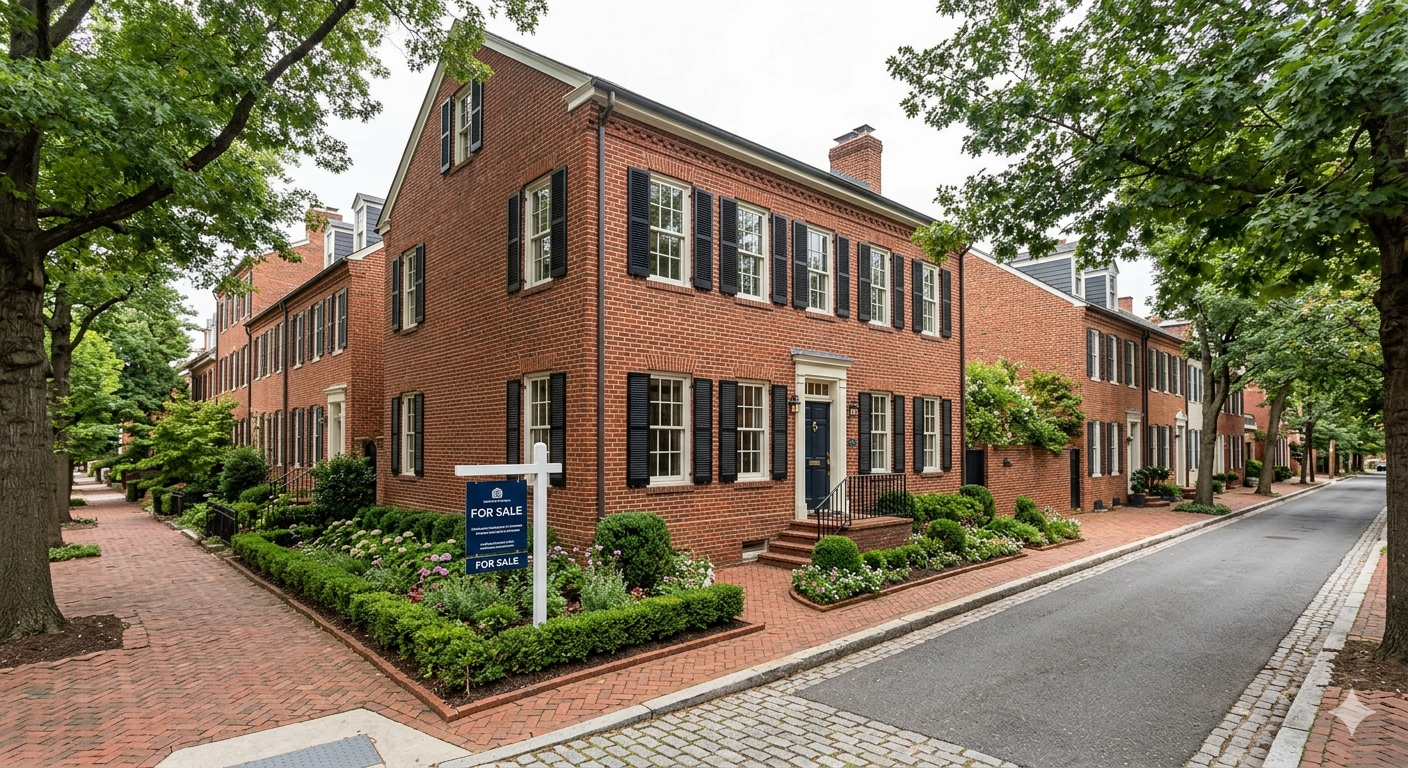
Understanding why homes are taking longer to sell in the DC metro area in 2026 is the first step to building a smarter selling strategy
Days on Market Are Up. Here Is the Honest Story Behind That.
If you have been watching the DC metro real estate market in 2026, or if you have a home listed right now that is not moving the way you expected, you have noticed something: homes are taking longer to sell than they did in 2021, 2022, or even 2023. Days on market across many DC, Maryland, and Virginia neighborhoods have increased compared to the feverish pace of the pandemic-era market. Listings that would have gone under contract in a weekend with multiple offers are now sitting for two, three, or four weeks, and in some cases longer.
This is not a crisis. But it is a meaningful shift, and it deserves an honest explanation rather than reassuring generalizations. Understanding why this is happening, and what sellers can do about it, is the most useful thing you can take away from this post.
What Days on Market Actually Measures
Days on market, or DOM, measures the number of days a property has been actively listed before going under contract. In a very active seller’s market, like the DC area in 2021 and 2022, the median DOM in many neighborhoods fell to under a week, and in some hot segments it was essentially zero, with homes going under contract before the first open house weekend was finished.
That was not normal. That was an anomaly driven by historically low inventory, record-low mortgage rates, and an extraordinary surge in buyer demand tied to pandemic-era relocation trends. The normalization of the market, in which DOM returns to a range that looks more like pre-pandemic conditions, is a natural correction, not a sign of market collapse.
The DC area has historically had a median DOM in the range of three to six weeks depending on the neighborhood, price point, and season. Getting back toward that range is not alarming in itself. What sellers need to watch for is whether their specific property is performing within or outside the normal range for their neighborhood, and why.
Why Homes Are Sitting Longer in the DC Area in 2026
Several factors are contributing to the increase in days on market across the DMV region.
Buyers Have More Choices
Inventory has increased compared to the historically thin supply of 2021 and 2022. When buyers have more homes to consider, they take more time. They are less likely to waive contingencies, more likely to compare multiple properties before making an offer, and more likely to negotiate than accept the first asking price. This slows the cycle from listing to contract.
Higher Interest Rates Have Reduced Buyer Urgency
When mortgage rates are near three percent, buyers feel urgency to lock in before rates go higher. When rates are in the six to seven percent range, the financial calculation is different, and buyers are more inclined to take their time and evaluate carefully. The rate environment in 2026 has removed a significant source of urgency from the buyer side of the market.
Federal Workforce and Economic Uncertainty
As discussed in our companion post on what the federal budget and policy changes mean for DC residential real estate in 2026, the ongoing adjustments to the federal workforce and contracting environment have dampened buyer confidence in some market segments, particularly in Northern Virginia and parts of close-in Maryland with high concentrations of government workers and contractors.
Overpricing Is the Single Biggest Driver
If there is one factor that consistently explains why a specific home is sitting on market longer than comparable homes in the same neighborhood, it is overpricing. Sellers who anchor their expectations to peak-era prices from 2021 to 2023 rather than current comparable sales data are discovering that buyers are not willing to validate those expectations in the current market.
This matters because overpricing creates a compound problem. A home that is on market for thirty, forty, or sixty days raises a red flag in the minds of buyers and their agents. What’s wrong with it? Why hasn’t it sold? Those questions, whether fair or not, put the seller in a progressively weaker negotiating position. By the time a price reduction brings the home in line with the market, the damage to its perceived value has already been done, and the final sale price often ends up below where correct initial pricing would have landed.
Presentation Expectations Have Not Changed
Buyers in 2026 still expect quality presentation. In a market where they have more options, a home that is not professionally photographed, thoughtfully staged, and clean and well-maintained stands out for the wrong reasons. Sellers who cut corners on presentation in a more active market could get away with it. In a market with more choices for buyers, presentation shortfalls compound pricing problems and extend time on market.
What Extended Days on Market Signals to Buyers
Understanding how buyers interpret extended DOM helps sellers recognize why addressing the root cause matters so much. When a buyer or their agent sees that a home has been on market for thirty days or more, they typically draw one of several conclusions: the home is overpriced, something is wrong with the property or the title, or the sellers are difficult to work with. None of those perceptions help a seller.
Even when the home is well-priced and in excellent condition, extended DOM has a contagion effect on negotiating dynamics. Buyers who would have felt pressure to act quickly in a tight market feel more comfortable making lower offers on a stale listing. The longer the home sits, the more leverage shifts from seller to buyer.
This is why catching and correcting the problem early, whether through a price adjustment, a presentation refresh, or a temporary withdrawal and re-listing strategy, is better than waiting and hoping the market comes to you.
What Sellers Can Do to Reduce Days on Market
If your home is sitting, or if you want to avoid that outcome from the start, a few strategies make a meaningful difference in the current DC market.
Price It Right the First Time
This is the single most important lever. Current comparable sales data, not what you wish the market were or what you paid for the home, should drive your list price. An agent who is willing to have a direct conversation about realistic pricing is more valuable right now than one who tells you what you want to hear to get the listing.
Invest in Presentation
Professional photography is not optional in the DC area. Staging, even light staging in key rooms, makes a measurable difference in how buyers perceive value. Cleaning, decluttering, and addressing obvious deferred maintenance signals to buyers that the home has been cared for and that you are a motivated, credible seller.
Time the Listing Strategically
Spring and early fall remain the strongest listing windows in the DC metro area. Launching in the right season with correct pricing and strong presentation produces better outcomes than listing in the wrong window or off-peak period and waiting for buyers to find you.
Be Responsive and Flexible
In a market where buyers have more options, sellers who are easy to work with, prompt on scheduling showings, responsive to reasonable requests, and flexible on timing have a real advantage over those who create friction. The transaction where both sides feel well-served and respected is more likely to close.
Know When to Adjust
If your home has been on market for three to four weeks without a serious offer, that is data, not bad luck. A strategic reassessment of pricing, marketing, or presentation at that point is more productive than waiting another three weeks. Your agent should be monitoring showing feedback, traffic data, and comparable activity actively and bringing you real analysis, not reassurance.

Vacant and well staged homes in DC, Maryland, and Virginia are still selling in 2026 but the process requires more patience and smarter strategy than it did two years ago
Frequently Asked Questions
Why is my home not selling in the DC area in 2026?
The most common reasons homes sit on market in the DC area in 2026 are overpricing relative to current comparable sales, presentation that does not meet buyer expectations in a more competitive environment, and broad buyer hesitancy driven by interest rate levels and economic uncertainty. Identifying which factor applies to your specific situation is the first step toward addressing it.
How long does it typically take to sell a home in DC, Maryland, or Virginia in 2026?
It varies significantly by neighborhood, price point, and season. In strong close-in markets like Georgetown, Bethesda, or parts of Arlington, well-priced and well-presented homes are still selling within two to four weeks. In softer segments or at higher price points, three to eight weeks or longer is more common in 2026 than it was in 2021 or 2022.
Should I reduce my price if my home has been on market for three weeks?
It depends. Three weeks without an offer in a neighborhood where median DOM is two weeks is a signal worth taking seriously. Three weeks in a luxury segment where median DOM is six weeks may be normal. The question to ask is how your home’s performance compares to current comparable active listings and recent comparable solds in your specific neighborhood.
Does staging really help reduce days on market in DC?
Yes, particularly in a market where buyers are taking more time and comparing more properties before making offers. Staging helps buyers visualize the home at its best and positions it favorably against competing listings. The return on investment for staging is generally positive in DC-area markets, particularly at mid-range and luxury price points.
Is the DC real estate market going to get worse in 2026?
The honest answer is that no one knows for certain. Federal workforce and policy uncertainty, the interest rate environment, and broader economic conditions all remain variables. What is clear is that the market in 2026 is materially different from the 2021 to 2022 peak, and sellers who plan for that reality rather than hoping for a return to peak conditions will make better decisions.
What neighborhoods in DC and Maryland are still selling quickly?
Neighborhoods with strong fundamentals, limited inventory, and demand that is not primarily government-employment-dependent tend to perform best. Georgetown, Kalorama, Chevy Chase, and parts of Bethesda continue to attract motivated buyers with shorter DOM trends than the regional average. Correct pricing remains essential in all of them.
Should I take my home off the market and relist later?
Withdrawing and relisting can reset the DOM counter and give your listing a fresh look in search results. But it does not solve the underlying issue if that issue is pricing. Relisting at the same price after a brief withdrawal typically produces the same result. If you withdraw, use the time to genuinely address the root cause before relaunching.
How do I know if my home is priced correctly for the current DC market?
Your agent should provide you with a current comparative market analysis that includes homes sold in the past thirty to sixty days in your specific neighborhood and price range, not listings from a year ago. If your agent is citing peak-era comps from 2022 or early 2023 to justify today’s pricing, that is a problem worth addressing directly.
What is the difference between a buyer’s market and a seller’s market in the DC area?
In a seller’s market, supply is low relative to demand, giving sellers pricing leverage and producing short DOM and multiple offers. In a buyer’s market, supply exceeds demand, giving buyers negotiating leverage and resulting in longer DOM and more price flexibility. The DC area in 2026 sits closer to balanced conditions in most segments, with pockets that lean more clearly in one direction depending on neighborhood and price point.
The Sellers Who Are Succeeding in 2026 Have One Thing in Common
Across every neighborhood in the DC metro area, from Georgetown to McLean to Bethesda to Arlington, the pattern is consistent: sellers who are succeeding in 2026 priced their homes accurately from the start, invested in presentation, and worked with an agent who gave them real market intelligence rather than comfortable optimism. That combination still produces strong results, even in a market that is clearly more demanding than it was two years ago.
If your home is sitting, or if you want to build a strategy that avoids that outcome, Matt Cheney can provide a direct, data-driven assessment of where your property stands in today’s market. Reach out at mattsold.com.
About Matt Cheney
Matt Cheney is a top-producing real estate advisor with Compass in Washington, DC, guiding buyers and sellers across DC, Maryland, and Virginia through high-stakes moves, from luxury sales to estate settlements, downsizing, and divorce-related transactions. With over $779 million in career sales volume and 22 years of experience, including more than two decades working on complex and sensitive real estate situations, Matt is known for calm, strategic guidance and brings hundreds of successful sales to clients seeking clarity and support during life transitions.