

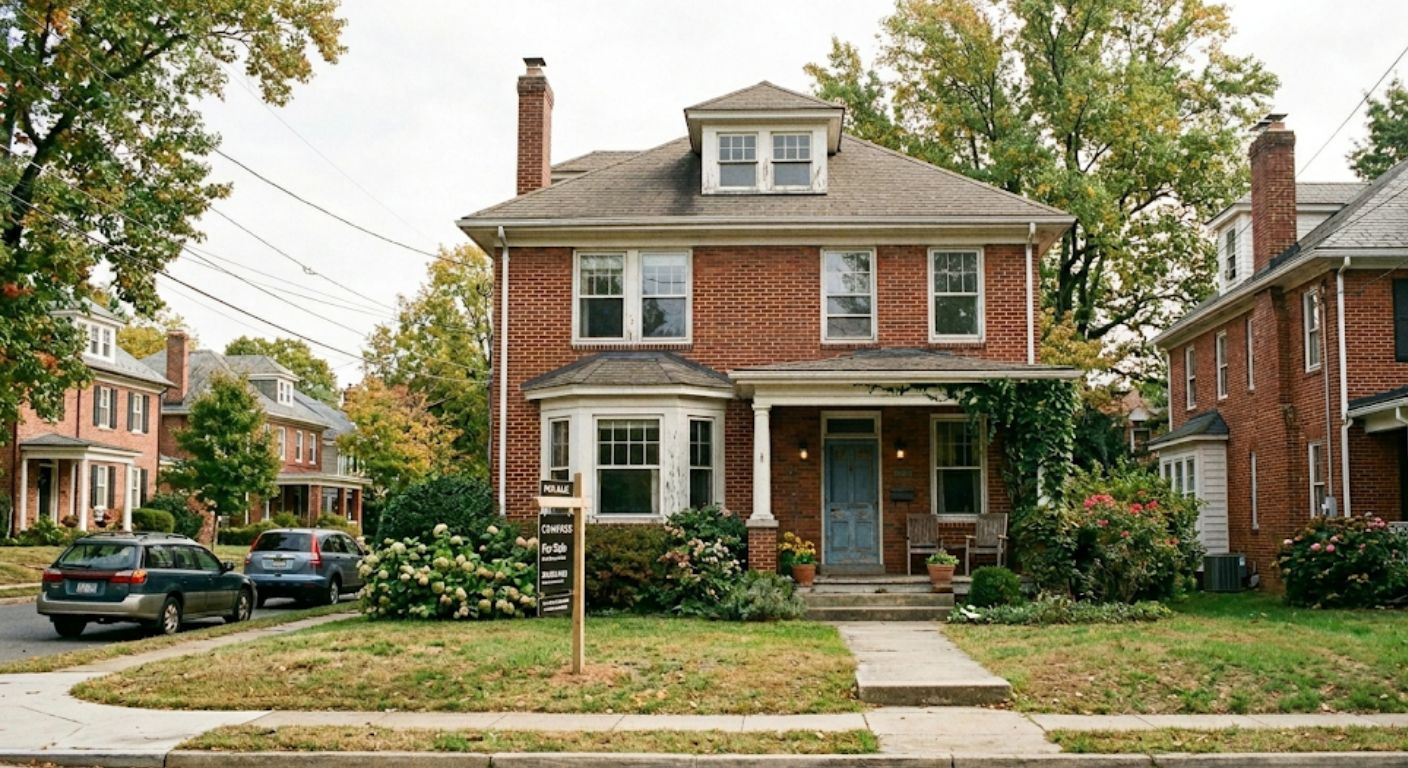
Selling as-is can be the right call in certain situations, but the decision deserves careful thought about pricing, timing, and the buyer pool it will attract.
Selling As-Is Is an Option, Not a Default
The phrase “as-is” gets used a lot in real estate conversations, sometimes loosely. Before deciding whether it makes sense for your home, it helps to understand what it actually means and what trade-offs come with it.
Selling as-is means you’re listing the home in its current condition and signaling to buyers that you’re not planning to make repairs or credits based on what comes up in an inspection. It doesn’t mean you can withhold known material defects. Sellers in DC, Maryland, and Virginia are still required to disclose known issues. It simply means the purchase price accounts for the home’s current condition, and the buyer accepts that condition when they make an offer.
Whether that approach works for you depends on your situation, your timeline, the property, and the local market.
When Selling As-Is Makes Sense
There are situations where an as-is sale is a reasonable path. Here are some of the more common ones.
You’ve inherited the property and aren’t in a position to manage renovations from a distance or on a tight timeline. As-is sales are common in estate situations for exactly this reason. You want to settle the estate, you may not have a strong read on the property’s condition, and taking on a renovation project isn’t practical.
The home needs significant work that would require more capital than you want to put in before selling. If the property has deferred maintenance or systems that need replacing, some sellers prefer to price for that reality rather than fund improvements and hope to recapture the cost at closing.
You need to move quickly and can’t wait out a renovation timeline. An as-is sale, particularly to a cash buyer or investor, can close faster than a conventional sale. That speed has value in certain situations.
The property is in a location or at a price point where investor and developer interest is strong enough to drive competitive offers even in as-is condition. In some DC neighborhoods, a land value or teardown buyer may pay close to or above what you’d net after renovation costs anyway.
When It Might Not Be the Right Call
As-is isn’t always the better option, even when it feels like the simpler one.
If the issues are cosmetic or manageable, a targeted investment in the right areas can improve buyer response and final price by more than it costs. This isn’t always the case, but it’s worth running the numbers with your agent before assuming as-is nets you more after accounting for preparation costs.
If your price point attracts primarily financed buyers who need the home to qualify for a mortgage, an as-is sale may limit your buyer pool more than you expect. Some loan types have condition requirements that effectively exclude properties with specific issues. Fewer buyers means less competition and often a lower final price.
If the local market is competitive and move-in ready homes are moving well, an as-is property will typically attract less interest or require a more significant price discount to generate offers. In that environment, the cost of preparation may be justified by the wider buyer pool it creates.
You may also like: What Every Home Seller in Washington DC Needs to Know Before Listing, What Sellers in DC and Maryland Should Know About Contingent Offers in 2026, and What Buyers in the DC Metro Area Should Know About Contingencies Before Making an Offer
How to Price an As-Is Home
Pricing is where as-is sales often go wrong. Some sellers overprice because they don’t want to fully accept the discount the market will apply for condition. That leads to extended days on market, which erodes buyer confidence and often results in a lower final price than a more accurate initial list would have produced.
An accurate as-is price starts with what comparable updated homes have sold for, then applies a realistic adjustment for the cost and inconvenience buyers will face. That adjustment varies based on the severity of the issues, the local market, and the likely buyer profile. Your agent should be walking you through that math specifically, not just giving you a round number.
In some cases, getting a pre-listing inspection can actually help. Knowing exactly what’s there lets you price accurately and gives buyers confidence that you’re not hiding anything. It can also reduce the risk of a deal falling apart after the buyer’s inspection turns up something unexpected.
Disclosure Still Applies
One thing worth saying clearly: selling as-is does not change your disclosure obligations. In DC, Maryland, and Virginia, sellers are required to disclose known material defects. If you know the roof leaks, the foundation has been repaired, or there’s a history of moisture intrusion, that information needs to be disclosed regardless of how you’re marketing the property.
Your agent and, if questions come up, a real estate attorney can help you think through what needs to be disclosed for your specific property. This is an area where being thorough protects you.
What Buyers of As-Is Homes Are Usually Thinking
Understanding your likely buyer helps you make better decisions about pricing and marketing. As-is properties in the DC metro area often attract investors, developers, buyers interested in renovation projects, and cash buyers looking for properties below market rate. These buyers are typically experienced, they know what they’re doing, and they’re going to price the work into their offer.
That’s not necessarily a bad thing. It can lead to a clean, fast transaction. But it does mean the price expectations are different from what a move-in ready home would generate. Being realistic about that up front is part of making the decision clearly.
Frequently Asked Questions About As-Is Home Sales in the DC Metro Area
Do I still have to disclose issues if I’m selling as-is in DC?
Yes. Selling as-is does not exempt you from disclosure requirements in DC, Maryland, or Virginia. You are still required to disclose known material defects. The term as-is refers to your intention not to make repairs, not to your disclosure obligations.
Will an as-is sale close faster?
It can, particularly if the buyer is paying cash and waiving a financing contingency. But it depends on the buyer. An as-is sale to a conventional financed buyer goes through essentially the same process as any other transaction.
How much less will I get for an as-is home versus a prepared one?
The discount varies based on the condition of the property, the local market, and the buyer pool. There’s no fixed percentage. Your agent should be able to walk you through comparable sales and give you a realistic estimate for your specific property and neighborhood.
Is it better to make repairs before selling or sell as-is?
It depends on what the repairs are, what they cost, and how they would affect buyer response and final price. Some improvements generate a meaningful return; others don’t. The answer is specific to the home, the market, and the timing. Running the math with your agent before deciding is worth the time.
About Matt Cheney
Matt Cheney is a top-producing real estate advisor with Compass in Washington, DC, guiding buyers and sellers across DC, Maryland, and Virginia through high-stakes moves, from luxury sales to estate settlements, downsizing, and divorce-related transactions. With over $779 million in career sales volume and 22+ years of experience, Matt is ranked in the Top 1.5% of agents nationally by RealTrends America’s Best. He is known for calm, strategic guidance and a straightforward approach to complex and sensitive real estate situations.
Matt Cheney | Compass Real Estate is committed to the principles of the Fair Housing Act and the Equal Opportunity Act. All real estate services are provided without regard to race, color, national origin, religion, sex, familial status, or disability.