

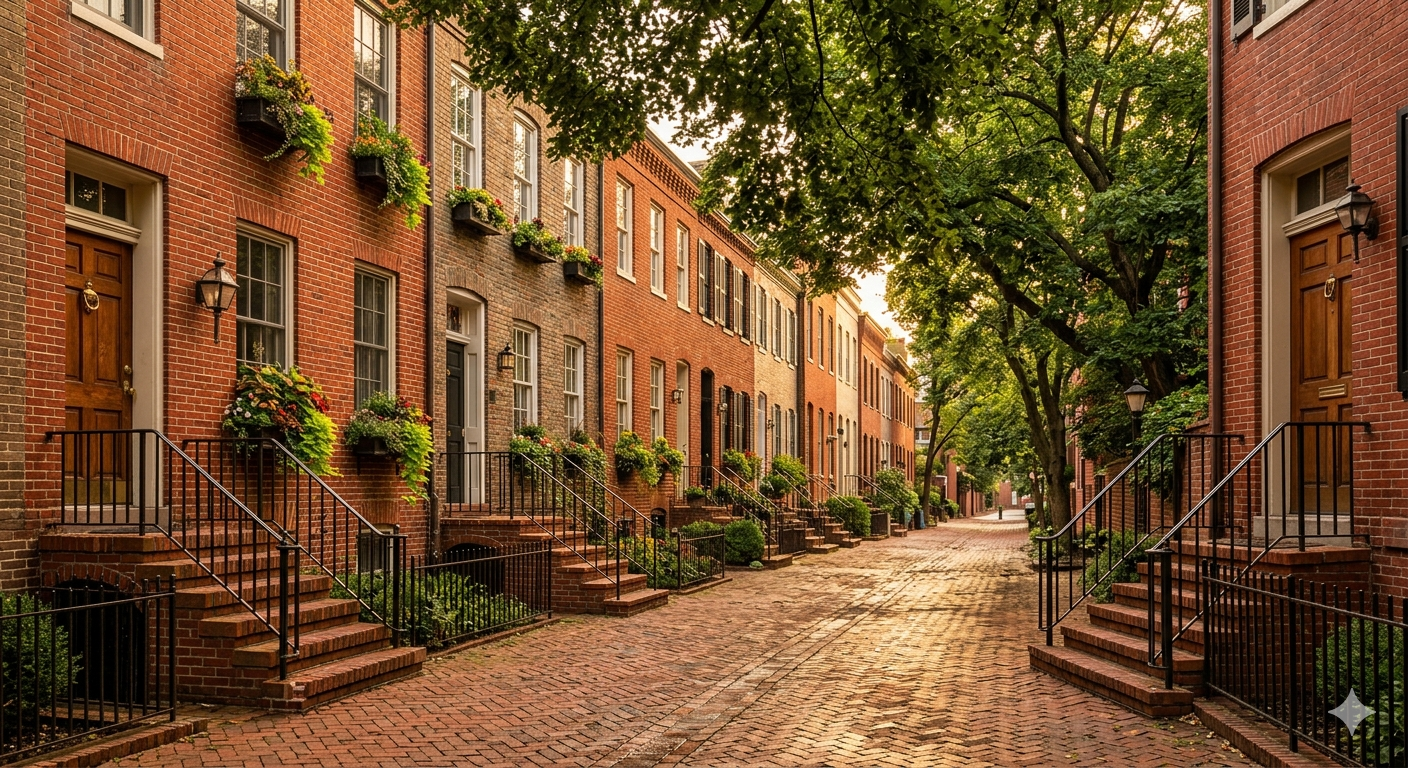
Georgetown’s residential streets, lined with Federal and Georgian rowhouses and original brick sidewalks, offer a sense of place that is difficult to find anywhere else in Washington, DC.
Here is what to know before you start.
What Georgetown’s Housing Stock Actually Looks Like
Georgetown is known for its rowhouses, and those rowhouses are the backbone of the residential market here. Most of them are Federal, Georgian, or Victorian in style, and many date back to the 1800s. They vary significantly in size, layout, condition, and finish level, even on the same block.
Beyond rowhouses, there are carriage houses, larger detached homes, and a small number of larger estates. Condos and co-ops exist here too, though the condo inventory is more limited than in other parts of DC. If you are coming from a neighborhood with more uniform housing stock, Georgetown will feel more varied, and that variation affects how you evaluate and compare properties.
One thing buyers learn quickly is that square footage in Georgetown can be deceptive. A home that looks large from the street may have a less practical layout inside, or vice versa. Ceiling heights, natural light, outdoor space, and storage all factor into how livable a home actually is day to day.
Parking and Practical Realities
Parking is one of the most frequent issues buyers bring up when they are considering Georgetown. Street parking exists but can be competitive, and permit zones are in place for residents. Homes with a private parking pad or garage are significantly easier to live in for buyers who drive regularly, and they tend to command higher prices because of it.
If parking is important to your daily life, it is worth being upfront about that early in the process so you are not touring homes that will not work for you. If you can be flexible on parking, you open up a larger portion of the inventory, but that tradeoff is worth thinking through carefully.
Georgetown also has older infrastructure in some areas, which can mean older plumbing, electrical, and HVAC systems in homes that have not been fully updated. A good home inspection is especially important here. Buyers who skip or rush the inspection process on a historic Georgetown property sometimes discover issues that would have been manageable if caught early.
What Georgetown Buyers Are Competing Against
Georgetown tends to attract buyers who know what they want. You will often find yourself competing with buyers who have been watching the neighborhood for a while and move quickly when the right home comes up. Well-priced homes in good condition do not tend to linger.
That said, Georgetown is not always a frenzied bidding war market. Price point, condition, and timing all affect how competitive a given home is. A home that is priced right and shows well will attract more attention. A home that is overpriced or that has clear deferred maintenance may sit longer and give buyers more room to negotiate.
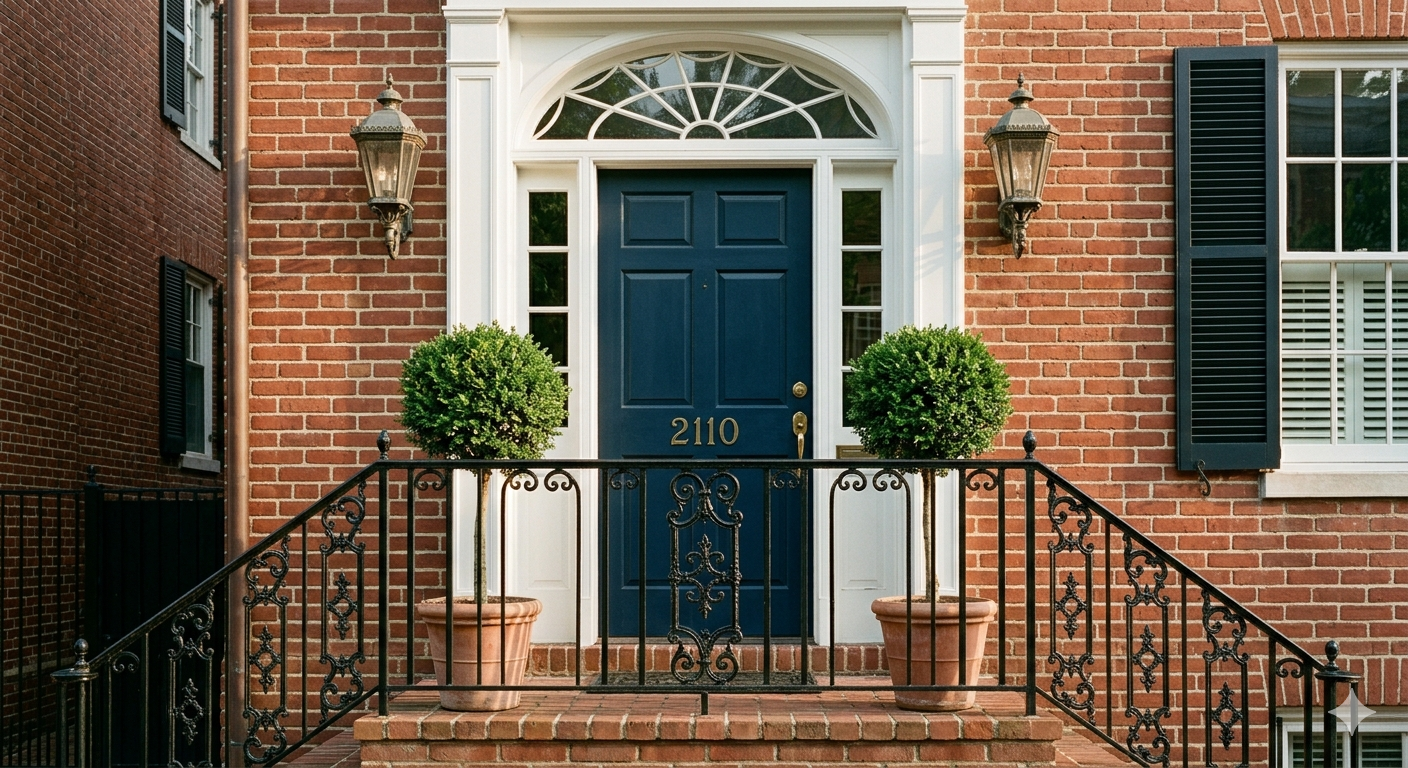
The architectural details found on Georgetown stoops, from period ironwork to transom windows, reflect the neighborhood’s long history and draw buyers who value that kind of character.
You may also like: 5 of Washington DC’s Most Walkable Neighborhoods for Everyday Living, What are the most desirable neighborhoods for high-end homes in Washington DC, and Foxhall vs. Palisades: Which Northwest DC Neighborhood Is Right for You
How Georgetown Compares to Nearby Neighborhoods
Buyers sometimes consider Georgetown alongside other Northwest DC neighborhoods like Foxhall, The Palisades, Wesley Heights, and Kalorama. Each has its own character. Georgetown offers more walkability, more density, and proximity to the retail and restaurant corridor along M Street and Wisconsin Avenue, though buyers should verify current business activity as offerings can change over time.
The other neighborhoods tend to offer more privacy, larger lots, and a quieter residential feel.
The right choice depends on how you plan to use your home and what daily life looks like for you. Georgetown works well for buyers who want to walk to coffee, restaurants, or the waterfront. If you want more space and more quiet, you might find one of the nearby neighborhoods fits better.
How Matt Cheney Helps Georgetown Buyers
Frequently Asked Questions
Is Georgetown, DC a good place to buy a home?
What is the average price of a home in Georgetown, DC?
Is parking available for Georgetown homeowners?
Some Georgetown homes include private parking pads or garages, which are highly valued. Many homes rely on residential street parking with permit zones. If parking is a priority, it is worth focusing your search on homes that include private parking.
What should I watch out for when buying a historic Georgetown home?
Older homes in Georgetown may have aging systems, including plumbing, electrical, and HVAC, that need attention. Historic designation in some parts of Georgetown can also limit exterior modifications. A thorough home inspection and a clear understanding of any historic preservation requirements before you make an offer is important.
Final Word
Georgetown is one of the most interesting neighborhoods to buy in Washington, DC, but it rewards buyers who come in prepared. Understanding the housing stock, the parking realities, the competitive dynamics, and how Georgetown compares to nearby neighborhoods helps you make a smarter decision.
If Georgetown is on your radar, the right starting point is a real conversation with someone who knows the neighborhood well. The market moves at its own pace, and being ready when the right property comes up makes all the difference.
About Matt Cheney
Matt Cheney is a top-producing real estate advisor with Compass in Washington, DC, guiding buyers and sellers across DC, Maryland, and Virginia through high-stakes moves, from luxury sales to estate settlements, downsizing, and divorce-related transactions. With over $780 million in career sales volume and 23+ years of experience, Matt is ranked in the Top 1.5% of agents nationally by RealTrends America’s Best. He is known for calm, strategic guidance and a straightforward approach to complex and sensitive real estate situations.
Matt Cheney | Compass Real Estate is committed to the principles of the Fair Housing Act and the Equal Opportunity Act. All real estate services are provided without regard to race, color, national origin, religion, sex, familial status, or disability.
Real estate considerations related to divorce or estate matters involve legal and financial complexities. Consult a qualified attorney and financial advisor for guidance specific to your situation.