

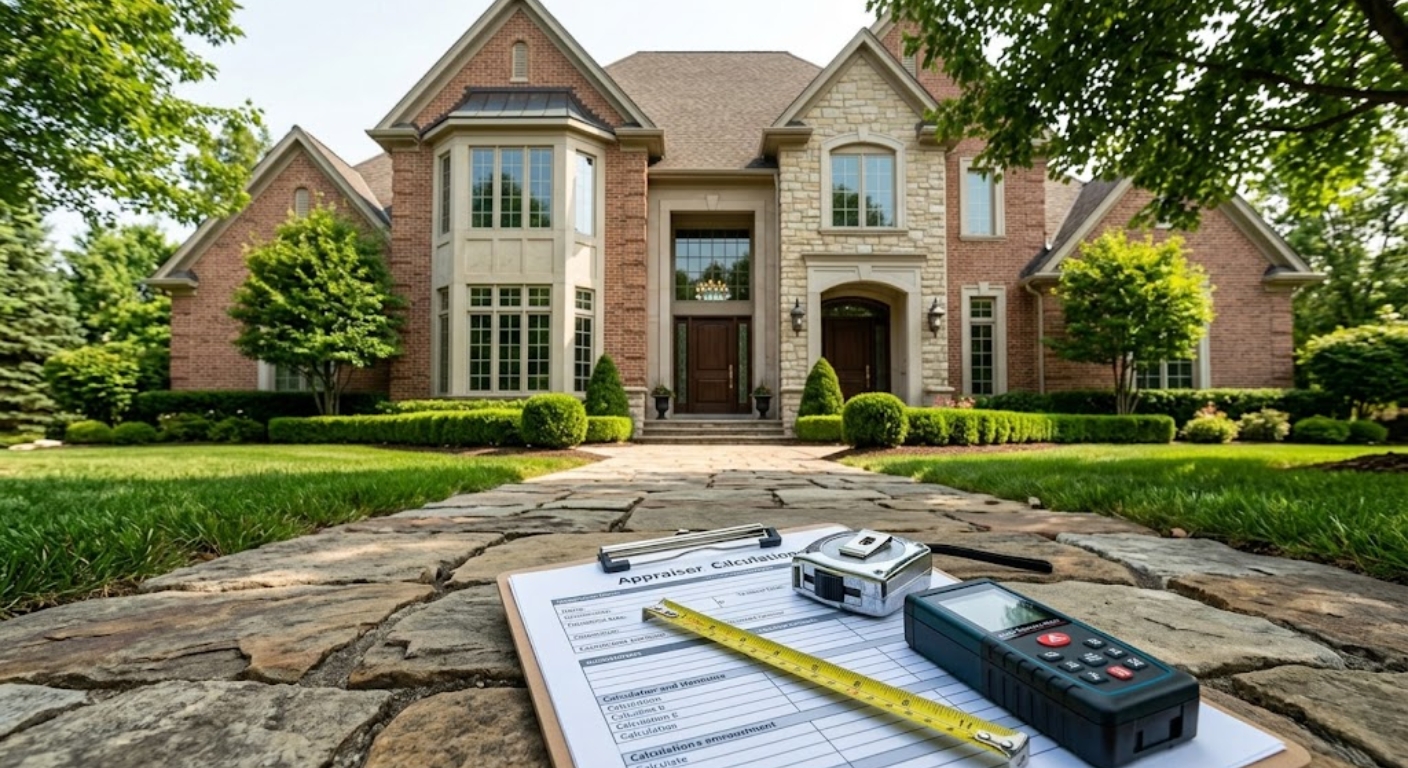
A home appraisal is a standard step in financed transactions. A low result requires a clear plan from both sides.
What a Low Appraisal Means in a Luxury Transaction
An appraisal is an independent assessment of a property’s market value conducted by a licensed appraiser, typically ordered by the buyer’s lender. The appraiser reviews the property and compares it to recent sales of similar homes to arrive at a value estimate. When the appraised value comes in below the agreed purchase price, it creates what is commonly called an appraisal gap.
In DC’s luxury market, appraisal gaps occur more often than in lower price tiers. One reason is limited comparable sales. Luxury properties are by definition less common, and finding truly comparable recent sales in the same neighborhood at the same price level can be difficult. An appraiser working from inadequate comps may undervalue a property that the market is supporting at a higher number.
Why Luxury Homes Are More Prone to Appraisal Gaps
Luxury homes often have custom features, finishes, or configurations that generic market data does not fully capture. A historic Georgetown townhouse with a fully renovated interior, a private courtyard, and off-street parking represents a combination of attributes that may not exist in any recent sale within a tight radius. An appraiser assigned from outside the neighborhood, working from a database of recent transactions, may not fully account for what those features command in this specific market.
Additionally, when a competitive offer situation pushes the final sale price above recent comps, the appraisal may simply trail what buyers have demonstrated they are willing to pay. This happens in rising markets where sales prices are outpacing the historical data that appraisers rely on.
Options When an Appraisal Comes in Low
When an appraisal comes in below the purchase price, both buyer and seller have options. The path forward depends on the contract language, how large the gap is, and how motivated both parties are to close.
The seller can reduce the price to the appraised value. The buyer can make up the difference in cash, paying the appraised value through their loan and covering the gap out of pocket. Both parties can meet somewhere in the middle, splitting the difference between the appraised value and the contract price. Or, if the buyer has an appraisal contingency, they may exit the contract without penalty.
In DC’s luxury market, all-cash offers are common enough that appraisal gaps may not arise in the first place. Cash buyers do not require lender appraisals. But when financing is involved, the appraisal step is part of the process, and a low result requires a clear response from both sides.
Buyers who want to understand how to structure offers with or without appraisal protections should review buying a luxury home in Washington DC for a broader picture of how the purchase process works at this level.
You may also like: What Sellers in DC and Maryland Should Know About Contingent Offers in 2026, What Buyers in the DC Metro Area Should Know About Contingencies Before Making an Offer, and What Every Home Seller in Washington DC Needs to Know Before Listing
How to Challenge a Low Appraisal
A low appraisal is not necessarily the final word. Sellers and their agents can submit a rebuttal to the appraisal, known as a reconsideration of value, by providing additional comparable sales or documentation that the appraiser may not have considered. This process takes time, and it does not always result in a revised value, but it is worth attempting when the appraised figure seems clearly out of step with market evidence.
For the reconsideration to be credible, the additional comps need to be genuinely relevant, meaning recent, nearby, and comparable in key attributes. An agent who knows the neighborhood well and has access to detailed transaction data is better positioned to support this process than one who is working the area less frequently.
According to the Consumer Financial Protection Bureau, buyers and sellers both have rights in the appraisal process, including the ability to request a copy of the appraisal report and, in some cases, to request a reconsideration of the value if there are factual errors or missing information.
What Sellers Should Know Before Listing
Sellers who are pricing at or near the top of the market should understand the appraisal risk before accepting a financed offer. If the asking price exceeds recent comparable sales by a meaningful margin, the risk of an appraisal gap is real. That does not mean the price is wrong, but it does mean that a financed offer at that number carries more complexity than a cash offer would.
Some sellers in competitive situations specifically prefer cash offers to eliminate appraisal risk entirely. Others are comfortable with financed offers if the buyer demonstrates financial strength and an ability to cover a reasonable gap. These are conversations worth having before accepting an offer, not after an appraisal comes in short.
Frequently Asked Questions About Appraisals in DC Luxury Sales
Does a low appraisal mean the home is overpriced?
Not necessarily. Appraisals reflect a backward-looking analysis of comparable sales data, while prices in active markets reflect current buyer demand. A home that receives multiple offers above asking and closes at a premium over comps may still appraise below the contract price, not because the price is wrong but because the appraiser’s data lags the market.
Can the buyer walk away if the home doesn’t appraise?
If the contract includes an appraisal contingency, the buyer generally has the right to exit if the appraised value comes in below the purchase price and they cannot reach an agreement with the seller. If the buyer waived the appraisal contingency, they are typically obligated to close at the contract price regardless of the appraisal result, or they risk losing their earnest money deposit.
How often do luxury homes in DC face appraisal gaps?
Appraisal gaps are more common at higher price points due to limited comparable sales and unique property characteristics. How frequently they occur depends on the neighborhood, the price tier, and whether the market is rising quickly relative to historical data. An agent who works regularly in the luxury market can give you a realistic sense of the risk for a specific property.
What is appraisal gap coverage and how does it work?
Appraisal gap coverage is a clause some buyers include in their offer, committing to pay a specified amount above the appraised value if the home comes in short. It reassures the seller that a low appraisal will not automatically kill the deal. Buyers who include this language should be confident in their ability to cover the gap and understand the financial commitment they are making.
About Matt Cheney
Matt Cheney is a top-producing real estate advisor with Compass in Washington, DC, guiding buyers and sellers across DC, Maryland, and Virginia through high-stakes moves, from luxury sales to estate settlements, downsizing, and divorce-related transactions. With over $779 million in career sales volume and 22+ years of experience, Matt is ranked in the Top 1.5% of agents nationally by RealTrends America’s Best. He is known for calm, strategic guidance and a straightforward approach to complex and sensitive real estate situations.
Matt Cheney | Compass Real Estate is committed to the principles of the Fair Housing Act and the Equal Opportunity Act. All real estate services are provided without regard to race, color, national origin, religion, sex, familial status, or disability.