

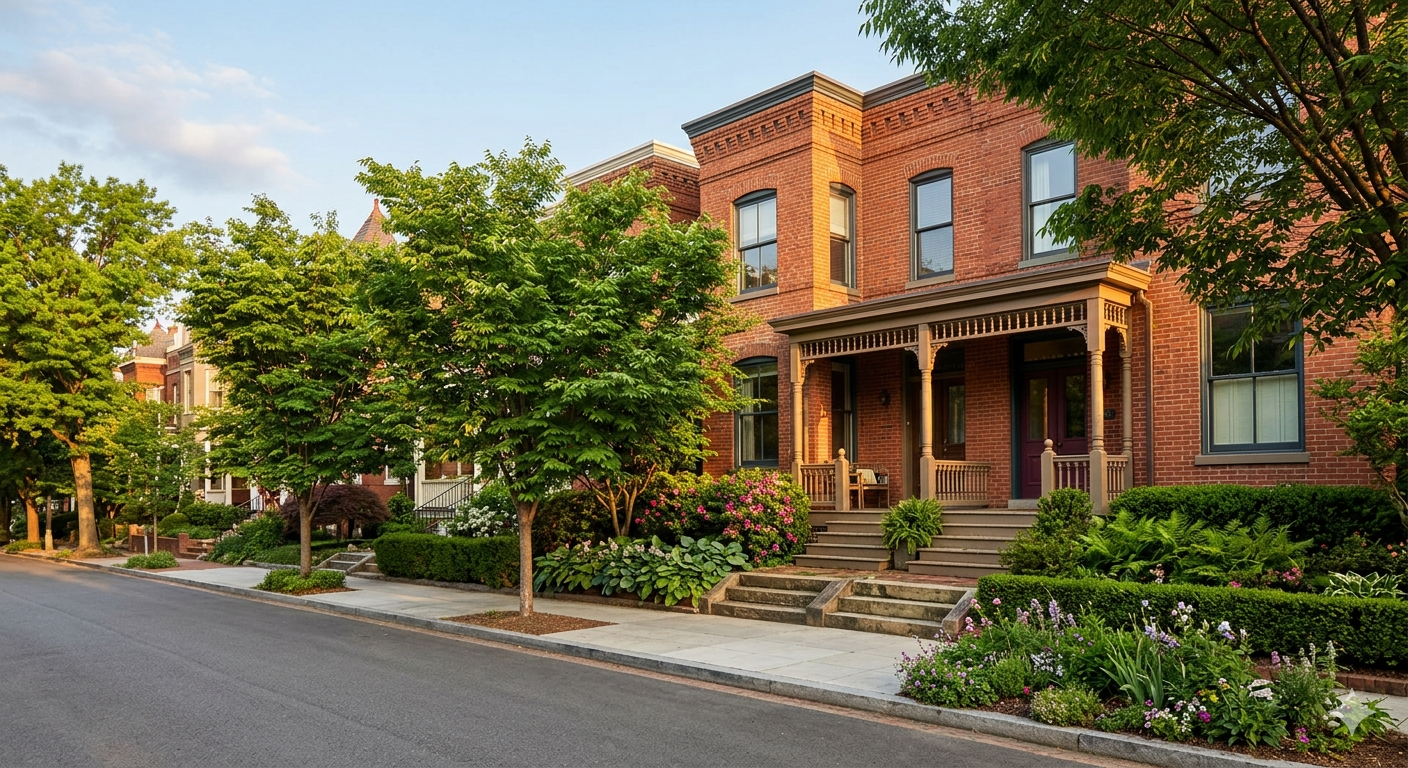
Buying your first home in the DC metro area is one of the most important financial decisions you will make, and starting with the right guidance makes a lasting impact.
Why First-Time Buyers in the DC Metro Area Often Start on the Wrong Foot
Buying your first home in Washington, DC, Maryland, or Virginia is an exciting milestone. It is also one of the most financially and emotionally complex transactions most people will ever undertake. The DC metro area is a competitive, fast-moving market with its own rules, price dynamics, and neighborhood nuances that do not always match what buyers have read online or heard from friends who bought in other cities. That gap between expectation and reality is where most first-time buyer mistakes happen.
After 23+ years guiding buyers and sellers across Georgetown, Bethesda, McLean, Arlington, Chevy Chase, and beyond, I have seen the same patterns repeat themselves. The good news is that nearly every mistake is avoidable when you understand what to expect before you start. This guide walks through the most common missteps first-time buyers make in DC, Maryland, and Virginia, and what to do instead.
The Budget Mistake Almost Every First-Time Buyer Makes
The single most common mistake is confusing pre-qualification with pre-approval. These are not the same thing, and in a competitive DC metro market, submitting an offer with a pre-qualification letter instead of a pre-approval letter can cost you the home.
Pre-qualification is an informal estimate based on information you provide to a lender. No documents are verified, no credit report is pulled in depth, and nothing is confirmed. Pre-approval is a real underwriting process. Your income, assets, employment, and credit are all reviewed. The lender issues a letter stating what you are approved to borrow, and sellers take that seriously.
In neighborhoods like Wesley Heights, Spring Valley, and Bethesda, where well-priced homes regularly attract multiple offers within days, a pre-approval is not optional. It is the cost of entry. Buyers who skip this step often find themselves scrambling to get paperwork together after they fall in love with a home, only to lose it to a buyer who was already ready.
Beyond the pre-approval, many first-time buyers also underestimate the true cost of buying. The purchase price is only the beginning. Closing costs in DC, Maryland, and Virginia can vary widely depending on loan type, jurisdiction, and transaction specifics, and may run between 2 and 5 percent of the loan amount or higher in some cases, particularly in Washington, DC where recordation and transfer taxes apply. On a $700,000 home, that could mean $14,000 to $35,000 or more in closing costs on top of your down payment. Buyers should verify current closing cost estimates with their lender and settlement attorney.
Add in moving expenses, any immediate repairs, and the cost of setting up a new home, and your cash needs can be significantly higher than expected.
Working with a local lender who understands the DC metro area market and can close on competitive timelines is just as important as the pre-approval itself. For additional guidance on the financial side of homebuying, the Consumer Financial Protection Bureau’s homebuying guide is a thorough and trustworthy resource. If you are a first-time buyer exploring what your budget can realistically support, this is a smart place to start before you begin touring homes.
Not Knowing About Down Payment Assistance Programs
One of the most overlooked resources for first-time buyers in this region is down payment assistance. Many buyers assume they need a 20 percent down payment to purchase a home. That assumption causes some buyers to wait years longer than necessary, sitting on the sidelines while prices continue to rise.
In reality, there are a range of loan programs available for first-time buyers that require significantly less down. FHA loans allow down payments as low as 3.5 percent. Conventional loans with private mortgage insurance can go as low as 3 percent down. VA loans for eligible veterans and active military members require zero down payment.
Beyond federal programs, both Maryland and Virginia offer state-level assistance. The Maryland Department of Housing and Community Development administers programs including the Maryland Mortgage Program, which has offered competitive interest rates and down payment assistance for eligible buyers, though program terms and availability are subject to change. Virginia has similar programs through the Virginia Housing Development Authority. Washington, DC has the Home Purchase Assistance Program, which has provided interest-free loans to eligible buyers for down payment and closing costs. Buyers should verify current eligibility requirements and program availability directly with the administering agencies, as funding and terms may be updated.
Many buyers in Chevy Chase, Bethesda, Arlington, and Alexandria qualify for one or more of these programs and simply do not know it. A knowledgeable local lender and a well-connected buyer’s agent can help you identify what you may be eligible for before you make any assumptions about your timeline or affordability.
Trying to Time the Market in a Region That Rarely Slows Down
First-time buyers often ask whether they should wait for prices to drop. It is a reasonable question, but in the DC metro area, it is usually the wrong one to be asking.
The Washington, DC metro region is one of the most economically stable real estate markets in the country. The combination of federal employment, government contracting, associations, universities, healthcare systems, and a deeply diversified private sector creates consistent demand for housing across all price points. Even during national downturns, the DC area tends to experience shorter corrections and faster recoveries than most major markets.
Buyers who waited in 2019 hoping for a price pullback often found themselves buying in 2020 or 2021 at higher prices, depending on the neighborhood and property type. Buyers who waited in 2022 for rates to drop frequently encountered a low-inventory environment where prices held firm despite higher borrowing costs, though outcomes varied. The market here has often behaved differently than national headlines suggest, and past patterns are not a guarantee of future results.
Timing the market is a strategy that rarely works even for professional investors. For first-time buyers, the more relevant question is: when are you personally ready? When is your financial foundation solid, your life situation stable, and your timeline clear? Those factors matter far more than trying to catch the market at a perfect moment. For context on where the market stands right now, our overview of the DC, Maryland, and Virginia market outlook provides useful current perspective.
Searching Without Knowing What You Actually Need
Browsing listings is enjoyable. But many first-time buyers spend months scrolling through homes on Zillow or Realtor.com without ever establishing a clear framework for what they actually need versus what they simply like.
The distinction matters. In a fast-moving market, hesitation costs. When the right home comes up in Bethesda, McLean, or Northwest DC, buyers who have not already sorted out their priorities tend to hesitate while buyers who know exactly what they need move quickly.
Before you begin serious home searches in DC, Maryland, or Virginia, sit down and honestly work through a few core questions. How long do you realistically expect to stay in this home? Five years or ten or more? That answer shapes whether a condo, a townhouse, or a single-family home makes more sense, and in which neighborhood. What are your non-negotiables, such as a particular school district, proximity to a Metro station, or off-street parking? What are your preferences but not dealbreakers?
In Arlington, for example, walkability and Metro access are often top priorities for buyers coming from an urban lifestyle. In McLean or Great Falls, more space, larger lots, and school options buyers often evaluate are frequently among the factors that shape the search. In Georgetown or Kalorama, architectural character and walkability to restaurants and shops are frequently front of mind. Buyers should verify school assignments directly with the relevant district. Each of these preferences leads to a very different search, and being clear about yours from the start saves time and avoids frustration.
Misreading What a Home Is Actually Worth
Online home value estimates are a starting point, not a reliable guide for offer strategy. Zillow’s Zestimate and similar tools are built on algorithmic models that do not account for the condition of the home, recent improvements, the specific block, the school boundaries, or dozens of other factors that drive value in the DC metro area.
In neighborhoods like Spring Valley, Foxhall, and Kent in Northwest DC, two homes on the same street can differ by hundreds of thousands of dollars based on their renovation status, lot size, and orientation alone. In In Bethesda and Chevy Chase, the school cluster a home falls within can meaningfully affect both price and demand. Buyers should verify school assignments directly with the relevant school district, as boundaries are subject to change. In McLean, the difference between a renovated 1960s colonial and an unrenovated one of similar square footage is not trivial.
First-time buyers who rely on online estimates to set their offer price are working with incomplete information. A skilled buyer’s agent will provide a comparative market analysis built on real, closed sales that are genuinely comparable in size, condition, location, and age. That analysis is how you make a competitive offer without overpaying and without leaving so much room that you lose the home to another buyer.
Understanding how luxury and move-up pricing works in this market also helps calibrate expectations. Our overview of luxury property sales in the DC metro area offers useful context even for buyers at entry price points, because the pricing dynamics at the top of the market shape values throughout.
Skipping the Home Inspection or Waiving Contingencies Without Fully Understanding the Risk
In competitive bidding situations, some first-time buyers feel pressure to waive the home inspection contingency to make their offer more attractive. In certain markets and price ranges, this is a real consideration. But first-time buyers need to understand what they are giving up before they make that call.
A home inspection is not just a checklist. It is the process by which you learn about the actual condition of the property you are about to make the largest purchase of your life. In older DC metro neighborhoods where homes routinely date to the 1930s, 1940s, and 1950s, inspection findings frequently include items like aging knob-and-tube wiring, cast iron drain lines, galvanized water supply pipes, and HVAC systems that are past their useful life. These are not necessarily dealbreakers, but they are factors that should inform your offer price and your planning.
There are ways to remain competitive as a buyer while still protecting yourself. An experienced local agent can advise on how to structure an offer that is appealing to sellers without leaving you completely exposed. The goal is to be competitive, not reckless.
Similarly, waiving or shortening financial contingencies should be done only with full understanding of your lender’s process and timeline. If your loan falls through after you have waived the financing contingency, your earnest money deposit is at risk. That is a significant amount in DC metro transactions, often $10,000 to $30,000 or more depending on the purchase price.
Choosing an Agent Who Does Not Know the Local Market
Real estate is licensed statewide in DC, Maryland, and Virginia, but that does not mean every licensed agent knows every market equally well. The DC metro area is made up of dozens of distinct submarkets, each with its own inventory patterns, pricing norms, disclosure requirements, and transaction customs.
A buyer’s agent who primarily works in one county but is also willing to help you look in another county they rarely work in is not the same as an agent who knows that market in depth. For first-time buyers especially, having an agent who understands the specific neighborhood you are targeting, who has seen hundreds of transactions in that market, and who has relationships with listing agents in that area is a genuine competitive advantage.
Ask potential agents how many transactions they have completed in the specific neighborhoods you are considering, what their average days-to-close looks like, and how they help buyers navigate competitive offers. Their answers will tell you a great deal about whether they are the right fit for your search.
First-time buyers who are also newly married or recently partnered often face this challenge together for the first time. Our guide for newlyweds buying their first home in the DC area speaks directly to that experience and may be a helpful read alongside this one.
Underestimating How Long the Process Actually Takes
Many first-time buyers in the DC metro area expect to start looking in January and be settled in a new home by March. In practice, the timeline is often longer than expected, depending on inventory, lender timelines, and the buyer’s criteria. Not because the process is unnecessarily complicated, but because doing it correctly takes time.
Getting fully pre-approved through a local lender typically takes one to two weeks once you have gathered your documents. Actively searching for a home in competitive areas like Arlington, Bethesda, Chevy Chase, and Georgetown can take anywhere from a few weeks to several months depending on inventory and your criteria. Once under contract, the typical timeline to close in DC, Maryland, and Virginia runs 30 to 45 days, though it can be faster with the right team in place.
Buyers who are also managing a lease expiration, a job relocation, or a life transition face added pressure that can lead to rushed decisions. Planning your timeline with buffer, and being honest about your flexibility, allows you to make better decisions throughout the process rather than feeling forced into a purchase that is not quite right.
Not Asking the Right Questions Before Making an Offer
Before submitting an offer on any home in the DC metro area, first-time buyers should have clear answers to a handful of questions that rarely come up in a first showing but matter significantly to the decision. How long has the home been on the market, and has the price been reduced? Have there been prior offers that fell through, and if so, why? What do the utility costs look like? Has the home had any major work done in the past five years, and if so, were the appropriate permits pulled?
In DC, Maryland, and Virginia, permits for significant renovations are a matter of public record. Work done without permits can create real problems at closing or down the road when you go to sell. An experienced buyer’s agent knows how to ask these questions tactfully and how to interpret the answers in context.
Understanding what you are stepping into before you make an offer, rather than discovering it after you are under contract, keeps you in control of the decision. This is one of the most important ways a knowledgeable local agent earns their value for first-time buyers in particular.

Understanding your budget and the buying process helps first time buyers in DC, Maryland, and Virginia move forward with clarity and confidence.
The Final Word
Buying your first home in Washington, DC, Maryland, or Virginia is not a process you need to figure out on your own. The mistakes outlined here are common precisely because the process is genuinely complex, the market moves quickly, and there is no shortage of conflicting advice available online. The buyers who navigate it successfully are almost always the ones who connected early with an experienced local advisor, got their financial picture in order before they started looking, and made decisions based on clear priorities rather than emotion or urgency.
Understanding what the process actually involves, and where first-time buyers most often go wrong, puts you in a fundamentally stronger position before you ever tour your first home. If you are thinking about buying in DC, Maryland, or Virginia in 2026 and want a straightforward conversation about what to expect, contact Matt directly for a current market analysis. There is no pressure and no obligation, just honest guidance from an advisor with 23+ years of experience and over $780 million in career sales volume helping buyers navigate this market.
For additional perspective on current market conditions across the region, our guide on how to navigate a changing market as a DC-area seller offers context that buyers will find equally useful for understanding how the market operates from the other side of the table.
Frequently Asked Questions: First-Time Home Buyers in DC, Maryland, and Virginia
What is the biggest mistake first-time home buyers make in the DC area?
The most common mistake is starting the home search before getting fully pre-approved by a local lender. In a competitive market like Washington, DC, Bethesda, or Arlington, pre-approval is essential before making any offers. Buyers who skip this step often lose homes to more prepared buyers.
Do I need a 20 percent down payment to buy a home in DC, Maryland, or Virginia?
No. There are a range of loan programs available for first-time buyers that allow significantly lower down payments, including FHA loans at 3.5 percent down, conventional loans starting at 3 percent, and VA loans with zero down for eligible veterans. Down payment assistance programs are also available through Maryland and Virginia housing agencies.
How long does it take to buy a home in the DC metro area?
From the start of your pre-approval process to closing, most first-time buyers in DC, Maryland, and Virginia should plan for a timeline of two to four months, depending on how quickly you find a home that fits your criteria and how competitive the market is in your target neighborhoods.
Should I waive the home inspection to make my offer more competitive in DC?
Waiving an inspection contingency is a significant decision that should not be made without fully understanding the risks, especially for older homes in neighborhoods like Northwest DC, Chevy Chase, or Bethesda where the housing stock often dates back decades. An experienced local agent can help you find other ways to strengthen your offer without taking on unnecessary risk.
Is it worth waiting for home prices to drop in DC, Maryland, or Virginia?
The DC metro area has historically been among the more resilient real estate markets in the country, supported by the strength and diversity of the regional economy, though no specific market outcome is guaranteed. Buyers who have waited for significant price drops have often found themselves buying later at equal or higher prices, depending on the time period and property type. The more useful question is whether you are personally and financially ready to buy.
What is the difference between pre-qualification and pre-approval?
Pre-qualification is an informal estimate based on unverified information. Pre-approval is a full underwriting review of your income, assets, credit, and employment that results in a formal commitment letter from a lender. In the DC metro market, sellers and listing agents take pre-approval seriously and may not consider offers accompanied only by a pre-qualification letter.
Do first-time buyers in DC, Maryland, or Virginia qualify for any special programs?
Yes. Washington, DC has the Home Purchase Assistance Program for eligible buyers. Maryland offers the Maryland Mortgage Program through the Department of Housing and Community Development. Virginia Housing provides first-time buyer programs with competitive rates and down payment assistance. Eligibility requirements vary, and a local lender familiar with these programs can help you assess your options.
How do I know what a home is actually worth in the DC metro area?
Online value estimates like Zillow’s Zestimate are a starting point, but they do not account for the many local factors that drive value in DC metro neighborhoods. A comparative market analysis prepared by a knowledgeable local agent, based on actual closed sales of genuinely comparable homes, is the most reliable way to assess value before making an offer.
What should I ask before making an offer on a home in DC, Maryland, or Virginia?
Before making an offer, you should know how long the home has been on the market, whether there have been prior offers that fell through and why, whether major renovations were done with permits, what the utility costs typically look like, and what any known issues with the property are. Your buyer’s agent should help you gather this information before you commit to an offer price.
About Matt Cheney
Matt Cheney is a top-producing real estate advisor with Compass in Washington, DC, guiding buyers and sellers across DC, Maryland, and Virginia through high-stakes moves, from luxury sales to estate settlements, downsizing, and divorce-related transactions. With over $780 million in career sales volume and 23 years of experience, Matt is ranked in the Top 1.5% of agents nationally by RealTrends America’s Best. He is known for calm, strategic guidance and a straightforward approach to complex and sensitive real estate situations.
Matt Cheney | Compass Real Estate is committed to the principles of the Fair Housing Act and the Equal Opportunity Act. All real estate services are provided without regard to race, color, national origin, religion, sex, familial status, or disability.
Real estate considerations related to divorce or estate matters involve legal and financial complexities. Consult a qualified attorney and financial advisor for guidance specific to your situation.