

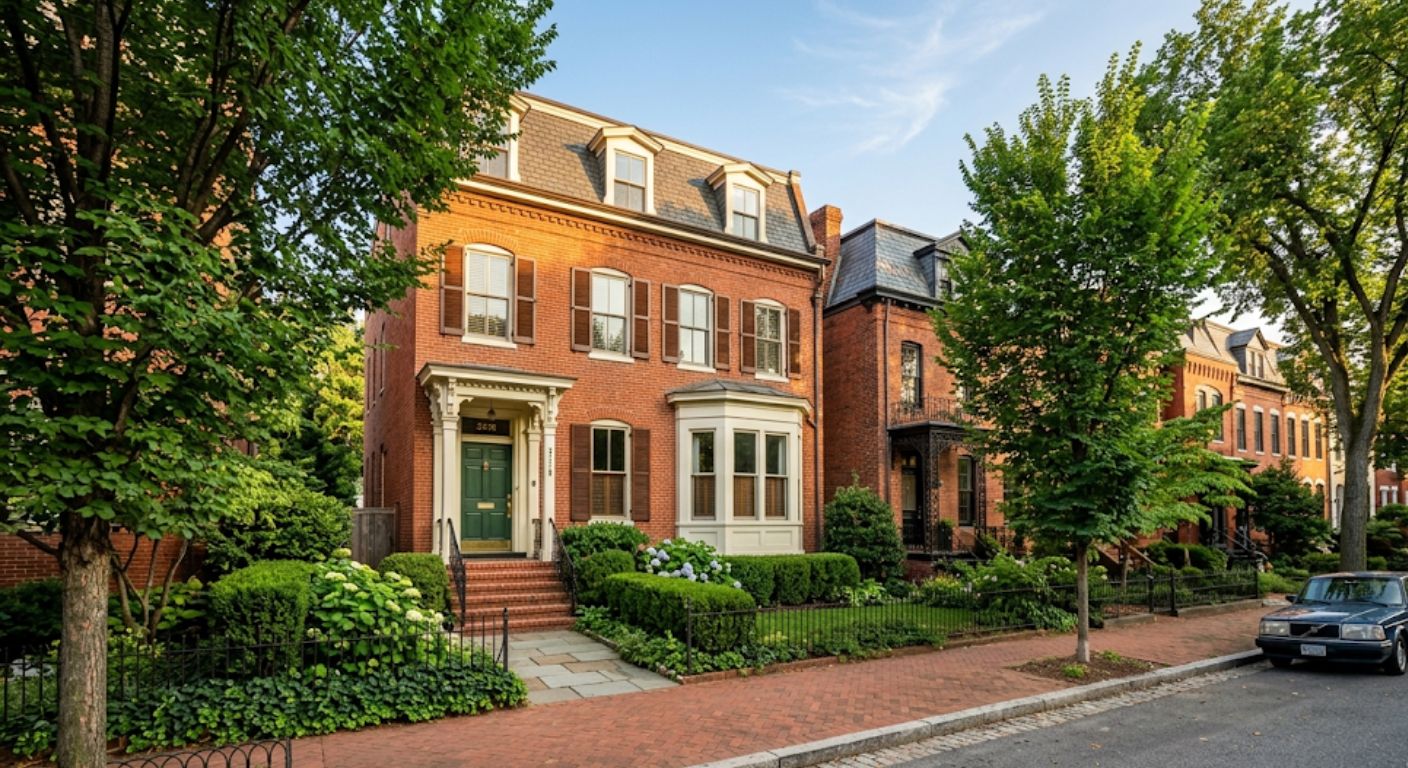
Many federal employees who have owned their DC home for decades are in a strong equity position heading into retirement, which changes how they approach the sale.
Washington, DC has one of the largest concentrations of federal employees in the country, and a significant number of them own homes in the city and surrounding suburbs. For many, the transition to retirement comes with a real estate decision that has been building for years: whether to sell the primary residence, when to do it, and what the process actually looks like.
Here is a practical look at what federal employees approaching retirement should know about selling their DC area home and how to plan the process thoughtfully.
Why the Timing of This Sale Is Different
Most home sales are driven by a change in circumstances: a new job, a growing household, a divorce, a financial shift. The retirement sale is different. The timeline is often known well in advance, the decision is usually deliberate, and the seller tends to have significant equity built up over many years of ownership. That changes the nature of the conversation.
Federal employees who have owned their DC home for 15 or 20 years are often sitting on more equity than they realize, particularly given how the DC Metro market has performed over the past decade. For some, that equity is a meaningful part of their retirement picture. That makes the sale not just a housing transaction but a financial event worth planning carefully.
Coordinating the Sale With Your Retirement Date
The most common question for this group is about timing: when should you list relative to your actual retirement date? There is no single answer, but here are the considerations that tend to matter most.
If you plan to relocate after retiring, the sale and the move will need to be coordinated. That usually means listing close enough to your retirement date that you are not carrying two housing costs for an extended period, but far enough in advance that you are not rushed. Most sellers in this situation do best when they begin the prep work, the pricing conversation, and the initial planning with their agent three to six months before their intended listing date.
If you plan to stay in the DC area and downsize, the timing challenge is slightly different. You may want to sell first to understand exactly what you have to work with before committing to a purchase, or you may want to find your next home before listing so you do not end up in temporary housing. Both approaches work and both have trade-offs. Your agent can help you map out which sequence fits your situation.
What Long-Term Homeowners Should Know About Preparing to List
Sellers who have lived in a home for a long time often underestimate how much work is involved in preparing it for the current market. Not because the home is in bad shape, but because styles and buyer expectations shift over 15 or 20 years. What felt current when you moved in may read as dated to buyers today, and that affects both how quickly the home sells and the price it commands.
This does not mean you need to renovate the home before selling. In most cases, it means being thoughtful about which targeted updates or improvements are worth doing, which ones are better handled through pricing, and what the home needs to present well without over-investing. An experienced agent will help you make those calls based on what the current buyer pool is actually responding to, not generic renovation advice.
Tax Considerations Worth Knowing About
This is general information, not tax advice. Tax treatment varies by ownership structure, use, timing, and personal circumstances. Speak with a CPA or tax advisor before making decisions.
If you have owned and lived in your home as your primary residence for at least two of the last five years, federal tax law provides an exclusion on a portion of your capital gains from the sale. The specifics vary based on your situation, filing status, and the amount of gain involved. This is worth reviewing with a CPA before you sell, not after. A tax advisor who understands real estate transactions can help you think about the timing and structure of the sale in a way that takes your overall retirement picture into account. The rules are general, and individual circumstances vary, so professional guidance here is worth the time.
What to Do With the Proceeds
For many retiring federal employees, the sale of their DC home generates a meaningful amount of capital. What you do with those proceeds is a financial planning question that goes beyond real estate, but it is worth having a clear sense of your options before you close. Some sellers use proceeds to buy a smaller home outright. Others invest a portion and rent for a period while deciding where they want to live long-term. There is no universal answer, but having a plan in place before the sale closes tends to reduce the stress of the transition.
How Matt Cheney Works With Sellers in This Situation
Matt Cheney has worked with long-term homeowners and sellers in life-transition situations across DC, Maryland, and Virginia for over 22 years, with more than $779 million in career sales volume. He is ranked in the Top 1.5% of agents nationally by RealTrends America’s Best. He understands that for sellers approaching retirement, this transaction is about more than the sale itself. It is about timing it well, getting the right price after years of ownership, and making the transition as smooth as possible.
If you are a federal employee thinking through a home sale as part of your retirement planning, reach out at mattsold.com to have a straightforward conversation about what the process looks like and what timing makes sense for your situation.
Frequently Asked Questions
When should federal employees start thinking about selling their DC home before retirement?
Ideally, the planning conversation starts at least six months before you intend to list. That gives you time to assess the home’s condition, make any targeted updates, understand the current market, and coordinate the sale with your retirement date without feeling rushed. The actual listing prep, staging, and marketing can happen in a shorter window, but the strategic planning benefits from more lead time.
Should I sell before or after I retire?
Both approaches work. Selling before you retire keeps your income documentation straightforward for any subsequent mortgage if you plan to purchase again. Selling after you retire gives you more flexibility to handle the move without work obligations competing for your attention. The right answer depends on your specific financial situation, your plans for the next property, and how tightly your retirement date is fixed. A real estate agent and a financial advisor together can help you map out the right sequence.
Do I need to make updates to my home before selling?
Not necessarily. The right approach depends on the home’s current condition, how it compares to active competition, and what the buyer pool is responding to. Some homes benefit from targeted updates that have a clear impact on buyer response. Others are better served by pricing them accurately as-is. There is no default answer, but a good agent will give you a clear read on this before you spend any money.
What happens to my mortgage when I sell?
Your existing mortgage is paid off at closing from the sale proceeds. If you own the home free and clear, there is no mortgage to resolve. The settlement company handles the payoff and distributes the remaining proceeds to you. This is a standard part of the transaction and does not require any special steps on your part beyond providing payoff information to the title company.
How long does it typically take to sell a home in the DC area?
Timeline varies depending on price, condition, and market timing. Well-priced and well-prepared homes in the DC Metro area can sell relatively quickly. Homes that come to market overpriced or that need significant work often take longer. Your agent will give you a realistic estimate based on current conditions in your specific neighborhood and price range.
Final Word
For federal employees who have built their career in the DC area, the decision to sell their home heading into retirement is one of the larger financial and personal decisions of this life stage. It does not need to be complicated, but it does benefit from some advance planning. The earlier you start thinking through the timing, preparation, and sequencing, the more options you have.
Matt Cheney | Compass Real Estate is committed to the principles of the Fair Housing Act and the Equal Opportunity Act. All real estate services are provided without regard to race, color, national origin, religion, sex, familial status, or disability.
About Matt Cheney
Matt Cheney is a top-producing real estate advisor with Compass in Washington, DC, guiding buyers and sellers across DC, Maryland, and Virginia through high-stakes moves, from luxury sales to estate settlements, downsizing, and major life transitions. With over $779 million in career sales volume and 22+ years of experience, Matt is ranked in the Top 1.5% of agents nationally by RealTrends America’s Best. Learn more at mattsold.com.