

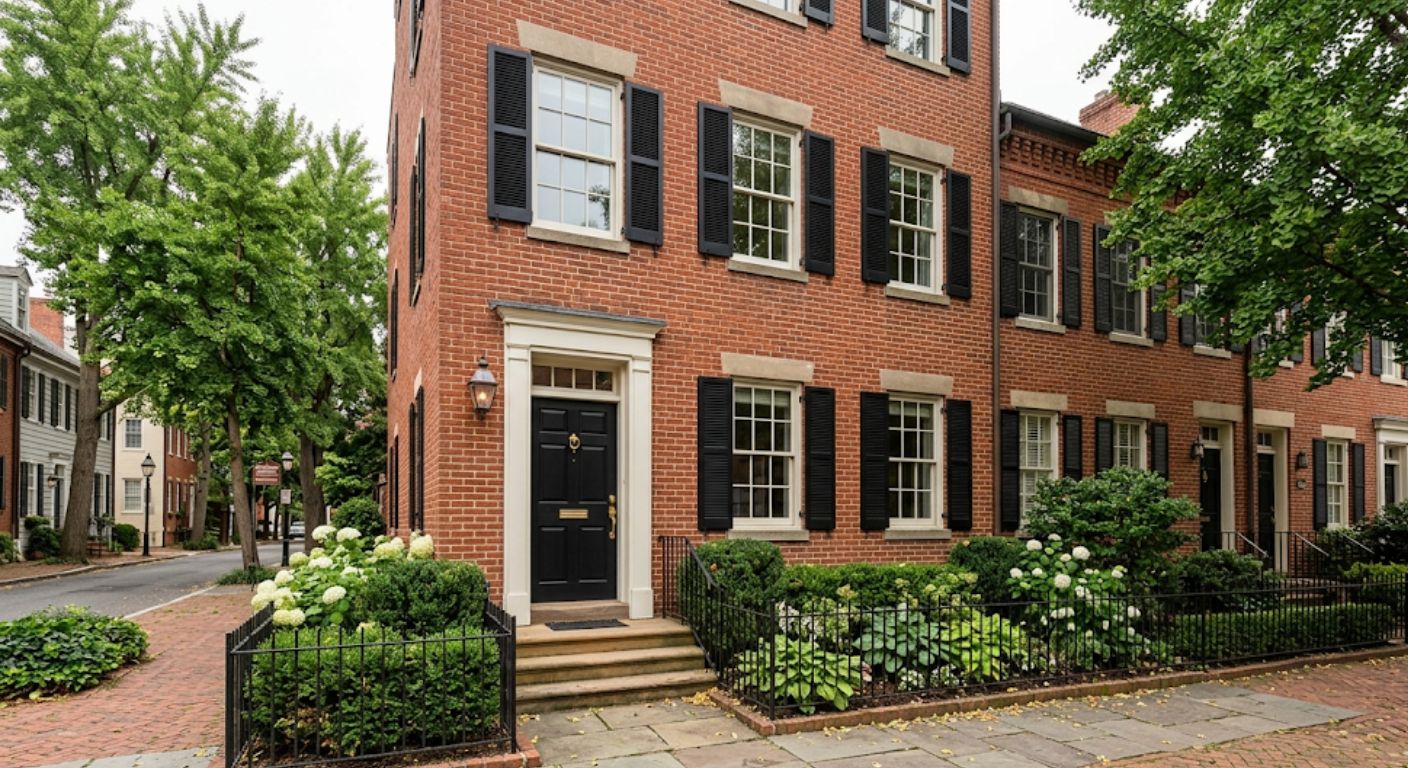
The DC metro real estate market has historically shown resilience during broader economic uncertainty, though conditions vary by neighborhood and price point.
When broader economic signals are mixed, buyers and sellers in the DC metro area start asking the same kinds of questions. Is now still a good time to buy? Should I wait to list? What happens to home prices if the economy slows down? What does all this uncertainty actually mean for my plans?
These are reasonable questions, and they deserve a straightforward answer rather than reassurance or alarm. Here is how economic uncertainty tends to affect the real estate market in Washington, DC, Maryland, and Virginia, and what it actually means for buyers and sellers right now.
How Economic Uncertainty Affects Buyer Behavior
When economic conditions feel uncertain, some buyers pull back. They wait for more clarity before committing to a major purchase. This tends to reduce the number of active buyers in the market, which means sellers face less competition for each listing.
At the same time, buyers who are still active during periods of uncertainty tend to be serious. They are not browsing out of curiosity. They have a real reason to move and they are looking carefully at what makes sense. These buyers do their due diligence thoroughly, negotiate more carefully, and are less likely to get caught up in competitive bidding that pushes prices beyond what they are comfortable paying.
For sellers, this means fewer showings on average, but the buyers who do show up are genuinely interested. The challenge is that those buyers are also more price-sensitive and more likely to push back on condition issues or other concerns.
How Economic Uncertainty Affects Home Prices
The relationship between economic uncertainty and home prices is not as simple as some headlines suggest. A slowing economy does not automatically mean falling prices. In markets with limited housing supply and strong underlying demand, prices tend to be resilient even when broader economic conditions are uncertain.
The DC metro area has historically benefited from a degree of insulation from national economic cycles. The concentration of federal government employment, government contractors, major research institutions, and international organizations creates a relatively stable employment base compared to markets more dependent on a single industry.
That does not mean the DC market is immune to economic pressures. It does mean that the impact here often looks different from what you might see in markets that are more directly tied to interest-rate-sensitive industries or sectors experiencing significant volatility.
What Rising or Volatile Interest Rates Mean Right Now
Interest rates are one of the biggest practical factors for buyers during periods of economic uncertainty. When rates are elevated or unpredictable, buyers’ monthly costs increase even if home prices stay stable. This can reduce purchasing power meaningfully and push some buyers to smaller homes, different neighborhoods, or a decision to keep renting.
Sellers are affected by rate volatility too. When rates are high, the pool of qualified buyers at any given price point shrinks. This can lengthen days on market and put more pressure on pricing. Sellers who price accurately given current conditions tend to navigate this better than those who price based on what they could have gotten when rates were lower.
What This Means for Sellers in the DC Metro Area
Sellers considering listing in an uncertain economic environment should focus on what they can control. Condition, staging, and accurate pricing matter more when buyer demand is softer. Buyers who have more choices and are watching their budgets carefully are less likely to overlook a home that is overpriced or shows poorly.
The sellers who do best in these conditions tend to be the ones who prepare the home thoroughly, price it honestly relative to the current market, and commit to the process rather than testing the market half-heartedly. Hesitant pricing in an uncertain market typically produces worse outcomes than clear, confident positioning at the right number.
What This Means for Buyers in the DC Metro Area
For buyers, economic uncertainty can actually create opportunity. Sellers who need to move are still selling, and with fewer competing buyers in the market, there is sometimes more room to negotiate on price, terms, and repairs than there would be in a more heated market.
The risk for buyers is letting uncertainty paralyze the decision entirely. Waiting for perfect conditions rarely produces the outcome people hope for. Interest rates, prices, and inventory all move, and the conditions that feel uncertain today may look very different in a year, in either direction.
The decision to buy should ultimately be based on your personal situation, your financial readiness, your timeline, and the quality of the specific home you are considering. Economic conditions are a factor, but they are rarely the determining one.
How Matt Cheney Helps Clients Navigate Uncertainty
Matt has worked through multiple market cycles in DC, Maryland, and Virginia over more than 22 years. He has seen how buyers and sellers respond to rising rates, economic slowdowns, and periods of significant uncertainty, and he has seen which approaches hold up and which ones tend to backfire.
The consistent pattern is that clear, well-prepared, and honestly priced sells. And buyers who are financially ready and focused on the right home for their needs tend to find them, even when the broader picture is complicated.
Frequently Asked Questions
Should I wait to buy a home in DC until the economy stabilizes?
Waiting for perfect economic conditions is a strategy that rarely plays out as intended. Markets do not announce when they have stabilized. The more useful question is whether you are financially ready, whether the home you are considering makes sense for your life, and whether the terms of the purchase work for you now, not in theory at some future point.
Will home prices in DC fall if there is a recession?
The DC metro area has historically been more resistant to significant price drops than many other markets, largely because of the stability of the federal employment base. That said, no market is entirely protected, and conditions vary significantly by neighborhood and price point. The best way to assess your specific situation is to look at the current data for the area you are considering.
How do high interest rates affect home buying in the DC area?
Higher rates increase monthly costs for buyers who are financing a purchase. This reduces purchasing power at any given price point and can affect how many buyers are actively looking in a specific range. It does not necessarily mean prices fall, but it does affect the dynamics of offers, negotiation, and how long homes sit before selling.
Is it a good time to sell a home in DC during economic uncertainty?
If you need to sell, the conditions of the current market are what they are, and preparing and pricing correctly gives you the best outcome in any environment. If you have flexibility on timing, your agent can give you a clear-eyed assessment of what the current market looks like for your specific home and help you decide whether waiting makes sense.
How does the DC market compare to other cities during economic downturns?
The DC metro area tends to show more resilience than markets heavily tied to a single industry, due largely to the size and stability of the federal government and related sectors. That said, the real estate market here is not a monolith. Upper Northwest DC and close-in suburbs often behave differently from markets in more distant suburbs or areas more directly tied to private sector employment.
Final Word
Economic uncertainty is real, and it is reasonable to factor it into major decisions. But the best real estate decisions in any environment tend to be grounded in specifics, your financial situation, the quality of the home you are buying or selling, and the current conditions in the specific market where you are active, rather than waiting for a national headline to tell you the coast is clear.
If you want to talk through what the current environment means for your situation in DC, Maryland, or Virginia, reach out. A clear, direct conversation is a good place to start.
About Matt Cheney
Matt Cheney is a top-producing real estate advisor with Compass in Washington, DC, guiding buyers and sellers across DC, Maryland, and Virginia through high-stakes moves, from luxury sales to estate settlements, downsizing, and divorce-related transactions. With over $779 million in career sales volume and 22 years of experience, including more than two decades working on complex and sensitive real estate situations, Matt is known for calm, strategic guidance and brings hundreds of successful sales to clients seeking clarity and support during life transitions.