

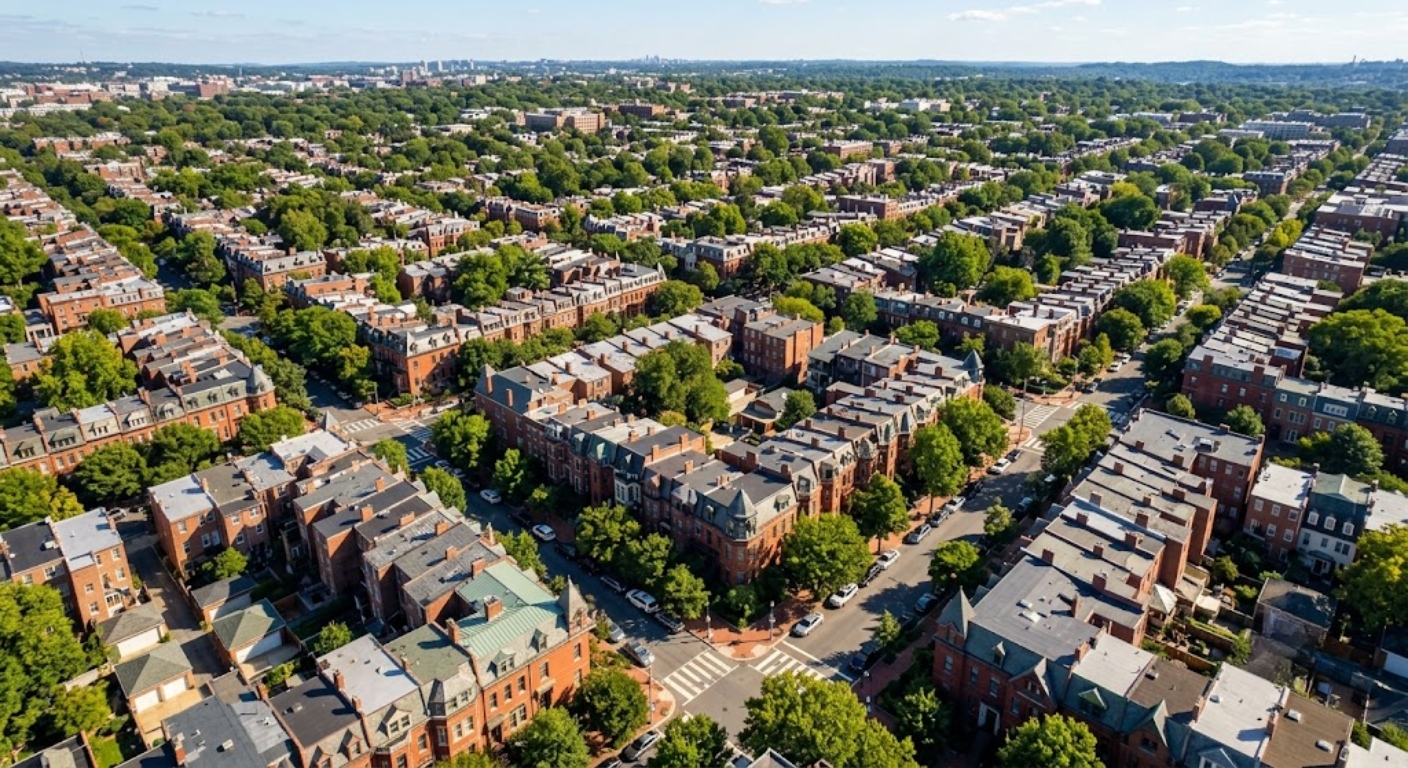
The DC luxury market in the second half of 2026 reflects more inventory, longer days on market, and a more selective buyer pool across the region.
A Market That Has Shifted, Not Collapsed
The DC luxury real estate market heading into the second half of 2026 is different from what buyers and sellers experienced a few years ago, but it is not a distressed market. What has changed is the pace, the leverage, and the expectations required to move successfully in either direction. Understanding those shifts clearly is more useful than trying to frame the current moment as either uniformly good or uniformly bad.
The headline numbers tell part of the story. According to Bright MLS data, the luxury benchmark price in Washington DC has reached approximately $1,795,000 as of mid-2026, reflecting a roughly 9% increase year over year. Inventory across the market has grown significantly during the same period, with active listings up more than 30%. If you have any questions about this data or the report it comes from, Matt is happy to walk you through it. Both of those things are true simultaneously, and they point to a market where prices have held but where sellers need to work harder to attract buyers in an environment where buyers have more choices.
Inventory: What Has Changed and What It Means
The inventory increase has not been uniform. Much of the growth in available listings has been concentrated in the condo segment, where supply has expanded considerably and buyer demand has not kept pace. Condo sellers in 2026 are facing longer days on market, more downward pressure on price, and a buyer pool that has meaningful leverage. For buyers who are open to condos, this is a notably different market than it was twelve to eighteen months ago.
Detached single-family homes in prime locations have held their footing better. In neighborhoods like Georgetown, Kalorama, Foxhall, and parts of Northwest DC, well-priced detached homes with updated interiors continue to attract serious buyers. The inventory increase in this segment has been more modest, and the buyer pool remains steady. That does not mean pricing can be aggressive, but it does mean the dynamics are meaningfully different from what condo sellers are experiencing.
For buyers and sellers who want to track DC metro market data over time, Redfin’s Washington DC housing market data provides monthly updates on median prices, days on market, and inventory trends across the region.
What Buyers Are Seeing in the Second Half of 2026
Buyers entering the DC luxury market now have more options than they had in the past two or three years and, in most sub-segments, more time to evaluate them. The compressed, multiple-offer situations that defined much of the 2021 to 2023 period have largely given way to a more deliberate buying process where due diligence gets done and offers are negotiated rather than waived.
According to Bright MLS data, roughly one in three luxury transactions in DC is still closing as an all-cash deal, which reflects the profile of buyers active at this level. Competition for specific properties that check all the boxes can still be real, particularly for turnkey homes in the most sought-after neighborhoods. But the broader environment gives buyers more room to be selective, more flexibility on contingencies, and more realistic opportunities to negotiate on price and terms.
You may also like: What are the most desirable neighborhoods for high-end homes in Washington DC, What Buyers in the DC Metro Area Should Know About Contingencies Before Making an Offer, and What Every Home Seller in Washington DC Needs to Know Before Listing
What Sellers Need to Understand Heading Into the Fall
Sellers who are planning to list in the second half of 2026 are entering a market where preparation and pricing are not optional. The buyers who are active at the luxury level have seen enough properties to recognize when a home is priced fairly and presented well. They are evaluating finishes, condition, functionality, and value at the same time. A home that is priced correctly and shows well can still generate strong results. A home that is priced above the market or presented without care tends to sit, and sitting in 2026 is harder to recover from than it was in a faster market.
Fall can be a productive window. Buyers who are motivated to close before year end, executives and professionals with flexible timelines, and buyers who missed spring all remain active in the fall market. DC luxury market updates from an agent with current local data are worth reviewing before finalizing your timing and strategy.
Frequently Asked Questions About the DC Luxury Market in H2 2026
Has the DC luxury market gotten softer in 2026?
It has become more balanced. Prices at the luxury level have generally held, with the benchmark price up year over year. What has shifted is the pace of sales and the buyer-seller dynamic. Inventory is higher, days on market have extended, and buyers have more options and leverage than they had in prior years. That is a different condition from a price collapse, but it does require sellers to approach the market more strategically than before.
Are luxury home prices falling in Washington DC?
The broader DC market has seen modest price softening, particularly in the condo segment. The luxury segment, especially for detached single-family homes in prime neighborhoods, has been more resilient. The luxury benchmark price has increased year over year, though individual outcomes depend heavily on the property, the neighborhood, and how well the home is priced and presented.
Is DC’s luxury market performing differently from the suburbs?
Yes, meaningfully so. DC proper, particularly the in-demand Northwest neighborhoods, has shown different dynamics than some suburban markets in Maryland and Virginia. Within the suburbs, close-in areas like Bethesda, Chevy Chase, and McLean have maintained stronger demand for detached homes than outer suburban markets. The picture is highly localized, which is why neighborhood-specific data matters more than metro-wide averages.
What should luxury buyers and sellers focus on most in H2 2026?
Buyers should focus on readiness and having a clear sense of their priorities so they can move when the right property appears. Sellers should focus on accurate pricing based on current conditions and on presenting the home at its best before going to market. Both groups benefit from working with someone who has direct, current knowledge of their specific sub-market rather than relying on general market sentiment.
Matt Cheney | Compass Real Estate is committed to the principles of the Fair Housing Act and the Equal Opportunity Act. All real estate services are provided without regard to race, color, national origin, religion, sex, familial status, or disability.
About Matt Cheney
Matt Cheney is a top-producing real estate advisor with Compass in Washington, DC, guiding buyers and sellers across DC, Maryland, and Virginia through high-stakes moves, from luxury sales to estate settlements, downsizing, and divorce-related transactions. With over $779 million in career sales volume and 22+ years of experience, Matt is ranked in the Top 1.5% of agents nationally by RealTrends America’s Best. He is known for calm, strategic guidance, bringing clarity and support to clients navigating complex and sensitive real estate situations.