

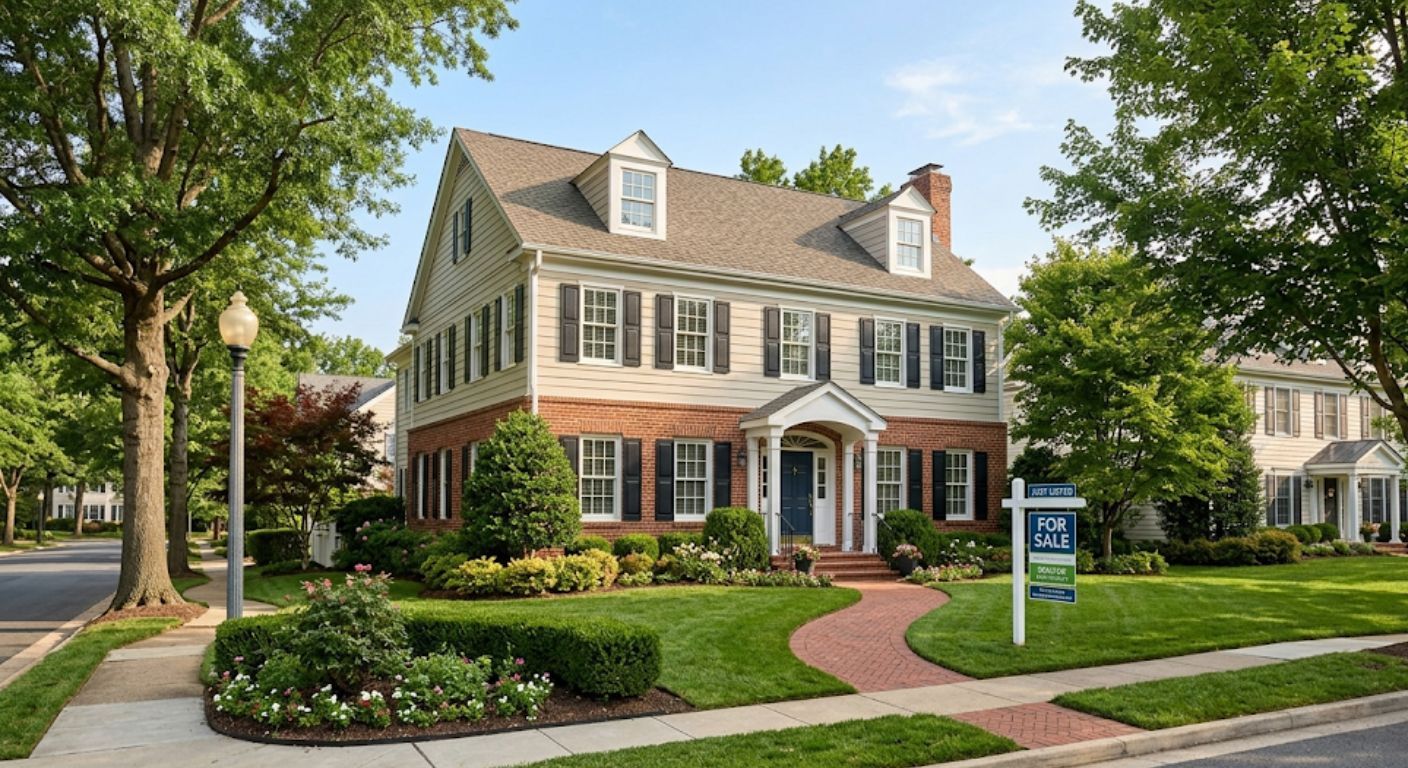
A listed home in the Washington DC metro area, representing the timing and strategy decisions buyers face when making contingent offers.
Buying a home when you already own one is rarely simple. The timing, the financing, and the negotiations all involve a layer of complexity that straightforward purchases do not. One of the options buyers in this situation consider is a contingent offer, an offer that gives them the right to walk away if their current home does not sell within a certain period.
Contingent offers come up in many DC metro transactions, and buyers who understand how they work, and how sellers typically respond, are in a better position to decide when to use one and when a different approach makes more sense.
What a Home Sale Contingency Actually Is
A home sale contingency is a clause in a purchase contract that gives the buyer a defined window to sell their existing home before the purchase of the new one proceeds. If the buyer’s current home does not go under contract or close within that window, the buyer has the right to cancel the contract and typically recover their earnest money deposit.
The contingency protects buyers from being obligated to purchase a new home while still owning their previous one. Without it, a buyer who could not close on the sale of their existing home might find themselves trying to carry two mortgages or forced to sell under pressure.
There are a few variations of how these contingencies are structured, but the general framework is the same: the purchase moves forward only if the buyer’s existing home sells.
How Sellers in DC, Maryland, and Virginia Typically Respond
Sellers’ reactions to contingent offers vary based on the market conditions at the moment and the specific terms of the offer. In a competitive market where the seller has multiple offers, a contingent offer is often at a disadvantage compared to a clean offer with no contingencies. Sellers generally prefer certainty, and a buyer whose offer depends on their own home selling introduces a variable the seller cannot control.
In a slower market, or when a home has been sitting for a while without strong interest, sellers may be more willing to accept a contingent offer, sometimes with what is called a kick-out clause. A kick-out clause allows the seller to continue marketing the home and accept another offer if one comes in, giving the original buyer a short window to remove their contingency or cancel.
The bottom line is that contingent offers are more accepted in some market conditions than others, and knowing which kind of market you are in matters before deciding whether to structure an offer this way.
When a Contingent Offer Makes Sense
Contingent offers tend to make the most sense when:
- You need the equity from your current home to complete the purchase and you do not have another financing solution
- The home you are buying has been on the market for a while and the seller has fewer alternatives
- Your current home is well-positioned to sell quickly and you can demonstrate that with a listing that is already active or about to go live
- The market conditions favor buyers, giving you more room to negotiate on terms including contingencies
Contingent offers become more complicated when the home you are buying has active competition or when your own home is not yet on the market. Sellers and their agents look at the full picture, including whether your home is listed, how it is priced, and how quickly it is likely to sell.
You may also like: What Sellers in DC and Maryland Should Know About Contingent Offers in 2026, What Buyers in the DC Metro Area Should Know About Contingencies Before Making an Offer, and What Every Home Seller in Washington DC Needs to Know Before Listing
Alternatives to a Contingent Offer
Some buyers in this situation choose to list their current home first and begin touring before making an offer on anything. This approach removes the contingency question but creates a timing challenge: you may not be able to find the right home before your current sale closes, or you may find yourself without a place to go.
Bridge financing is another option in some situations. This involves borrowing against the equity in your current home to fund the down payment on the new one, allowing you to purchase without a contingency. Bridge loans are not available in every situation and come with their own costs and risks, so they are worth discussing with a lender before counting on this path.
Some buyers also negotiate a rent-back agreement on their existing home after closing, giving themselves more time to find and close on the next purchase without the pressure of a hard deadline.
How Matt Cheney Helps Buyers Think Through This Decision
The right approach when buying and selling at the same time depends heavily on the specifics: your financial situation, the home you are buying, the current state of the market, and your personal timeline. There is not a one-size answer, and the path that works well for one buyer may not work for another.
Matt has helped buyers navigate this kind of timing challenge across DC, Maryland, and Virginia for more than 22 years. The goal is always to find the approach that gives you the best chance of buying what you want without taking on unnecessary risk or putting yourself in a difficult position with the sale of your current home.
Frequently Asked Questions
What is a home sale contingency in real estate?
A home sale contingency is a contract clause that allows a buyer to back out of a purchase if they are unable to sell their existing home within a specified period. It protects buyers from owning two homes simultaneously if their current home does not sell as expected.
Will sellers in DC accept a contingent offer?
It depends on the market. In competitive markets with multiple offers, sellers are less likely to accept a contingent offer. In slower markets or on homes with longer days on market, sellers may be open to it, often with a kick-out clause that lets them continue marketing the home. Your agent can assess the likelihood based on the current conditions.
What is a kick-out clause?
A kick-out clause in a contingent contract gives the seller the right to continue showing and marketing the home. If another acceptable offer comes in, the seller can notify the original buyer, who then has a short window, often 48 to 72 hours, to remove their contingency and proceed or cancel the contract.
Should I list my current home before making an offer?
In many cases, having your current home actively listed, or at minimum under contract, strengthens a contingent offer considerably. Sellers are more willing to accept a contingency when they can see that the buyer’s home is already on the market and moving toward a sale.
Are there alternatives to a contingent offer when buying and selling at the same time?
Yes. Bridge financing, timing the sale and purchase closely together, or negotiating a rent-back arrangement on your current home are all options worth discussing with your agent and lender. The right approach depends on your financial situation and the specific homes involved.
Final Word
Contingent offers are a legitimate tool, but they require a clear understanding of the market and the seller’s position before you rely on one. Getting the strategy right from the beginning, whether that means a contingent offer, a bridge loan, a careful timing approach, or something else, is worth the conversation before you start touring homes.
If you are working through the buy-sell timing challenge in DC, Maryland, or Virginia, reach out. Getting the sequencing right is one of the more complicated parts of a move, and a clear plan makes it much more manageable.
About Matt Cheney
Matt Cheney is a top-producing real estate advisor with Compass in Washington, DC, guiding buyers and sellers across DC, Maryland, and Virginia through high-stakes moves, from luxury sales to estate settlements, downsizing, and divorce-related transactions. With over $779 million in career sales volume and 22 years of experience, including more than two decades working on complex and sensitive real estate situations, Matt is known for calm, strategic guidance and brings hundreds of successful sales to clients seeking clarity and support during life transitions.