

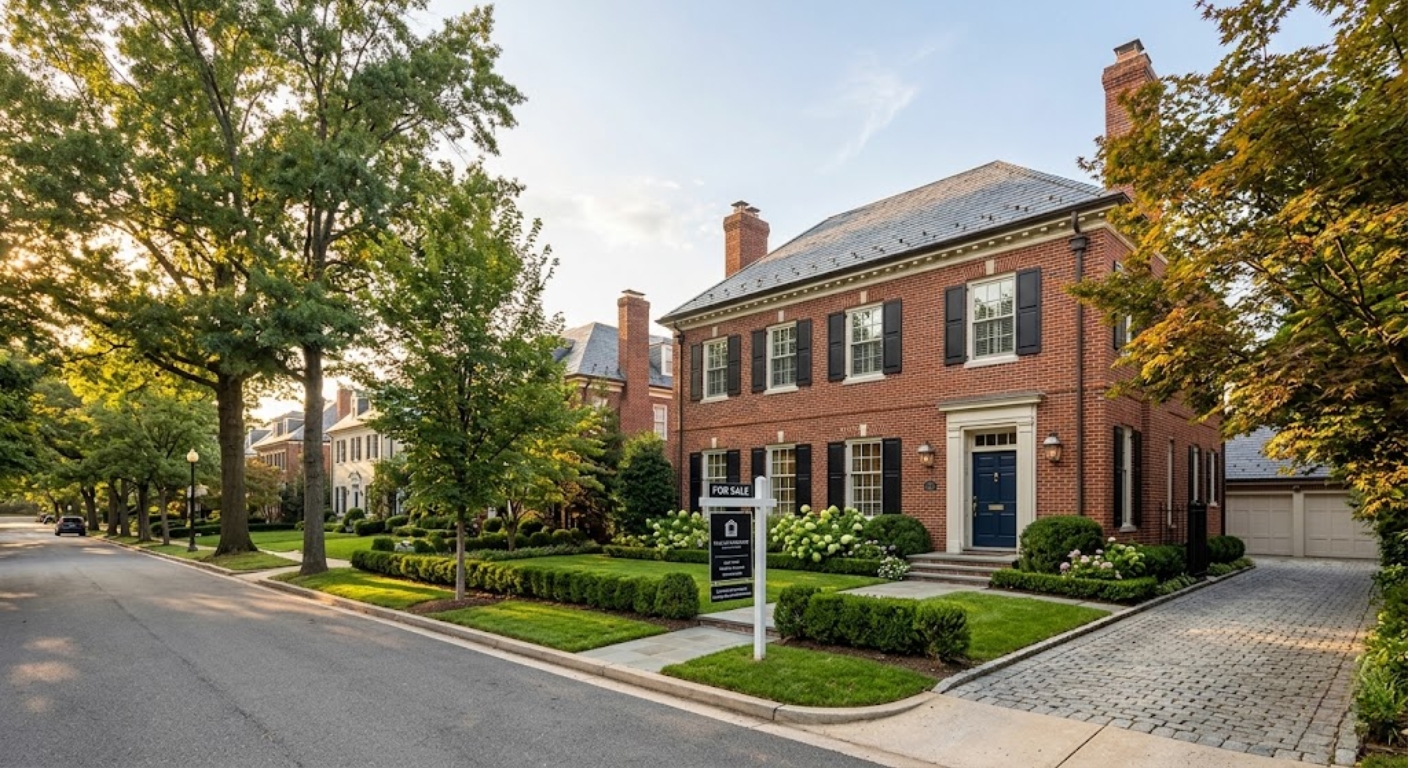
In a cooling market, how a luxury home is priced and prepared matters more than it does when conditions strongly favor sellers.
What a Cooling Market Actually Means
A cooling market does not mean prices are collapsing or that sellers cannot do well. It means the balance of power between buyers and sellers has shifted, usually gradually. Homes take longer to sell. Multiple offer situations become less common. Buyers ask for more concessions. Price reductions happen more often. None of that means it is a bad time to sell. It means it is a time when the details matter more.
In the DC luxury market specifically, cooling tends to be more gradual and less dramatic than in broader residential markets. The pool of buyers at the high end is smaller and more stable. They are less rate-sensitive in many cases and tend to be buying for reasons tied to their careers and life circumstances more than to market timing. That creates some natural cushion in this segment, but it does not mean luxury sellers can ignore the shift.
What Changes in a Cooler Market
A few things tend to change noticeably when the market cools. Showing activity slows. Feedback from buyers and their agents becomes more critical. Days on market stretch. Offers, when they come, often include contingencies that would not have appeared in a hotter environment, inspection contingencies, financing contingencies, and sometimes appraisal contingencies even at the luxury level.
The most visible signal of a cooling market is typically the change in days on market. When homes that used to go under contract in one to two weeks are now sitting for a month or more, the market has shifted. Sellers who understand that and adjust their approach tend to do better than those who wait for conditions to return to what they were.
How Pricing Changes in a Cooling Market
This is where the most common mistakes happen. In a hot market, aggressive pricing sometimes works because buyer demand is strong enough to pull offers up. In a cooling market, that same approach tends to backfire. Buyers have more choices and more time. An overpriced listing collects days on market and starts to carry a stigma that is hard to shake even after a reduction.
The homes that sell well in cooling conditions are the ones that come out at a price that is clearly defensible based on recent comparable sales. Buyers in the luxury tier are well-advised, and their agents will run the same numbers your agent does. A price that cannot be supported by comps will be recognized as such from the start. DC luxury market data and a realistic pricing conversation with your agent are worth having before you list, not after you have been sitting for weeks.
What Does Not Change
A few things remain constant regardless of market conditions. Presentation quality still matters. Buyers at the luxury level still expect a home that is well-maintained, well-prepared, and shows well in photographs and in person. Cutting corners on preparation in a cooling market is a mistake. If anything, the bar for presentation is higher when buyers have more options to choose from.
Marketing still matters as well. Reaching the right audience through the right channels remains important. And an agent’s network, their relationships with active buyer’s agents, still plays a meaningful role in generating early qualified activity on a new listing.
Market data consistently show that homes priced at or near market value from the start tend to outperform those that start high and are reduced later, across most market conditions. That dynamic is more pronounced in a cooling market than in a hot one.
When to Think About Adjusting
If a well-prepared luxury listing has been on the market for more than three to four weeks without a serious offer, that is typically a signal worth taking seriously. The most useful question is whether the issue is price, preparation, marketing, or some combination. Your agent should be giving you honest feedback and recommending next steps based on what is actually happening in showings and buyer response, not just offering reassurance.
A well-timed price adjustment in a cooling market, done early rather than after the listing has sat too long, can reset buyer attention and generate renewed activity. Waiting too long to make that call often means the adjustment has to be larger to make an impact.
Frequently Asked Questions About Selling a Luxury Home in a Cooling DC Market
How do I know if the DC luxury market is actually cooling?
Key signals include rising days on market across comparable properties, fewer multiple offer situations, more price reductions among active listings, and a widening gap between list and sale prices. Your agent can pull current data on these metrics for your specific neighborhood and price range.
Should I wait until the market improves before listing?
Not necessarily. Timing the market is difficult, and cooling markets can persist for extended periods. If you have a strong reason to sell, the more useful question is how to position your home well in current conditions rather than when conditions will shift. A well-priced, well-prepared property can still find a qualified buyer in a cooling market.
Will I have to make concessions to buyers in a cooler market?
Possibly. Buyers in cooling markets are more likely to ask for closing cost assistance, inspection repairs, or contingency periods that they might have waived in a competitive environment. Whether and how much to concede depends on your specific situation and how long you are willing to wait for a buyer who asks for less. Your agent can help you evaluate each offer in context.
About Matt Cheney
Matt Cheney is a top-producing real estate advisor with Compass in Washington, DC, guiding buyers and sellers across DC, Maryland, and Virginia through high-stakes moves, from luxury sales to estate settlements, downsizing, and divorce-related transactions. With over $779 million in career sales volume and 22+ years of experience, Matt is ranked in the Top 1.5% of agents nationally by RealTrends America’s Best. He is known for calm, strategic guidance, bringing clarity and support to clients navigating complex and sensitive real estate situations.
Matt Cheney | Compass Real Estate is committed to the principles of the Fair Housing Act and the Equal Opportunity Act. All real estate services are provided without regard to race, color, national origin, religion, sex, familial status, or disability.