

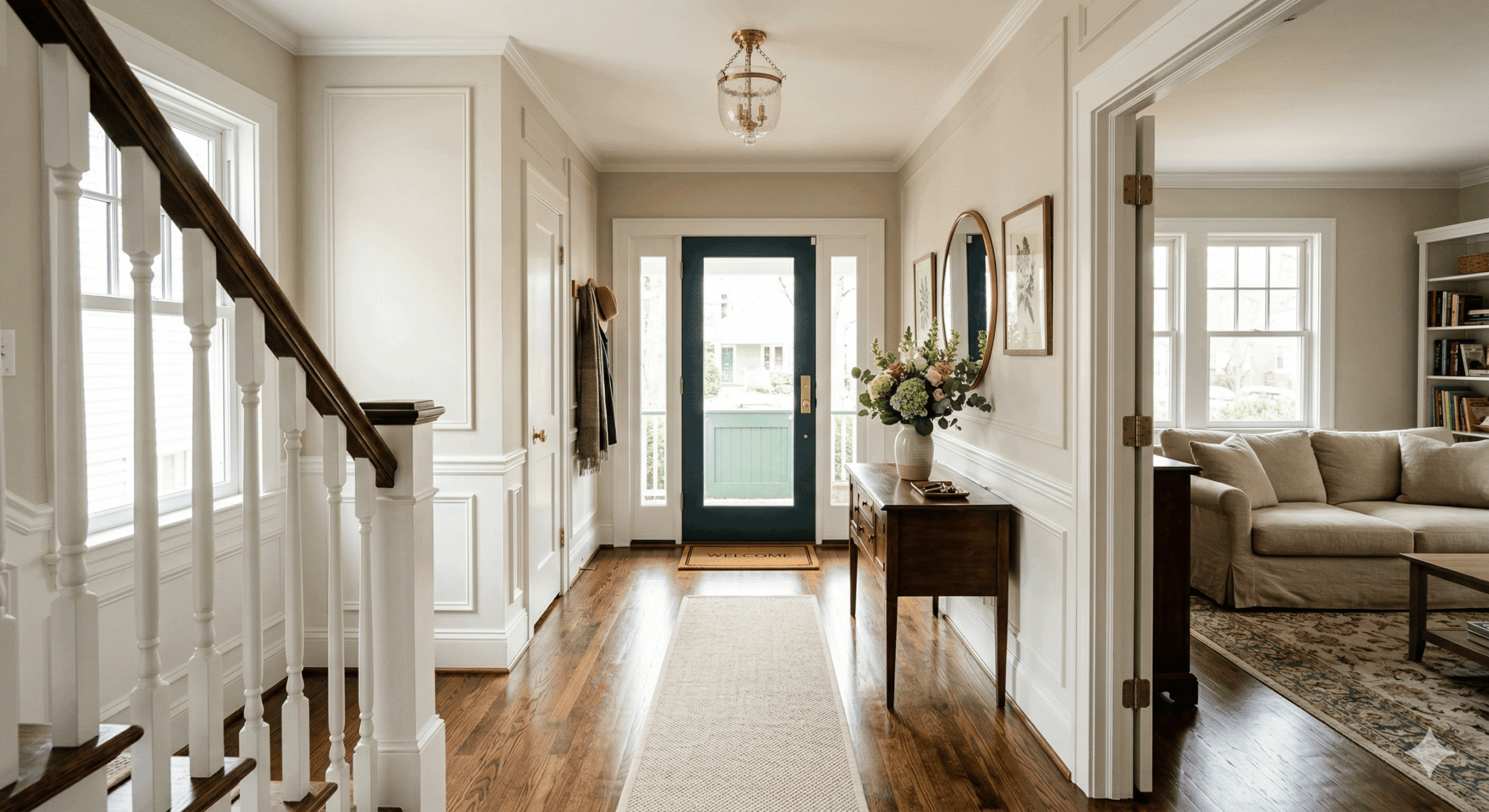
The homes that sell fastest and for the most in the DC metro area are almost never the ones with the biggest renovation budgets. They are the ones that are clean, beautifully presented, and priced with precision.
You have decided it is time. The kids are gone, the house is bigger than you need, and the next chapter is calling. Now comes the practical question that almost every seller in Bethesda, Northwest DC, McLean, Chevy Chase, and across the DC metro area eventually asks: what should I actually do to the house before I put it on the market?
The answer is almost never “renovate everything.” And it is almost never “do nothing.” The truth sits in between, and finding it requires honest thinking about what today’s buyers in your specific neighborhood actually respond to, and what improvements are likely to return more than they cost in buyer perception, offer strength, and final sale price.
After more than two decades and $779 million in career sales across Washington, DC, Maryland, and Virginia, I have watched sellers make both mistakes: spending $80,000 on a kitchen renovation that returned $40,000, and skipping a $3,000 painting job that would have transformed buyer reaction. The goal of this guide is to help you avoid both.
These are the updates that consistently make a difference for empty nesters selling family homes in the DC metro area, organized by what they cost, what they deliver, and how to think about each one.
Start Here: The Right Mindset for Pre-Sale Updates
Before you pick up a paintbrush or call a contractor, it helps to get clear on one foundational principle: you are not updating this home for yourself. You are updating it for the buyer who does not yet know it exists.
That shift in perspective changes almost every decision. The paint color you have loved for fifteen years may feel warm and familiar to you, but if it reads as dated to a buyer walking through the door in 2026, it becomes an obstacle rather than an asset. The kitchen that served your family beautifully may feel perfectly functional to you, but if comparable homes in Bethesda or Chevy Chase are showing updated appliances and clean surfaces, yours will be judged against that standard.
This does not mean erasing everything personal about your home. It means presenting the best version of what you have in a way that connects with buyers rather than creating friction. The improvements that do this most reliably are also, in most cases, the ones that cost the least. They involve attention, effort, and selectivity more than major capital investment.
With that framing in place, here is where to focus.
Deep Cleaning and Decluttering: The Highest-Return Investment in Real Estate
No improvement delivers a better return than a genuinely clean, decluttered home. None. And yet it remains the most consistently underestimated step in the pre-sale process, particularly for sellers who have lived in their homes for fifteen or twenty years and have accumulated the natural accumulation of a full family life.
Buyers in Bethesda, McLean, Georgetown, and Northwest DC are sophisticated. They are looking at multiple properties in a weekend. They notice everything. A home that smells clean, presents clutter-free, and feels light and airy creates an immediate emotional response that is hard to quantify but very easy to recognize: the buyer wants to be in the space. A home that feels full, heavy, or tired creates the opposite response, regardless of its underlying quality.
For empty nesters, decluttering often means making decisions that have been deferred for years. Children’s rooms that still hold furniture and belongings from high school. Basements that accumulated twenty years of storage. Garages filled with equipment that no longer gets used. Attic spaces that have not been fully opened since the last decade.
The process takes time, and starting it early is one of the most valuable things you can do for your sale. Donation partners, estate sale companies, and junk removal services can all help move volume efficiently. The goal is not to strip the home of personality. It is to create breathing room that allows buyers to see the bones of the property, the architecture, the light, the flow, and the proportions, rather than the accumulated life that has been lived in it.
Professional deep cleaning after decluttering is a worthwhile investment. In the DC metro area, a thorough cleaning of a larger family home typically costs $300 to $700 and transforms how a home presents. Windows, baseboards, grout lines, appliances, and every surface that a buyer’s eye might rest on deserve attention. The return is immediate and tangible.
Fresh Paint: The Single Most Impactful Dollar-for-Dollar Update
If there is one pre-sale update that reliably changes how buyers experience a home in the DC metro area, it is fresh paint in updated, neutral tones. It is not glamorous. It does not require a designer or a contractor. But the difference between a home with fresh, current paint and one with fifteen-year-old color choices that have scuffed and faded is enormous in terms of buyer perception.
The colors that work best in 2026 for selling DC metro family homes are clean, warm neutrals. Soft whites with warm undertones, warm greiges, and light taupes are all strong choices that read as fresh and contemporary without being stark or cold. Benjamin Moore’s Chantilly Lace and Classic Gray, Sherwin-Williams’ Accessible Beige and Agreeable Gray, and similar options have proven consistent performers in DC, Maryland, and Virginia homes across a range of architectural styles.
Accent walls and bold color choices that felt current fifteen years ago almost always benefit from neutralization before listing. Bright yellows, deep greens, saturated reds, and other statement colors that were popular in the early 2000s can significantly date a home’s feel and create mental work for buyers who have to imagine the space repainted before they can see themselves living in it. Eliminating that mental friction costs paint and labor. It returns buyer enthusiasm.
For a larger family home in Bethesda, Chevy Chase, or Northwest DC, a full interior repaint by a professional painter typically costs $6,000 to $14,000 depending on home size, ceiling height, and condition. If that feels like a significant expense, prioritizing the primary living areas, the entry, the main hallway, the living room, the dining room, and the kitchen, delivers most of the impact at a fraction of the full cost. Bedrooms, particularly those that will be shown as secondary rooms, can often be addressed with touch-ups rather than full repaints.
Exterior paint or trim refresh is equally important for the first impression. Buyers form an opinion before they walk through the front door. A freshly painted front door in a considered color, clean trim, and well-maintained exterior surfaces signal a home that has been cared for, which sets a positive tone for everything that follows inside.
Curb Appeal Updates That Make a Measurable Difference
First impressions in real estate are formed faster than most sellers realize. Studies consistently show that buyers make an initial emotional judgment about a home within seconds of arriving. In established DC metro neighborhoods like Spring Valley, Potomac, McLean, and Chevy Chase, where the quality of landscaping and exterior presentation is uniformly high, standing out requires that your home match or exceed what the street expects.
The good news is that curb appeal improvements are almost always among the lowest-cost, highest-impact investments available to sellers. Here is where to focus.
Lawn and garden condition matters more than most sellers expect. A well-edged lawn, clean beds, removed dead or overgrown plantings, and fresh mulch in garden beds create an impression of care and maintenance that buyers carry with them through the entire showing. In warmer months, seasonal color through annuals near the entry or in containers adds vibrancy that photographs well and registers positively on arrival.
The front door is the single most important exterior element. A freshly painted front door in a strong, classic color, think deep navy, rich black, a sophisticated green, or a warm red, creates focal energy and signals personality. Adding or polishing existing hardware, replacing a dated light fixture, and ensuring the door number is clean and visible round out the entry package at minimal cost.
Power washing the driveway, walkways, exterior siding, and any hardscape is a fast and inexpensive transformation that removes years of grime and makes a home look significantly fresher than before. For brick colonials and Craftsman homes common in Northwest DC and close-in Maryland suburbs, power washing often reveals the original warmth and character of the exterior that had been obscured by weathering.
Gutter cleaning and minor roof maintenance are not glamorous, but they matter on inspection and in buyer perception. Overflowing gutters, visible moss, and missing shingles all create questions in a buyer’s mind about what else might have been deferred. Addressing them before listing removes that friction proactively.
Kitchen Updates That Make Sense Before Selling in the DC Area
The kitchen is the room buyers weigh most heavily, which is why sellers often wonder whether a full kitchen renovation is worth doing before they list. In most cases, for sellers who are planning to move, the answer is no. A full kitchen renovation in a DC metro home costs $40,000 to $100,000 or more and rarely returns its full cost in the sale price, particularly when buyers may prefer to customize the kitchen themselves anyway.
What does make sense is a series of targeted improvements that bring the kitchen up to a competitive presentation standard without the cost and disruption of a full renovation.
Cabinet refreshing is one of the highest-return kitchen updates available. If your cabinets are structurally sound but dated in color, painting them in a clean, current tone, typically white, off-white, or a soft gray, can transform the entire feel of the kitchen for a fraction of replacement cost. Cabinet painting by a skilled painter costs $3,000 to $7,000 for a typical kitchen and returns dramatically more in buyer perception. New hardware, pulls and knobs in brushed nickel, matte black, or warm brass, completes the update for a few hundred dollars more.
Countertops are a higher-cost consideration. If your existing countertops are in good condition, even if they are not the most current material, clean presentation matters more than replacement. If they are chipped, stained, or in genuinely poor condition, replacement with a clean, neutral-toned quartz or granite surface is worth considering. Entry-level quartz countertop replacements in a medium-sized kitchen can be accomplished for $3,000 to $6,000 and significantly elevate buyer response.
Appliances matter less than most sellers assume, provided they are clean, functional, and reasonably current. A well-maintained stainless steel refrigerator, range, and dishwasher from five to ten years ago presents perfectly well to buyers. Replacing appliances solely for the sake of listing is generally not necessary. The exception is an appliance in visible disrepair or with a finish that has significantly degraded. In those cases, replacement is the right call.
Lighting is frequently overlooked and disproportionately impactful. A dated pendant or flush-mount fixture over the kitchen island or dining area can be replaced for $200 to $600 and immediately modernizes the space. Recessed lighting that has been on dimmer for years sometimes simply needs new bulbs at the correct brightness and color temperature to make the kitchen feel warm and inviting rather than dim and tired.
Bathroom Updates That Buyers Actually Notice
Bathrooms, like kitchens, carry disproportionate weight in buyer decision-making. And like kitchens, a full bathroom renovation before selling is rarely the right investment for an empty nester who is planning to move.
The bathroom updates that consistently move buyers in DC metro homes, without requiring a full gut renovation, are focused on cleanliness, light, and hardware.
Re-caulking is one of the most overlooked and highest-impact bathroom updates available. Pink, cracked, or stained caulk around the tub surround, shower, and sink instantly communicates age and maintenance neglect to buyers. Fresh white caulk applied cleanly costs under $100 in materials and a few hours of effort, and the visual transformation is remarkable. It is the definition of a low-cost, high-return pre-sale improvement.
Re-grouting tile in showers or on bathroom floors follows the same logic. Grout that has discolored over decades of use makes tile look dated even when the tile itself is in perfectly good condition. A professional grout cleaning and, where necessary, re-grouting or grout colorant application can restore the tile’s original appearance for a few hundred dollars and extend the perceived freshness of the bathroom significantly.
Fixture updates can be accomplished selectively and inexpensively. A dated vanity light bar, towel bars, toilet paper holder, and faucet can all be replaced in a matched finish for $400 to $900 per bathroom and produce a cohesive, updated look without touching the tile, vanity, or plumbing.
Vanity mirrors that are original to the home’s construction often benefit from replacement. Current frameless, simple-frame, or statement mirrors available at major home retailers cost $150 to $400 and visually anchor the vanity space in a way that reads as current and considered.
In primary bathrooms where the investment is more justified, painting existing vanity cabinets to match what you have done in the kitchen creates a cohesive story that buyers appreciate. A primary bathroom that is clean, bright, freshly painted, and detailed with current hardware and lighting competes effectively even against homes with more recent renovations, because presentation and condition matter as much as age of finishes to most buyers.

A clear, prioritized pre-sale checklist built around what actually moves buyers in your specific DC metro neighborhood is one of the most valuable tools an experienced advisor brings to the table.
Flooring: When to Refinish, When to Replace, and When to Leave It
Flooring is one of the areas where empty nesters selling DC metro family homes face the most variability. The right answer depends entirely on what you have, its current condition, and what comparable homes in your neighborhood are showing.
Hardwood floors are the most common flooring in established DC, Maryland, and Virginia family homes, and they are one of the most buyer-friendly features a home can offer. If your hardwoods are in good condition but have lost their luster after years of use, refinishing them is almost always worth the investment. Hardwood floor refinishing in a typical family home costs $3,000 to $6,000 and produces a transformation that buyers notice immediately. Gleaming hardwood floors throughout a home communicate quality and care in a way that no other flooring type can match.
If your hardwoods have significant damage, deep scratches, or staining that refinishing will not address, replacement with new hardwood or a high-quality engineered hardwood in a current tone is worth considering in primary living areas. Wide-plank hardwoods in warm oak or lighter tones are the current buyer preference in DC metro homes at middle and upper price points.
Carpet in bedrooms is generally acceptable to buyers in the DC metro area, provided it is clean and in reasonable condition. If the carpet is stained, worn, or carries odor, replacement is strongly recommended. Entry-level carpet replacement in bedrooms costs $1,500 to $4,000 depending on room count and square footage and eliminates a significant buyer objection at minimal cost.
Tile in kitchens and bathrooms should generally be left in place unless it is cracked, actively lifting, or in a condition that creates a negative impression. Replacing tile is expensive and disruptive, and buyers at the DC metro price points where most empty nesters are selling can generally look past dated but intact and clean tile more easily than they can overlook dirty or damaged tile.
Lighting Updates That Modernize a Home Without Major Investment
Lighting is consistently underestimated in its ability to change how a home feels and photographs. A home with good light, both natural and artificial, photographs beautifully, shows warmly, and feels larger and more inviting than a comparable home with inadequate or dated lighting.
Replacing dated light fixtures is one of the most cost-effective modernization steps available to sellers. Chandelier and pendant replacements in dining rooms and kitchens cost $300 to $800 per fixture and can shift the entire feel of a room from dated to current. Entry foyer fixtures, which are the first thing buyers see when they walk through the door, are particularly worth updating if they are from the original construction of the home.
Recessed lighting that is outdated in trim style or bulb type benefits from simple modernization. Replacing brass or bronze recessed trim rings with clean white or brushed nickel options costs $10 to $30 per fixture and takes minutes. Replacing incandescent or older bulbs with warm-white LED bulbs at 2700K to 3000K color temperature improves both the quality and consistency of light throughout the home and reduces the dimness that many older homes present when touring agents turn on every light.
Ensuring that every bulb in the home works before listing sounds obvious but is surprisingly often overlooked. A burned-out bulb in a closet, hallway, or bathroom reads as neglect to a detail-oriented buyer. Replacing every bulb in the home with matched warm-white LEDs costs under $100 and ensures the home photographs and shows at its best in every corner.
Staging: What It Is, What It Costs, and When It Makes Sense
Professional staging is the process of furnishing and decorating a home specifically to maximize buyer appeal during a sale. It is not the same as interior design, and it is not about making the home look like yours. It is about creating a visual story that helps buyers see themselves living in the space.
For empty nesters, staging presents a particular opportunity. A home that has been partially or fully vacated, where some furniture has been removed or rooms have been cleared, can feel hollow and hard for buyers to connect with. A well-staged home in that condition gives buyers a visual framework that fills the space with warmth and purpose and answers the question they are always silently asking: how does this work?
In the DC metro area, full professional staging for a three to five bedroom family home typically costs $3,500 to $8,000 for the first month, which covers the staging company’s design work, furniture and accessory rental, delivery, setup, and eventual removal. For homes in the $900,000 to $2.5 million range, which represents a significant portion of the empty nester selling market in Bethesda, McLean, Northwest DC, and Chevy Chase, staging is routinely among the highest-return pre-sale investments made.
Partial staging, which involves bringing in key accent pieces, art, and accessories to complement existing furniture rather than replacing it, is a more economical option that works well when the existing furnishings are in good condition and appropriately scaled for the rooms. Partial staging consultation and rental costs typically range from $1,000 to $2,500.
Virtual staging, which involves digitally adding furniture to photographs of empty rooms, is a lower-cost option used more often at entry price points. For the DC metro price ranges where most empty nesters are selling, physical staging is generally the stronger investment because it shapes the in-person showing experience, not just the photography.
A Pre-Sale Update Checklist for DC Metro Empty Nesters
Use this as a working framework when assessing your home. Not every item will be relevant to your specific property. Your advisor should walk you through which of these apply in your neighborhood and at your price point.
Cleaning and decluttering: Begin with a full declutter of every room including storage areas, then follow with a professional deep clean of the entire home including windows, appliances, grout, and all surfaces buyers will encounter.
Paint: Assess all interior walls and ceilings for condition and currency of color. Prioritize the entry, main living areas, kitchen, and primary bedroom. Repaint in warm neutrals where needed. Refresh exterior trim and the front door.
Curb appeal: Edge and clean up the lawn, refresh mulch in garden beds, add seasonal color near the entry, power wash the driveway and walkways, and address any peeling or faded exterior paint or trim.
Kitchen: Assess cabinet condition and consider painting if dated. Update hardware. Check appliance condition and appearance. Replace any lighting that reads as dated. Ensure countertops are clean, sealed, and chip-free.
Bathrooms: Re-caulk all tub, shower, and sink areas. Clean or re-grout tile where needed. Replace dated fixtures, mirrors, and light bars. Ensure all surfaces are genuinely clean and fresh-smelling.
Flooring: Have hardwoods professionally assessed for refinishing. Replace stained or worn carpet in bedrooms. Address any cracked or lifting tile.
Lighting: Replace dated or mismatched fixtures in key rooms. Ensure all bulbs are functioning and matched in color temperature. Add lamps or supplemental lighting in any room that photographs dark.
Deferred maintenance: Walk the home with a checklist mindset. Sticky doors, running toilets, dripping faucets, cracked switch plates, loose railings, and non-functioning outlets all create negative impressions on buyers and buyers’ inspectors. Addressing them before listing is almost always less expensive than addressing them as inspection concessions after an offer is in hand.
Pre-listing inspection: Consider hiring a licensed home inspector before you list. Understanding what an inspector is likely to find gives you the ability to address issues on your own terms rather than reactively during a contract negotiation. In the DC metro area, a pre-listing inspection typically costs $400 to $700 and can save multiples of that cost in avoided concessions.
Staging assessment: Have your advisor walk the home and recommend whether full, partial, or no staging is appropriate given your existing furnishings, the price point, and current buyer expectations in your neighborhood.
What Empty Nesters Should Not Spend Money On Before Selling
Equally important to knowing what to do is knowing what to skip. These are the investments that consistently fail to return their cost in the DC metro market for sellers who are not staying in the home.
Full kitchen renovations are rarely justified. At $50,000 to $100,000 or more, a full kitchen gut-renovation almost never returns its full cost in a sale price increase. Buyers at upper price points often prefer to customize the kitchen themselves. Targeted updates, as described above, deliver most of the buyer appeal impact at a small fraction of the cost.
Additions or major structural changes are not appropriate pre-sale investments. Any improvement that requires permits, significant construction time, and substantial capital is better left to the buyer. You will not recoup the cost, and the disruption to your timeline is significant.
Swimming pool installation is a common but costly mistake in some DC metro markets. While pools add value in some suburban neighborhoods, they are a divisive feature that can narrow your buyer pool as easily as they can expand it. Installing one before selling is almost never justified.
High-end appliance upgrades beyond what the market requires are often unnecessary. A $6,000 professional range in a kitchen that otherwise reads as dated does not move buyers in a meaningful way. The context of the whole kitchen matters more than any single element within it.
Over-personalizing during the staging process is the reverse of the staging goal. If you are adding new furniture or accessories before listing, keep them neutral and broadly appealing rather than reflective of your personal taste.
Why the Right Advisor Changes What You Spend and What You Keep
The guidance in this post is general by design. The specific recommendations for your home in your neighborhood depend on your property’s condition, your price point, what competing homes look like right now, and what buyers in your micro-market are currently responding to.
That specificity is what an experienced local advisor provides. Having closed hundreds of transactions across Bethesda, Chevy Chase, McLean, Northwest DC, Arlington, Potomac, and Great Falls over 22 years, the pre-listing walkthrough is one of the most valuable conversations I have with sellers. It takes about an hour, it costs nothing, and it consistently produces a clear, prioritized list of what to do, what to skip, and what to spend money on in order to maximize the net result.
The goal is always the same: get you the strongest possible outcome with the preparation that actually moves the needle, not the preparation that simply costs money. Those are two very different lists, and knowing the difference is where 22 years and more than $779 million in career sales across DC, Maryland, and Virginia shows up most clearly for clients.
Frequently Asked Questions About Pre-Sale Home Updates in DC, Maryland, and Virginia
What home updates give the best return before selling in the DC metro area?
Deep cleaning and decluttering, fresh neutral paint, curb appeal improvements, hardwood floor refinishing, and targeted kitchen and bathroom updates consistently deliver the strongest returns relative to their cost in DC metro homes. These improvements are also the ones buyers most reliably notice and respond to during showings and when reviewing listing photography.
Should I renovate my kitchen before selling my home in Bethesda or McLean?
In most cases, no. A full kitchen renovation rarely returns its cost when done specifically for a sale. Targeted updates, including cabinet painting, new hardware, updated lighting, and clean countertops, deliver strong buyer appeal at a fraction of the cost. A pre-listing consultation with your advisor is the best way to determine exactly what your specific kitchen needs to compete in your neighborhood.
How much should I budget for pre-sale home updates in the DC metro area?
The right budget depends on your home’s current condition and your target price point. For a well-maintained family home in Bethesda, McLean, or Northwest DC in the $900,000 to $1.5 million range, a thoughtful pre-sale budget commonly falls between $10,000 and $30,000 covering cleaning, paint, minor repairs, targeted kitchen and bathroom updates, and staging. Homes in better condition may require significantly less. Homes with more deferred maintenance may require more. Starting with a professional walkthrough helps you calibrate the budget to what will actually move the needle.
Is professional staging worth the cost when selling a family home in DC, Maryland, or Virginia?
For empty nester sellers in the DC metro area, particularly those selling in the $800,000 to $2.5 million range, professional staging almost always returns more than it costs in both the speed of sale and the strength of offers received. A well-staged home photographs better, shows better, and helps buyers connect emotionally with the space in ways that directly influence offer behavior. The cost of staging is modest relative to the price point of most DC metro family homes and the equity at stake in the transaction.
Should I get a pre-listing inspection before selling in the DC area?
Yes, in most cases. A pre-listing inspection gives you advance knowledge of what a buyer’s inspector is likely to find, allowing you to address items on your own terms rather than reactively during contract negotiations. Inspection findings that surface after an offer is in hand often result in price reductions or credits that exceed what the repair would have cost if done proactively. At $400 to $700, a pre-listing inspection is one of the lowest-cost, highest-value steps in the selling process.
What are the most common pre-sale mistakes empty nesters make when selling in DC, Maryland, or Virginia?
The most common mistakes are over-improving in areas that buyers will customize anyway, such as full kitchen renovations, and under-investing in areas that create immediate and measurable buyer reaction, such as cleaning, paint, curb appeal, and staging. A close second is skipping the pre-listing consultation with an experienced local advisor and making improvement decisions based on personal preference rather than current market feedback.
How long does it take to prepare a family home for sale in the DC metro area?
For a well-maintained home that needs cleaning, paint, and minor updates, four to eight weeks of preparation time is typically sufficient. For homes with more deferred maintenance, significant decluttering needs, or larger cosmetic improvement scopes, ten to sixteen weeks gives you enough runway to do the work thoughtfully without rushing. Starting the planning conversation with your advisor well in advance of your intended list date is the most reliable way to avoid last-minute pressure.
A Final Word on Preparing Your Home to Sell
The homes that sell fastest and for the most money in Bethesda, McLean, Northwest DC, Chevy Chase, Arlington, and across the DC metro area are almost never the ones with the biggest recent renovation budgets. They are the ones that are clean, beautifully presented, thoughtfully staged, and priced with precision for their specific neighborhood and moment in the market.
Empty nesters who are moving from a long-held family home have a specific advantage: years of investment in a property that buyers genuinely want, in neighborhoods that continue to hold strong demand. The preparation work is about removing the friction between what the home has always been and what it can be for someone new. That gap is almost always smaller than it feels from the inside, and the cost to close it is almost always lower than sellers fear before they sit down and make a real plan.
If you are thinking about selling your family home in Washington, DC, Maryland, or Virginia and want a clear picture of what to do, what to skip, and what it will cost to get your home to market in the strongest possible condition, the right starting point is a direct conversation. There is no obligation, no pressure, and no pitch. Just honest guidance built on 22 years of experience selling homes exactly like yours, in neighborhoods exactly like yours, to buyers exactly like the ones your home will attract.
About Matt Cheney
Matt Cheney is a top-producing real estate advisor with Compass in Washington, DC, guiding buyers and sellers across DC, Maryland, and Virginia through high-stakes moves, from luxury sales to estate settlements, downsizing, and divorce-related transactions. With over $779 million in career sales volume and 22 years of experience, including more than two decades working on complex and sensitive real estate situations, Matt is known for calm, strategic guidance and brings hundreds of successful sales to clients seeking clarity and support during life transitions.