

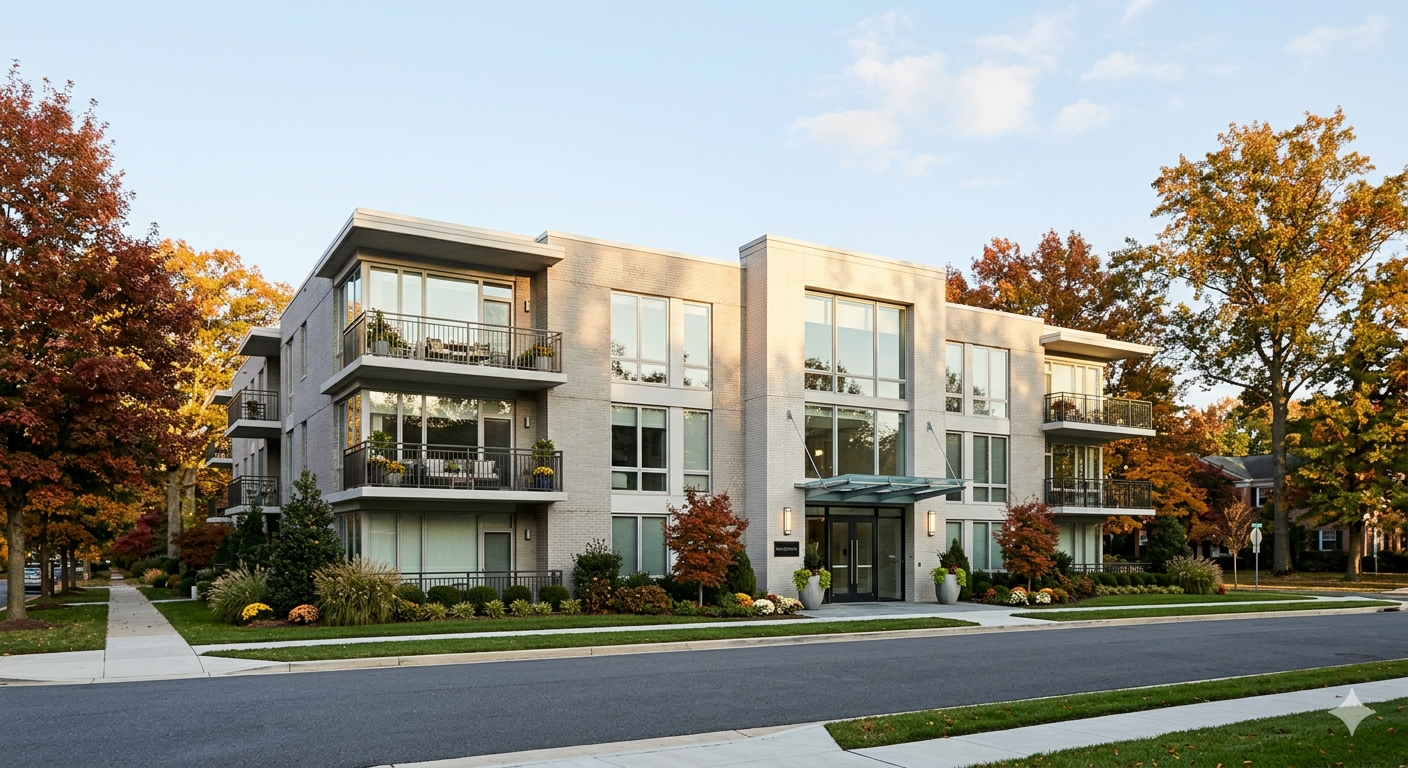
55-plus communities in the DC metro area range from condominiums to single-family home developments, with options across a range of price points.
For many homeowners in the DC area, the idea of moving to a 55-plus community comes up sometime in their early to mid-60s, often after the house starts to feel bigger than it needs to be and the maintenance feels like more work than it used to. The appeal is real. Less upkeep, a more manageable home, and a community designed around a similar life stage. But making the move well takes some planning, and the real estate piece is often more complex than people expect.
What 55-Plus Communities in Maryland and Virginia Actually Offer
55-plus communities in the DC metro area vary widely. Some are condominium buildings with amenities like fitness centers, pools, and concierge services. Others are single-family home communities with HOA-maintained common areas. Some are active adult communities built around lifestyle programming and social events. Others are quieter, smaller-scale developments that simply offer age-appropriate design in a low-maintenance setting.
The price range is similarly wide. Entry points in some Montgomery County communities may start in the mid-$400,000s for condominiums, though pricing shifts with market conditions and buyers should verify current availability directly. In other areas closer to McLean or Bethesda, well-appointed units in premium communities can run well above $1 million, depending on the building, amenities, and current inventory. Understanding what is available in the area where you want to land is a useful first step before you start the selling process on your current home.
The Selling Side of the Equation
For most homeowners making this transition, their current home has been owned for a decade or more, which means there is typically meaningful equity involved. How that equity gets timed and applied to the new purchase matters.
One of the most common questions is whether to sell first or buy first. Selling first gives you a clear financial picture and removes the pressure of carrying two properties. Buying first is tempting when you find the right community, but it requires bridge financing or the ability to manage two transactions at once.
In a market where 55-plus inventory can move quickly, particularly in preferred communities with limited units, some buyers do choose to act quickly when they find the right fit. If that is your situation, talking with a lender about bridge loan options or a home equity line of credit on your current property is worth doing before you start looking seriously.
Timing the Move Around Your Life, Not Just the Market
Seasonal market timing matters, but for most people in this life stage, the decision is driven more by personal readiness than by whether it is technically a seller’s market. The more meaningful questions are about lifestyle readiness: Are you done with the maintenance demands of a larger home? Are you ready to simplify your surroundings? Is the community you are considering the right fit for how you want to spend your time?
Those answers matter more than whether rates are a quarter point lower next spring.
What the Tax Picture Can Look Like
For homeowners who have lived in their primary residence for at least two of the past five years, there may be a federal capital gains exclusion available on the sale. As of the time of this writing, the exclusion is $250,000 for individuals and $500,000 for married couples filing jointly, though tax law can change and buyers should confirm current rules with a licensed CPA or tax advisor. For a home that has appreciated significantly over 20 or 30 years of ownership, this exclusion can offset a substantial portion of the gain, depending on your cost basis and individual circumstances.

Many 55-plus communities in Maryland and Virginia offer well-designed, lower-maintenance living spaces that feel far from the downsized stereotype.
How Matt Cheney Helps With This Type of Transition
Matt Cheney has guided many DC-area homeowners through the process of selling a long-held property and moving into the next chapter. He understands the emotional weight that comes with leaving a home where you have raised a family or lived for decades, and he approaches these transactions with the patience and care the situation deserves. If you are thinking about this kind of move, a conversation with Matt is a good place to start.
Frequently Asked Questions
What is a 55-plus community and how does it work?
A 55-plus community is a housing development where at least 80 percent of occupied units must have at least one resident who is 55 or older, under federal rules for age-restricted housing. Communities must also meet additional requirements related to published intent and age-verification procedures. They come in many forms, from condominiums to detached single-family homes, and are designed around lower maintenance and often shared amenities. Buyers should confirm a specific community’s qualifying status with legal counsel or the community directly.
Should I sell my home before or after finding a 55-plus community to move into?
In most cases, selling first gives you more financial clarity and negotiating strength. However, in communities with limited availability, some buyers choose to act quickly. Talk with your agent about the inventory situation in communities you are considering before deciding on timing.
Are there tax implications when selling a long-held home in Maryland or Virginia?
There can be. The federal capital gains exclusion on primary residence sales is a starting point, but your specific tax picture depends on your cost basis, improvements, and other factors. Your CPA or tax advisor should review this before you close.
Can I use the proceeds from my home sale to buy in a 55-plus community?
Yes, and many buyers do exactly that. Timing the two transactions carefully, or using bridge financing as a short-term tool, is how most people navigate the gap between selling one property and closing on another.
What should I look for when evaluating a 55-plus community in Maryland or Virginia?
HOA fees and what they cover, the financial health of the community, the type and quality of amenities, proximity to medical services and daily needs, and whether the lifestyle programming fits your interests are all worth evaluating closely.
Final Word
Moving to a 55-plus community is a real estate transaction, but it is also a life decision. The two are connected, and getting the real estate side right can make the personal transition a lot smoother. If you are thinking about making this kind of move in the DC metro area, contact Matt directly for a current market analysis. He can help you think through the timing, the selling process, and what to look for on the other side of the move.
Matt Cheney | Compass Real Estate is committed to the principles of the Fair Housing Act and the Equal Opportunity Act. All real estate services are provided without regard to race, color, national origin, religion, sex, familial status, or disability.
About Matt Cheney
Matt Cheney is a top-producing real estate advisor with Compass in Washington, DC, guiding buyers and sellers across DC, Maryland, and Virginia through high-stakes moves, from luxury sales to estate settlements, downsizing, and divorce-related transactions. With over $780 million in career sales volume and 23 years of experience, Matt is ranked in the Top 1.5% of agents nationally by RealTrends America’s Best. He is known for calm, strategic guidance and a straightforward approach to complex and sensitive real estate situations.
Matt Cheney | Compass Real Estate is committed to the principles of the Fair Housing Act and the Equal Opportunity Act. All real estate services are provided without regard to race, color, national origin, religion, sex, familial status, or disability.
Real estate considerations related to divorce or estate matters involve legal and financial complexities. Consult a qualified attorney and financial advisor for guidance specific to your situation.