

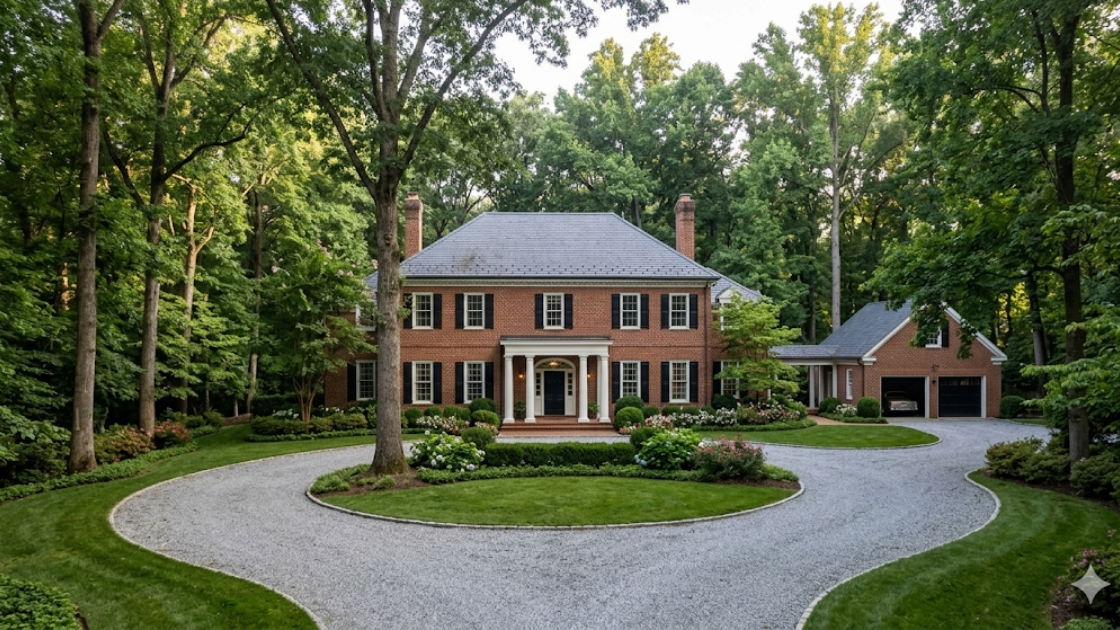
Great Falls, Virginia sits at an interesting intersection for buyers in the DC metro area. It is close enough to the city to be practical for commuting and everyday life, but the residential character, the lot sizes, and the overall feel are unlike anything you find inside the Beltway. For buyers who want space without leaving the metro, Great Falls is one of the more compelling options in Northern Virginia.
If you are thinking about buying or selling a home in Great Falls, here is what is worth knowing about this market before you start.
What Defines the Great Falls Real Estate Market
Great Falls is predominantly large-lot, detached single-family homes. Lot sizes often start at an acre and go up from there, and the wooded, private character of many properties is a significant part of the appeal. The area does not have a traditional town center or dense retail corridor, which shapes the buyer profile significantly. People who end up in Great Falls tend to be looking for a specific kind of lifestyle, and they know it.
The housing stock covers a wide range. There are estate-style properties with significant acreage, homes from the 1970s and 1980s that have been fully updated, newer construction on infill lots, and everything in between. Architectural styles tend toward traditional, Colonial, and transitional, though you will find contemporary homes as well. The range of options is broader than many people expect before they start looking.
Pricing reflects the combination of lot size, condition, location within Great Falls, and proximity to Route 7, Georgetown Pike, and the Dulles corridor. Well-positioned properties in strong condition can command prices well above the Northern Virginia median.
What Luxury Buyers Look for in Great Falls
Buyers drawn to Great Falls are typically motivated by a few consistent factors. Privacy and land are usually at the top of the list. The ability to have a real yard, separation from neighbors, and a sense of quiet is something you simply cannot replicate at a smaller scale, no matter how much you spend in more urban parts of the metro.
Beyond land, buyers in this price range look closely at condition, systems, and how well a home has been maintained. At Great Falls prices, deferred maintenance is a red flag, not a minor consideration. Buyers also tend to evaluate the overall layout carefully. Open floor plans that work for how people actually live now, primary suites with the right configuration, and functional outdoor spaces are consistent priorities.
Access is a practical factor as well. Proximity to Route 7 and Georgetown Pike matters for buyers who commute toward DC, Tysons, or Reston. Homes in the northern and eastern parts of Great Falls tend to draw buyers who prioritize that access, while properties farther west often attract buyers who are less concerned with commute time.
What Sellers in Great Falls Should Know Before Listing
The buyer pool for Great Falls is more targeted than in neighborhoods with broader price ranges or more varied housing types. You are marketing to a specific kind of buyer, and reaching them requires a strategy built for that audience, not a generic residential marketing approach.
Condition is critical. Buyers at this price point do thorough due diligence, and inspection findings that suggest deferred maintenance or systemic issues will surface during the contract period. Addressing the obvious items before listing, and being prepared to respond to what comes up during inspection, will produce better outcomes than ignoring problems and hoping buyers will overlook them.
Pricing accurately from the start is also important. Great Falls does not have the same volume of comparable sales as denser suburban markets, which means pricing decisions require more careful analysis. Overpricing in a lower-volume market can result in extended days on market, which creates a perception problem that is hard to recover from without a significant price reduction.
How Matt Cheney Works with Great Falls Buyers and Sellers
Matt has worked across the DC, Maryland, and Northern Virginia market for more than two decades. The luxury and estate segments of Northern Virginia, including Great Falls, McLean, and Great Falls adjacent communities in Fairfax County, are markets he knows well, both from the buyer and seller side.
For sellers, his approach starts with an honest assessment of condition, comparable pricing, and how to position the property for the buyers most likely to respond to it. For buyers, it means understanding what you are actually getting, what the realistic renovation costs are if updates are needed, and how a specific property compares to what else is available in Great Falls and nearby communities like McLean.
Frequently Asked Questions
What types of homes are available in Great Falls Virginia?
Great Falls is primarily large-lot single-family detached homes, ranging from traditional Colonials and brick estates to updated contemporaries and newer construction. Lot sizes often start at one acre and go significantly larger for estate properties. There are limited condos or townhomes in Great Falls proper, which makes it a distinct market from McLean or Arlington.
How much do homes in Great Falls Virginia typically cost?
Pricing in Great Falls covers a wide range depending on lot size, condition, location, and the level of updates. The market generally sits in the upper tier of Northern Virginia residential pricing. For current information on specific price ranges, reviewing recent closed sales in the area is the most accurate approach.
Is Great Falls Virginia a good area for buyers relocating to the DC area?
For relocating buyers who want space, privacy, and a suburban or semi-rural setting while staying within the DC metro commute zone, Great Falls is often a strong fit. It does require a car for most daily activities and is not close to Metro service, which matters for buyers who rely on transit. Understanding those trade-offs before you start looking will help narrow your search efficiently.
How long do homes typically stay on the market in Great Falls?
Days on market in Great Falls tend to be longer than in higher-volume suburban markets because the buyer pool is more specific. Well-priced and well-presented homes still sell in reasonable timeframes, but sellers should expect a different pace than, say, a townhome in Arlington. Patience and a realistic pricing strategy are both important.
Who is the best realtor to sell a luxury home in Great Falls Virginia?
Look for an agent with specific experience in the Northern Virginia luxury segment, particularly with large-lot, estate-style properties. General residential experience in high volume markets does not always translate to the targeted buyer strategy that Great Falls listings require. Ask candidates specifically how they market properties in the $1.5M and above range in Fairfax County.
Final Word
Great Falls is a market that rewards preparation and patience on both sides of the transaction. Buyers who understand what they are looking for and move quickly on the right property tend to do well. Sellers who price accurately and present their homes in strong condition reach the right buyers without the lengthy market exposure that can work against you at this price point.
If you are thinking about buying or selling in Great Falls, Virginia, or in the broader Northern Virginia luxury market, a conversation about current conditions and strategy is a useful starting point.
About Matt Cheney
Matt Cheney is a top-producing real estate advisor with Compass in Washington, DC, guiding buyers and sellers across DC, Maryland, and Virginia through high-stakes moves, from luxury sales to estate settlements, downsizing, and divorce-related transactions. With over $779 million in career sales volume and 22 years of experience, including more than two decades working on complex and sensitive real estate situations, Matt is known for calm, strategic guidance and brings hundreds of successful sales to clients seeking clarity and support during life transitions.