

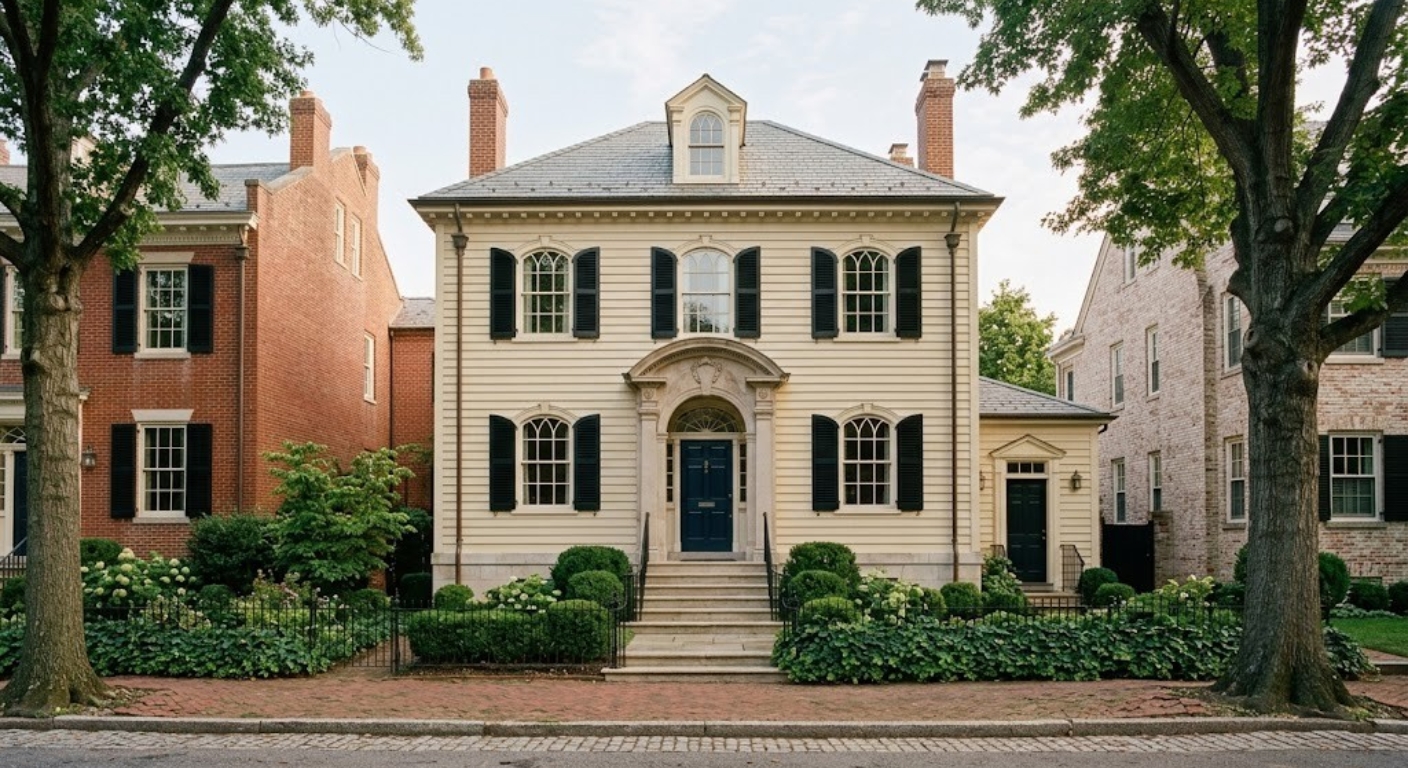
Historic homes in neighborhoods like Georgetown and Kalorama offer architectural character that newer construction rarely replicates, drawing buyers who prioritize permanence over novelty.
What Makes DC’s Historic Luxury Homes Different
Washington, DC has a housing stock that most American cities simply do not have. The combination of historic preservation protections, limited developable land, and decades of steady demand has produced a luxury market where the most sought-after homes are often the oldest. In neighborhoods like Georgetown, Kalorama, Embassy Row, Cleveland Park, and Capitol Hill, buyers routinely compete for pre-war rowhomes and single-family properties that have features no new construction can replicate.
That architectural character, including original hardwood floors, plaster walls, period millwork, coffered ceilings, and solid masonry construction, is a meaningful part of the value proposition. These are not just old homes. They are homes built to standards and with materials that are no longer practical to reproduce at scale. That distinction matters to the buyer pool that gravitates toward this segment of the market.
How Historic Homes Have Performed in DC’s Luxury Market
According to recent market data (source and reporting period should be cited here), the DC luxury benchmark price was approximately $1,795,000, representing roughly 9% year-over-year appreciation as of that period. Verify current figures directly, as market conditions change. In the neighborhoods where historic homes are most concentrated, that trajectory has been consistent over time. Georgetown’s historic preservation protections permanently constrain supply, which has helped insulate values even during broader market slowdowns. Kalorama’s combination of embassy proximity, architectural scale, and neighborhood privacy has produced a similar pattern.
Recent market data has suggested that approximately one in three luxury transactions in DC closed as an all-cash deal during a recent reporting period (cite source and date); verify current figures directly, as market conditions change. These are not buyers who are rate-sensitive in the traditional sense. They are evaluating long-term value and scarcity, and they are willing to move decisively when the right property comes available. For sellers in historic neighborhoods, that buyer profile can work in your favor if the home is priced and presented correctly.
You can explore current DC historic luxury listings to see what is active and how properties compare within the same price range. If you have questions about a specific property or neighborhood, contact Matt directly for a current market analysis and recent sales data
What Buyers Need to Understand Before Pursuing Historic Properties
Buying a historic luxury home in Washington, DC is not the same as buying new construction or a post-war home. There are practical considerations that buyers who are new to this segment sometimes underestimate.
The first is historic preservation oversight. Many properties in Georgetown, Kalorama, and other designated historic districts fall under the jurisdiction of the Historic Preservation Review Board. That does not prevent renovation, but it does govern what changes can be made to a property’s exterior. If a buyer has plans to significantly alter the facade, add a rooftop addition, or make structural changes that affect the historic character of the building, those plans need to be vetted against HPRB requirements before going under contract. Understanding what a property can and cannot become is a critical step in the due diligence process.
The second is the nature of older construction. Pre-war homes have mechanical systems, electrical panels, and plumbing that may have been updated incrementally over decades. A home that looks pristine from the inside may have original knob-and-tube wiring behind the walls, aging cast-iron pipes, or a foundation that reflects 80 or 100 years of settling. None of these things are necessarily dealbreakers, but they require a thorough inspection by someone who knows older construction well. The inspection period in a historic home purchase is not a formality. It is the moment to develop a realistic picture of what ongoing maintenance or near-term capital expenditures look like.
The third is lot size and parking. Many historic townhomes in DC occupy narrow lots with minimal or no off-street parking. Buyers who are accustomed to suburban properties sometimes find the practical constraints of urban historic homes more limiting than they expected. Confirming parking, outdoor space, and storage before making an offer helps avoid surprises after the fact.
You may also like: What are the most desirable neighborhoods for high-end homes in Washington DC, 5 of Washington DC’s Most Walkable Neighborhoods for Everyday Living, and Best DC Area Neighborhoods Known for Large Lots and Privacy
What DC’s Historic Home Buyers Typically Prioritize
Buyers who are serious about historic luxury homes in DC tend to have a consistent profile. They value authenticity over finish level. A home with original details that have been carefully maintained or thoughtfully restored will often appeal to this buyer more than one that has been heavily renovated with contemporary finishes that look out of place in a pre-war structure. Buyers in this segment know the difference, and they price their offers accordingly.
Location within the historic district also matters. In Georgetown, certain blocks command different prices than others, even when the homes themselves are structurally similar. Proximity to M Street and Wisconsin Avenue, the Potomac waterfront, and the C&O Canal path all factor into how buyers evaluate specific properties. The same dynamic plays out in Kalorama, where distance to Rock Creek Park, the Embassy Row corridor, and Dupont Circle all inform what buyers are willing to pay.
According to National Association of Realtors housing research (verify current findings at nar.realtor), buyers of historic and architecturally significant properties have cited long-term value preservation as a primary motivation, a trend that may align with buyer behavior observed in DC’s most established historic neighborhoods, though individual motivations vary.
How Matt Cheney Works With Historic Home Buyers in DC
Matt Cheney has worked in DC’s luxury market for more than 22 years, including active work in Georgetown, Kalorama, and other historic Northwest neighborhoods. He understands the nuances of buying in these areas, from navigating HPRB requirements to evaluating the true condition of a pre-war home during the inspection period.
Frequently Asked Questions
What neighborhoods in Washington DC have the most historic luxury homes?
Georgetown, Kalorama, Embassy Row, Capitol Hill, Logan Circle, and Cleveland Park are among the neighborhoods with the highest concentration of historic luxury homes. Georgetown and Kalorama in particular draw the most demand from buyers specifically seeking pre-war architecture at the upper end of the market. Both neighborhoods have strong historic preservation protections that limit supply and have helped sustain values over time.
Are historic homes harder to renovate in Washington DC?
Properties within designated historic districts are subject to review by the Historic Preservation Review Board for exterior changes. Interior renovations are generally not subject to HPRB oversight, but changes to facades, rooflines, windows, and other exterior elements require review and approval. The process is not prohibitive, but it does add time and constraints to any renovation plan. Buyers who plan significant changes should understand what is and is not allowed before going under contract.
Do historic luxury homes in DC hold their value well?
Historically, properties in DC’s established historic districts have shown resilience during broader market slowdowns, largely because supply in these neighborhoods is structurally constrained. Georgetown’s building inventory is largely constrained by historic preservation protections, which has historically limited new supply in that neighborhood. That scarcity has been a consistent factor in how values hold. No specific result can be predicted for any individual property, but the long-term track record of these neighborhoods is one reason buyers in this segment cite value preservation as a key motivation. Contact Matt directly for a current market analysis and recent sales data in your neighborhood.
What should I look for during a home inspection on a historic DC property?
Focus on mechanical systems, electrical panels, plumbing condition, roof and masonry integrity, and any evidence of moisture intrusion. Pre-war homes often have systems that have been updated in pieces over decades, which can create inconsistencies that a general home inspector may not catch. Hiring an inspector with specific experience in older DC construction is worth the extra effort. Understanding the true condition of a home before closing is especially important when the renovation path may be limited by historic review requirements.
Is it worth buying a historic home in DC versus newer construction?
That depends entirely on what the buyer values. Historic homes offer architectural character, location, and scarcity that new construction in DC cannot match. They also come with older systems, potential renovation constraints, and maintenance considerations that buyers need to factor in. For buyers who prioritize long-term value, a specific neighborhood, and genuine architectural integrity, historic homes have consistently delivered. Buyers who prefer modern finishes, open floor plans, and minimal maintenance may find newer construction a better fit for their actual lifestyle.
About Matt Cheney
Matt Cheney is a top-producing real estate advisor with Compass in Washington, DC, guiding buyers and sellers across DC, Maryland, and Virginia through high-stakes moves, from luxury sales to estate settlements, downsizing, and divorce-related transactions. With over $779 million in career sales volume and 22+ years of experience, Matt is ranked in the Top 1.5% of agents nationally by RealTrends America’s Best. He is known for calm, strategic guidance and a straightforward approach to complex and sensitive real estate situations.
Matt Cheney | Compass Real Estate is committed to the principles of the Fair Housing Act and the Equal Opportunity Act. All real estate services are provided without regard to race, color, national origin, religion, sex, familial status, or disability.
Real estate considerations related to divorce or estate matters involve legal and financial complexities. Consult a qualified attorney and financial advisor for guidance specific to your situation.