

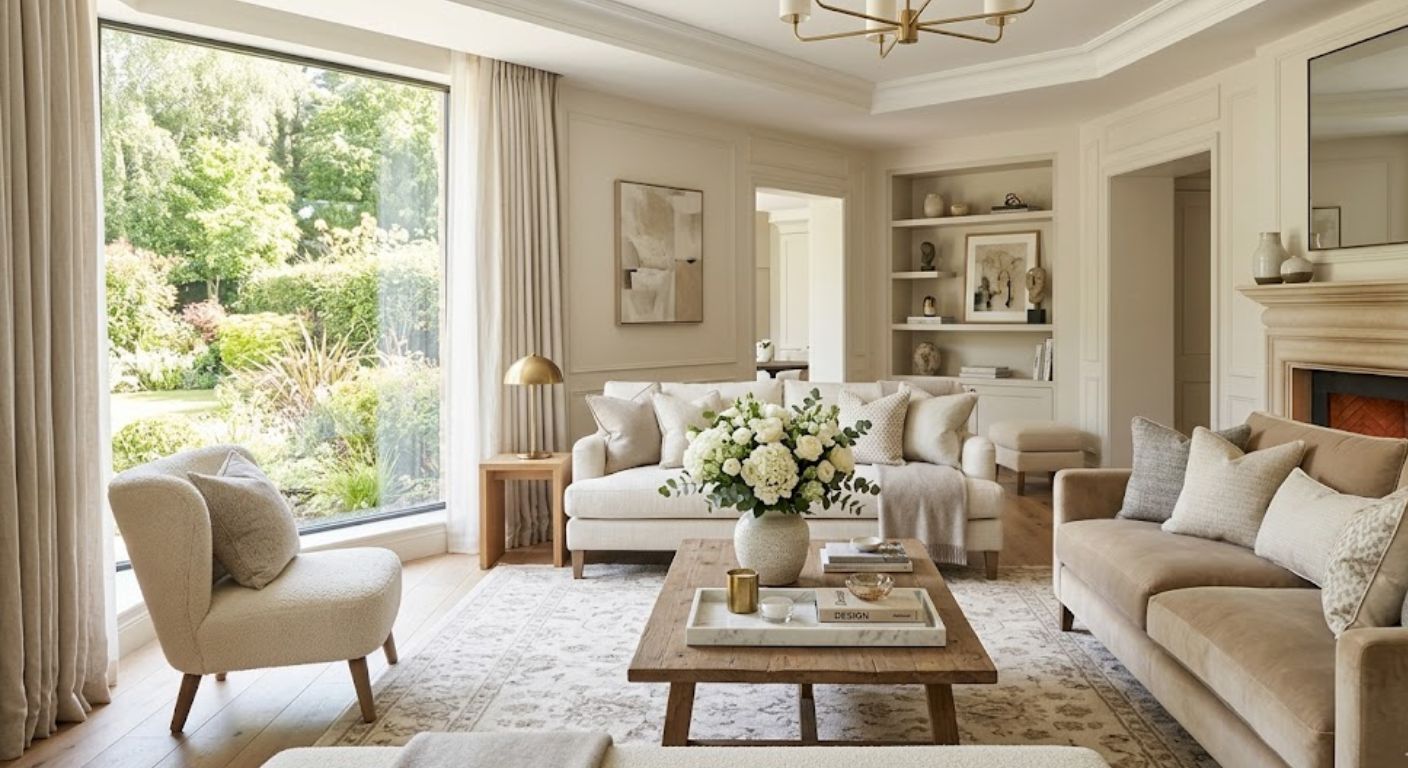
Thoughtful staging helps buyers picture themselves in the space.
Why Staging Matters More at the Luxury Level
At every price point, staging helps buyers picture themselves in a home. At the luxury level, the stakes are higher because buyers are comparing your home against other high-end listings, often in the same neighborhood, and small details get noticed. A home that feels lived-in or cluttered can undercut a price point that the bones of the property would otherwise support.
This does not mean every luxury listing needs a full professional staging overhaul. Some homes show beautifully with the owner’s existing furniture, especially if it is well-maintained and the spaces are already well-proportioned. The goal is not to make a home look like a hotel. It is to help buyers see the home at its best.
What Actually Gets Buyers’ Attention
Light, flow, and scale are the three things that consistently come up when buyers walk through a luxury home. Staging that opens up sightlines, removes oversized furniture that crowds a room, and lets natural light do its job tends to outperform staging that focuses heavily on accessories and decor.
Kitchens, primary bedrooms, and any rooms with standout architectural features (fireplaces, built-ins, high ceilings) deserve the most attention. These are the spaces buyers remember after a tour, and they are often the spaces featured most heavily in photography and video.
If you are preparing your home for sale, it can help to first review selling a luxury home in Washington DC for a broader look at how preparation fits into the overall sale timeline.
Working with Staging Professionals
Professional stagers who specialize in higher price points understand the difference between staging for a starter home and staging for a luxury buyer. They tend to use higher-quality furnishings, more restrained color palettes, and fewer but more deliberate decorative choices.
Cost varies depending on the size of the home and how much existing furniture can be incorporated versus brought in. For sellers who are already living in the home, partial staging, focused on key rooms and removing excess furniture, is often more practical than a full furniture swap.
What to Skip (and Why)
Over-styling is a common misstep. Too many decorative objects, heavily scented candles, or staging that feels themed rather than neutral can work against a listing. Buyers at the luxury level tend to respond to spaces that feel calm and editable, places where they can imagine their own belongings rather than someone else’s curated vision.
It is also worth being cautious about staging that hides problems rather than addressing them. A strategically placed rug over a damaged floor, or furniture arranged to block a view of a maintenance issue, tends to surface during inspection and can affect buyer trust during negotiations.
Timing Staging with Market Activity
Staging should be substantially complete before professional photography, and photography should happen close to the actual list date. In the DC luxury market, the first one to two weeks on market typically generate the most buyer interest, so the home should be fully ready, staged, photographed, and prepared for showings, before that window opens.
According to National Association of Realtors research, staged homes consistently spend less time on market compared to unstaged listings, though results vary by property and price point.
Frequently Asked Questions About Staging a Luxury Home
Do I need to hire a professional stager for a luxury home sale?
Not always. Some luxury homes show well with the owner’s existing furniture if it is in good condition and the rooms are well-proportioned. Professional staging tends to add the most value in vacant homes or homes where furniture scale does not match the size of the rooms.
How much does luxury home staging typically cost?
Costs vary widely depending on the size of the home, how many rooms are staged, and whether the home is occupied or vacant. Partial staging focused on key rooms is generally less expensive than a full furniture installation throughout the home.
Should I stage before or after photography?
Staging should be complete before professional photography. Photos are often the first impression buyers have of a listing, so the home should be fully ready, including staging, cleaning, and any final touch-ups, before the photographer arrives.
Can staging help if my home has an unusual layout?
Yes, staging can help define spaces and clarify how rooms can be used, which is particularly helpful in homes with unconventional layouts or open floor plans. A stager can help buyers understand the function of a space that might otherwise feel ambiguous.
About Matt Cheney
Matt Cheney is a top-producing real estate advisor with Compass in Washington, DC, guiding buyers and sellers across DC, Maryland, and Virginia through high-stakes moves, from luxury sales to estate settlements, downsizing, and divorce-related transactions. With over $779 million in career sales volume and 22+ years of experience, Matt is ranked in the Top 1.5% of agents nationally by RealTrends America’s Best. He is known for calm, strategic guidance and a straightforward approach to complex and sensitive real estate situations.
Matt Cheney | Compass Real Estate is committed to the principles of the Fair Housing Act and the Equal Opportunity Act. All real estate services are provided without regard to race, color, national origin, religion, sex, familial status, or disability.