


Right sizing your home is about aligning space with your current lifestyle and financial goals
How to Know When It Is Time to Right Size Your Home is one of the most important housing questions homeowners face in Washington DC, Maryland, and Virginia. A home that once felt perfect can gradually feel too large, too costly, or no longer aligned with your lifestyle. At the same time, it can be difficult to recognize the right moment to make a change.
In the DC Metro Area, where neighborhoods like Bethesda, Arlington, McLean, Georgetown, and Northwest DC offer a wide range of housing options, the decision to right size is not only about space. It is about financial efficiency, lifestyle alignment, and long term comfort.
Right sizing your home means moving into a home that better fits your current needs. For some homeowners, that means moving to a smaller home. For others, it means shifting into a more efficient layout or a different neighborhood. The goal is not simply less space. The goal is better alignment between your home and your life.
With over two decades of experience advising clients across Washington DC Maryland and Virginia, I have seen that the best decisions happen when homeowners recognize both financial and lifestyle signals early. This guide will help you identify those signals and understand when it may be time to take the next step.
Understanding What Right Sizing Really Means
Right sizing is often misunderstood as simply downsizing. In reality, it is a broader concept. It means adjusting your home to better fit your current stage of life.
For some homeowners in Bethesda or McLean, right sizing may mean moving from a large single family home to a more manageable townhouse or condo. For others in Arlington or Silver Spring, it may mean relocating closer to work or family while maintaining comfort and functionality.
The key idea is alignment. Your home should support your daily life, not create unnecessary burden or complexity.
Sign One Your Home Has More Space Than You Use
Unused rooms and underutilized areas
One of the most common signs that it may be time to right size is unused space. Many homeowners find themselves maintaining extra bedrooms, formal living rooms, or large basements that are rarely used.
In neighborhoods like Northwest DC or Great Falls, larger homes are common. Over time, these spaces can become maintenance responsibilities rather than functional living areas.
Maintenance without lifestyle benefit
Every additional square foot of space comes with cost and effort. Cleaning, heating, cooling, and maintenance all add up. When space is not actively improving your lifestyle, it may be a signal to reassess your housing needs.
Sign Two Rising Costs No Longer Match Your Priorities
Housing costs and financial balance
In the DC Metro Area, housing costs can increase significantly over time. Property taxes, utilities, insurance, and maintenance expenses often rise even when lifestyle needs do not.
If a large portion of your income is going toward housing expenses that no longer provide proportional value, it may be time to consider right sizing.
Opportunity cost of maintaining larger homes
Money tied up in a large home can limit flexibility. Homeowners in areas like Bethesda, Chevy Chase, and Arlington sometimes find that reducing housing costs allows them to increase savings, travel, or invest in other priorities.
Sign Three Your Lifestyle Has Changed
Life stage transitions
Life changes are one of the strongest indicators that it may be time to right size. Children may have moved out, work patterns may have changed, or daily routines may look very different than when the home was purchased.
In McLean or Alexandria, for example, many homeowners find that homes chosen for growing families feel oversized once those needs shift.
Daily convenience and comfort
As lifestyle needs evolve, convenience often becomes more important than size. A smaller, better located home can offer easier access to work, healthcare, dining, and community resources across Washington DC Maryland and Virginia.
Sign Four Maintenance Becomes Physically or Emotionally Heavy
Time and effort required for upkeep
Larger homes require more maintenance. Over time, this can become physically demanding or emotionally draining. Yard work, repairs, and cleaning can take time away from other priorities.
In areas like Great Falls or Northwest DC where larger properties are common, homeowners often begin to feel this shift as priorities change.
Desire for simplicity
Many homeowners begin to prioritize simplicity over space. A more manageable home can reduce stress and create more freedom in daily life.
Sign Five Financial Goals No Longer Align With Current Home
Equity and financial opportunity
For many homeowners in the DC Metro Area, significant equity builds over time. That equity can be used to support other goals such as retirement planning, investment, or relocation.
Holding onto a large home that no longer fits your needs can limit access to that financial flexibility.
Monthly cost efficiency
Right sizing often reduces monthly expenses. Smaller homes typically come with lower utilities, taxes, and maintenance costs. This can free up financial resources for other priorities.
Sign Six You Are Prioritizing Location Over Space
As lifestyles evolve, many homeowners begin to prioritize location over square footage. Being closer to work, family, or community often becomes more important than having extra rooms.
In Washington DC, Bethesda, Arlington, and Georgetown, walkability and convenience can significantly improve daily life. A smaller home in a better location may offer more value than a larger home farther away.
Sign Seven Emotional Attachment Is the Only Reason to Stay
It is natural to feel emotionally connected to a home. Memories, milestones, and family history often create strong attachments.
However, when emotional connection becomes the only reason to remain in a home that no longer fits your needs, it may be time to reassess.
Right sizing does not mean letting go of memories. It means choosing a home that better supports your current and future life.
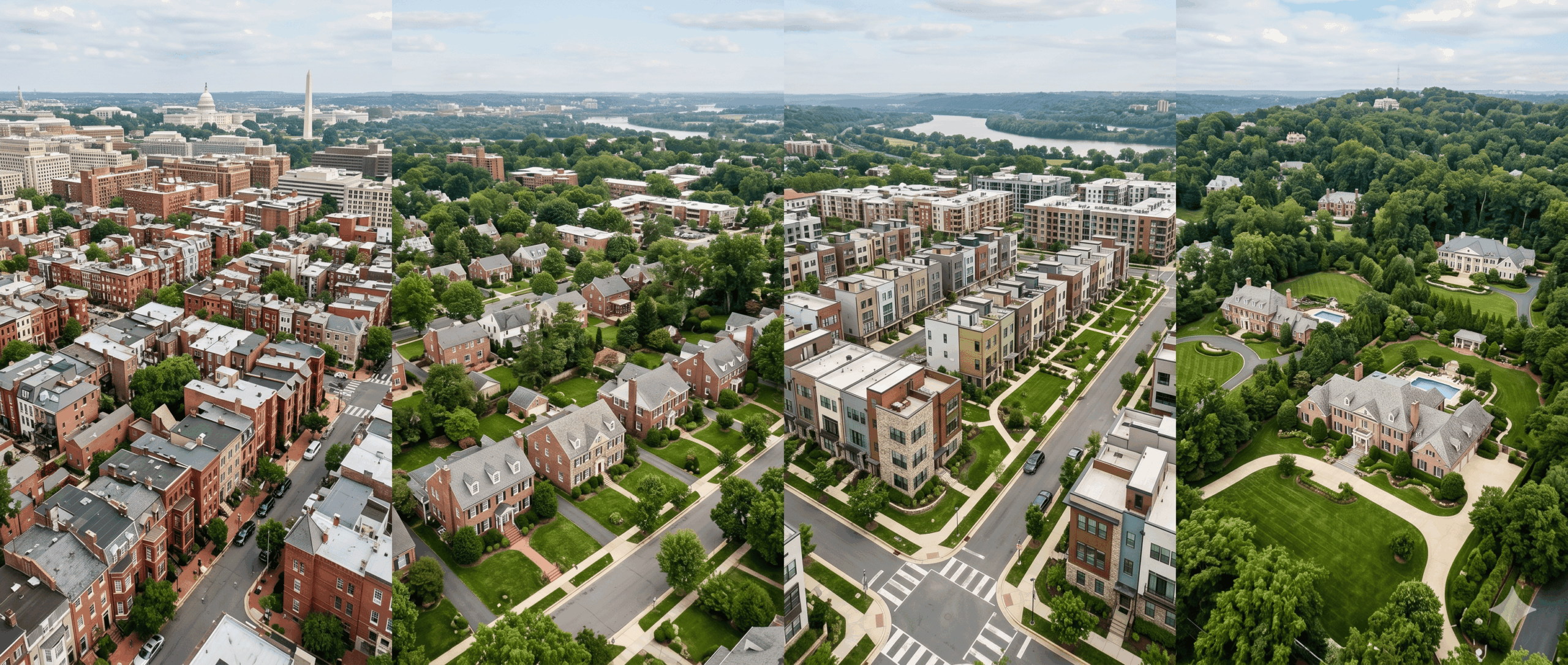
Different DC Maryland and Virginia neighborhoods offer flexible right sizing opportunities
How Debt and Financial Structure Affect Right Sizing Decisions
Debt plays an important role in deciding when to right size your home. Mortgage payments, credit obligations, and other financial commitments all influence monthly comfort.
In many cases, reducing housing size can also reduce financial pressure. Homeowners in Maryland, Virginia, and DC often find that right sizing allows them to reduce monthly expenses while maintaining equity value.
However, the decision is not only financial. It must also align with lifestyle needs and long term goals.
Location Strategy When Right Sizing in DC Metro Area
Choosing where to right size is just as important as deciding when. Different areas of the DC Metro Region offer different benefits.
Bethesda and Chevy Chase offer strong community environments. Arlington offers accessibility and convenience. McLean and Great Falls offer space and privacy. Northwest DC offers urban living and cultural access.
The right choice depends on how your lifestyle has changed and what you value most in your next stage of living.
Creating a Right Sizing Plan
Successful transitions happen when homeowners take a structured approach. This includes reviewing financial position, evaluating lifestyle needs, and understanding market conditions.
In Washington DC Maryland and Virginia, market timing can also influence outcomes. Understanding when to sell and when to buy helps maximize both financial and lifestyle results.
Homeowners who plan ahead often experience smoother transitions and stronger long term satisfaction.
Step by Step Guide to Deciding If It Is Time to Right Size
Step 1 Evaluate how much of your home you actually use
Step 2 Review monthly housing costs compared to income
Step 3 Assess lifestyle changes over the past several years
Step 4 Consider maintenance effort and emotional energy
Step 5 Review home equity and financial flexibility
Step 6 Identify preferred neighborhoods in DC Maryland and Virginia
Step 7 Compare current home benefits to future housing options
Step 8 Decide whether your home still aligns with your life goals
Frequently Asked Questions
What does it mean to right size your home in Washington DC
It means moving to a home that better fits your current lifestyle needs whether that is smaller, more efficient, or better located.
How do I know if my house is too big for me
If you consistently have unused space and rising maintenance costs, it may be a sign your home no longer fits your needs.
Is right sizing the same as downsizing
Not always. Right sizing focuses on alignment while downsizing focuses mainly on reducing size.
When is the best time to right size in the DC Metro Area
The best time depends on lifestyle changes, financial readiness, and local market conditions.
Final Word
How to Know When It Is Time to Right Size Your Home comes down to understanding alignment between your home, your lifestyle, and your financial goals. In Washington DC Maryland and Virginia, many homeowners reach a point where their current home no longer supports their daily life efficiently.
Recognizing the signs early allows for thoughtful planning and smoother transitions into a home that better fits your current and future needs.
About Matt Cheney
Matt Cheney is a top-producing real estate advisor with Compass in Washington, DC, guiding buyers and sellers across DC, Maryland, and Virginia through high-stakes moves, from luxury sales and estate settlements to downsizing and divorce-related transactions. With over $779 million in career sales volume and 22 years of experience, including more than two decades working on complex and sensitive real estate situations, Matt is known for calm, strategic guidance and brings hundreds of successful sales to clients seeking clarity and support during life transitions.