

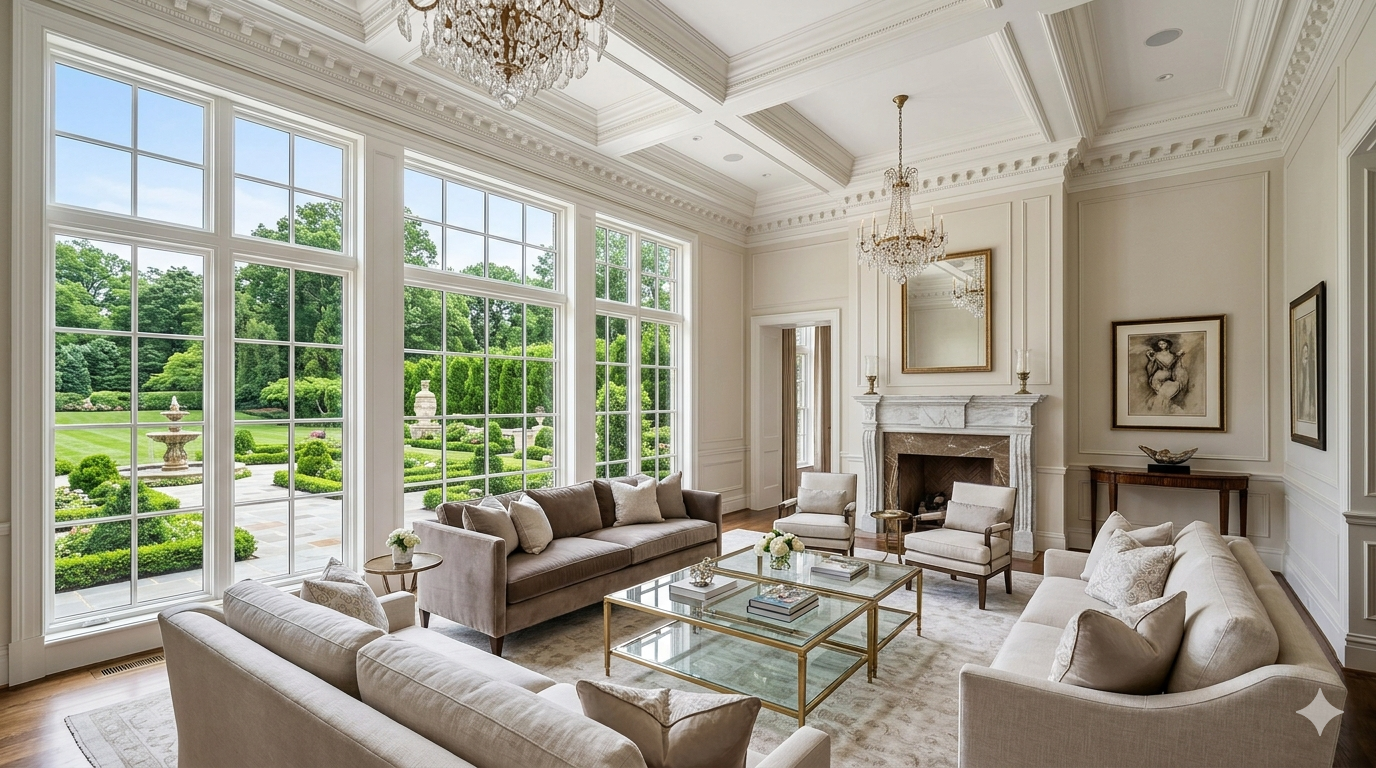
The DC luxury real estate market has undergone a meaningful recalibration since the exceptional conditions of 2021 to 2023
The Exceptional Market Is Over. What Replaced It Is More Complex and More Interesting.
The DC metro luxury real estate market from 2020 through 2022 was, by almost any measure, extraordinary. Demand from wealth accumulated during the pandemic years, a compression of inventory to historic lows, and record-low mortgage rates for luxury buyers who financed any portion of their purchases created conditions that pushed values in Georgetown, Kalorama, Spring Valley, McLean, Bethesda, and Great Falls to levels that surprised even the most experienced market observers.
That chapter has closed. What has replaced it is a luxury market that is more nuanced, more demanding, and in many ways more interesting for both buyers and sellers who take the time to understand it clearly rather than comparing it unfavorably to a period that was itself abnormal.
This post is a data-grounded look at how the DC metro luxury market has evolved since 2023, what is driving the current conditions, and what buyers and sellers in the $1.5 million-and-above segment need to understand going into 2026. For a broader look at overall luxury strategy, see our related post on luxury property sales in the DC metro area.
Defining Luxury in the DC Metro Market
For the purposes of this analysis, the luxury segment in the DC metro area is defined as residential properties priced at $1.5 million and above, with the ultra-luxury segment beginning around $3 million. In neighborhoods like Georgetown, Kalorama, Spring Valley, and Wesley Heights in DC, and in McLean, Great Falls, and Potomac in the suburbs, $1.5 million is a realistic entry point for larger single-family homes with quality finishes.
It is worth noting that what constitutes luxury in the DC area is not identical to luxury in, say, Manhattan or Los Angeles. DC luxury buyers tend to prioritize square footage, neighborhood character, proximity to green space and cultural amenities, and home office capacity. The market here rewards quality and condition more consistently than pure square footage or dramatic architecture, though the finest properties command premiums on all dimensions.
What Happened in the Luxury Market from 2020 to 2023
To understand where the market is now, it helps to understand where it came from.
From mid-2020 through approximately late 2022, the DC luxury market experienced several simultaneous tailwinds. Remote work eliminated the commute penalty for outer luxury suburbs, pushing demand into Great Falls, Potomac, and McLean. Record-low mortgage rates made very large mortgages financially accessible for a broader pool of buyers. Urban luxury demand in Georgetown, Kalorama, and Chevy Chase was also strong, driven by urban professionals who had accumulated wealth and were ready to upgrade.
Multiple offers on luxury properties, which had historically been relatively rare given the thinner buyer pool at higher price points, became relatively common. Days on market compressed significantly. Sale-to-list price ratios, which in luxury segments traditionally ran below asking, moved toward and in some cases above list price.
These conditions were real but not permanent. They reflected a unique combination of factors that are now largely absent from the market.
The Recalibration: 2023 Through Early 2026
Beginning in 2023 and continuing through 2025 and into 2026, several forces have produced a meaningful recalibration in the DC luxury market.
Interest Rates Compressed the Financed Buyer Pool
Even in the luxury segment, many buyers finance a portion of their purchase. Jumbo mortgage rates in the six to seven percent range have meaningfully increased monthly carrying costs on $2 million and $3 million properties compared to the three percent rate environment of 2021. This has reduced the depth of the qualified buyer pool at the upper end and increased the time it takes to find the right buyer for a luxury property.
Inventory Has Grown
Luxury inventory in the DC metro area has increased compared to the historic lows of 2021 and 2022. More options for luxury buyers means more comparison shopping, more due diligence, and less urgency to act before a competing buyer does. Luxury homes in 2026 are staying on market longer on average than they did at the peak, and sellers who do not account for this reality in their pricing and presentation strategy are experiencing frustration.
Federal Sector Wealth Concentration Has Shifted
Some of the wealth that traditionally supported DC luxury demand has been affected by federal workforce changes, shifts in government contracting priorities, and broader uncertainty about the federal employment sector. While the highest-end luxury demand, which tends to come from law firm partners, private equity professionals, lobbyists, and international buyers, is less sensitive to federal workforce changes, the upper-mid luxury segment that bridges $1.5 million to $2.5 million has felt the effect of reduced buyer confidence in some neighborhoods.
The Suburbs Have Partially Reversed the Pandemic Surge
Some of the suburban luxury markets that surged most dramatically during the remote work era, particularly in areas further out in Northern Virginia and outer Montgomery County, have experienced the most visible correction. Buyers who stretched into outer markets during the pandemic period because commute no longer mattered are now reassessing as return-to-office policies have changed the calculus. Conversely, close-in suburban markets with walkability, strong school systems, and established community character, particularly Bethesda, Chevy Chase, and close-in McLean, have held their relative position better.
How the Best DC Luxury Properties Are Performing in 2026
Within this more complex market, the performance gap between the best luxury properties and average luxury properties has widened. This is a pattern that tends to emerge when markets tighten: the exceptional pulls away from the ordinary.
Luxury homes in DC, Maryland, and Virginia that are attracting strong buyer interest in 2026 share several characteristics. They are accurately priced against current comparables rather than against peak-era aspirations. They are in excellent move-in-ready condition, because luxury buyers in the current market are much less willing to take on significant renovation projects than they were when money felt cheaper and deal velocity was higher. They are professionally and impeccably presented, because in a market with more options, first impressions matter more than ever. And they are in neighborhoods where the demand fundamentals remain sound: Georgetown, Spring Valley, Kalorama, McLean, Bethesda, and Chevy Chase continue to attract motivated, qualified buyers.
Days on Market in the Luxury Segment
Median days on market for DC-area luxury properties have extended compared to 2021 and 2022. What was once a two to three week process for the best properties has become a four to eight week process in many cases, with some properties at higher price points taking longer. This is not cause for alarm, but it does require sellers to maintain a strong marketing program and a patient, strategic posture rather than expecting a quick resolution. For a broader look at days-on-market dynamics across the DC market, see our companion post on why some DC-area homes are sitting longer on market in 2026.
Sale-to-List Price Ratios Have Normalized
The extraordinary above-list-price outcomes of the peak years are largely gone from most DC luxury segments. Sale-to-list price ratios have normalized toward, and in some cases slightly below, the asking price in most luxury neighborhoods. This means that the initial asking price matters more than it did when multiple-offer dynamics could push a buyer to exceed list regardless. Correct pricing from the start produces better outcomes than aggressive listing followed by reductions.
What Luxury Buyers Are Looking for in 2026
Understanding current luxury buyer preferences helps sellers position their homes effectively.
Condition and finishes are paramount. Luxury buyers in the DC area in 2026 are not interested in projects unless the price fully accounts for the work required. If you are selling a luxury home that has deferred maintenance or dated finishes, you face a choice: invest in bringing it to move-in-ready standards, or price it at a level that reflects the renovation burden a buyer will take on. Half-measures tend to produce the worst outcomes.
Outdoor and private space continues to matter more than it did in the pre-pandemic era. Terraces, gardens, pools, and usable outdoor entertaining space have maintained their premium since 2020. Buyers who experienced the value of private outdoor space during lockdowns have not forgotten it.
Home office quality and connectivity are still significant factors. The demand for functional, beautiful home office space has not diminished even as offices have reopened. Large, light-filled private offices or library spaces are consistently mentioned in buyer feedback on luxury properties across DC and the suburbs.
Location within the neighborhood matters as much as ever. In Georgetown, the premium blocks still command significant premiums. In McLean, proximity to specific schools drives meaningful price differences. In Bethesda, walkable access to shopping and dining remains a strong value driver. Neighborhood-level analysis is essential for luxury pricing.
What Luxury Sellers Need to Understand Going Into 2026
If you are considering selling a luxury property in the DC metro area in 2026, the most important thing you can internalize is that the market requires more from you than it did in 2021 or 2022, and that is okay. More preparation. More precision on pricing. More patience during the marketing period. In exchange, the buyers who are active in the luxury segment right now tend to be more serious, more financially qualified, and less subject to the impulse dynamics that characterized the peak.
A luxury sale that is done right in the current market still produces an excellent outcome. The homes that are selling well are doing so because their sellers and agents approached them with discipline and strategy rather than nostalgia for the peak conditions of two or three years ago.
For context on how broader market forces are shaping the environment you are selling into, see our post on what federal policy changes mean for DC real estate in 2026.
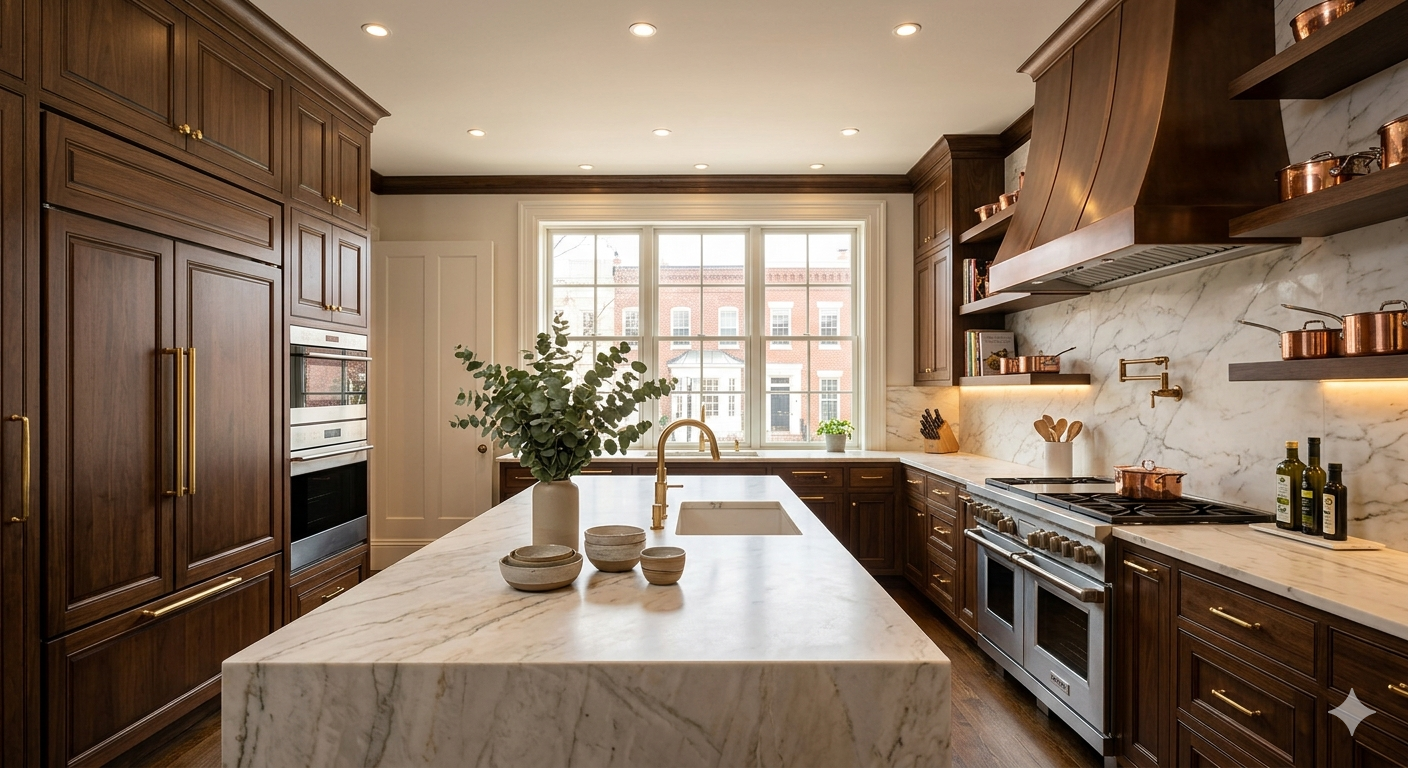
Luxury buyers in DC, Georgetown, McLean, and Bethesda continue to prioritize quality finishes and move-in-ready conditions though their expectations around value have shifted significantly since 2023
Frequently Asked Questions
Are luxury home prices dropping in the DC area in 2026?
In most established DC luxury neighborhoods, prices have not dropped dramatically but appreciation has slowed and some segments have experienced modest softening compared to peak. The most significant adjustments have occurred in outer suburban markets that surged most dramatically during the remote work period. Close-in luxury markets in Georgetown, Kalorama, and Bethesda have shown more resilience.
How long does it take to sell a luxury home in the DC metro area in 2026?
Median days on market for well-priced luxury properties in strong DC-area neighborhoods range from approximately four to eight weeks in 2026, compared to the two to three week pace of 2021 and 2022. The best-positioned properties in the most desirable neighborhoods can still move quickly, but the expectation of a weekend contract is no longer realistic for most sellers.
What price point defines luxury real estate in the DC area?
The luxury threshold in the DC metro area is generally considered to begin around $1.5 million for single-family homes and larger condominiums in prime neighborhoods. The ultra-luxury segment, which commands the most attention from high-net-worth buyers and international buyers, typically begins around $3 million, with Georgetown, Kalorama, and McLean producing the most transactions in this range.
Should I renovate before selling my luxury DC home?
It depends on the current condition of the home and what buyers in your specific neighborhood expect. In the current market, move-in-ready condition is a significant premium driver. Kitchens, primary bathrooms, and outdoor spaces consistently influence buyer decisions and sale price. The return on investment for strategic renovation before a luxury listing is generally positive, but the work should be targeted toward what buyers in your neighborhood actually value rather than personal preferences.
Are international buyers still active in the DC luxury market?
International buyer activity in Washington, DC luxury real estate remains present but has moderated from earlier peaks. The diplomatic, international institutional, and international business community that supports DC luxury demand is a consistent but not dominant force in the market. These buyers tend to concentrate in specific neighborhoods including Georgetown, Kalorama, and close-in Northwest DC.
How does the luxury market in Bethesda compare to McLean?
Both are strong luxury markets with distinct character. Bethesda tends to attract buyers who value walkability, urban amenities, and proximity to DC. McLean attracts buyers who prioritize larger lots, privacy, and proximity to Northern Virginia employment centers and specific private schools. Both have performed better than the outer suburban luxury markets in the post-peak period, though their specific inventory and pricing dynamics differ and require neighborhood-level analysis.
What is the outlook for DC luxury real estate in 2026 and beyond?
The structural underpinnings of DC luxury real estate, including the concentration of wealth in law, lobbying, finance, and international institutions, the constrained supply of quality homes in the most desirable neighborhoods, and the city’s role as a center of national policy and power, remain in place. The exceptional conditions of 2021 and 2022 are gone, but the fundamental case for well-located, well-maintained DC-area luxury real estate over a medium to long time horizon remains sound.
How important is staging for a luxury home in the DC area?
Extremely important in the current market. Luxury buyers in 2026 are comparing more options before making decisions, which means that presentation quality is a more significant differentiator than it was during the peak. Professional staging for luxury properties in the DC area is an investment that consistently pays off in buyer perception, marketing materials quality, and ultimately in sale price.
Who is the best realtor for luxury home sales in the DC area?
Look for an agent with a demonstrated track record of luxury transactions in the specific neighborhoods you are targeting, a network of qualified luxury buyers and buyer agents, and a marketing program that matches the caliber of the property. Experience with high-net-worth clients, discretion, and the ability to navigate complex negotiations are all important qualities at this price level.
The DC Luxury Market Rewards the Well-Prepared
The luxury real estate market in Washington, DC, Maryland, and Virginia in 2026 is not the market it was in 2021 or 2022. It is more deliberate, more discerning, and in many ways more interesting for buyers who know what they are looking for and sellers who approach it with precision and discipline. The exceptional conditions of the peak are gone, but the exceptional properties, in the exceptional locations, handled with exceptional strategy, are still producing excellent results.
Matt Cheney has worked with luxury buyers and sellers across Georgetown, Kalorama, Spring Valley, Wesley Heights, McLean, Bethesda, Great Falls, and Potomac for more than two decades. With over $779 million in career sales volume and a Top 1.5% national ranking, he brings the kind of market-specific insight and professional network that luxury transactions require. Reach out for a confidential conversation at mattsold.com.
About Matt Cheney
Matt Cheney is a top-producing real estate advisor with Compass in Washington, DC, guiding buyers and sellers across DC, Maryland, and Virginia through high-stakes moves, from luxury sales to estate settlements, downsizing, and divorce-related transactions. With over $779 million in career sales volume and 22 years of experience, including more than two decades working on complex and sensitive real estate situations, Matt is known for calm, strategic guidance and brings hundreds of successful sales to clients seeking clarity and support during life transitions.