


In 2026, a dedicated home office is no longer a bonus feature for DC-area buyers. For a large portion of the active buyer market, it is a baseline requirement.
Remote Work Did Not Fade. It Evolved.
In 2020 and 2021, remote work reshaped the real estate market in ways that felt sudden and dramatic. Buyers moved away from urban cores, demand surged in suburbs with more space and less density, and the DC metro area saw meaningful shifts in where people wanted to live. Five years later, remote work has not reversed. It has settled into a durable hybrid model that continues to shape where buyers across Washington, DC, Maryland, and Virginia are choosing to purchase homes in 2026.
Understanding how remote work still drives buyer behavior matters whether you are buying a home this year or considering selling into a market where buyer expectations have genuinely changed. This post covers what the current picture looks like and what it means for DC-area homeowners and buyers.
What Remote Work Looks Like in the DC Area in 2026
The federal government and many major private sector employers in the DC metro area have broadly shifted toward hybrid schedules rather than full-time remote or full-time in-office arrangements. Based on widely reported workforce data, many knowledge workers in the region are in the office approximately two to three days per week, though schedules vary by employer and role. This ongoing shift has had a lasting effect on how buyers evaluate homes and neighborhoods.
Full-time remote work still exists in the DC area, particularly in technology, consulting, and certain financial services roles. These buyers have the most flexibility in where they live and are willing to look at properties farther from traditional employment centers. Hybrid workers, by contrast, care deeply about commute quality on the days they do go in, which shapes their geographic preferences in specific ways.
Why the Home Office Is Now a Core Requirement
For buyers across the DC metro area in 2026, a dedicated home office space is no longer a nice-to-have feature. It is a baseline requirement for a large portion of the buyer pool. A spare bedroom that can serve as a quiet workspace, a finished basement with its own climate control, or a separate structure on the property all carry real value with buyers who work from home two or more days per week.
Homes that lack a credible home office configuration are facing longer days on market in some segments, particularly among mid-range and move-up buyers. Sellers who have a room that functions as a home office should stage and market it explicitly as such, not as a generic flex space. The framing matters to buyers who are filtering their search by work-from-home suitability.
Which DC-Area Neighborhoods and Communities Have Benefited Most
The geography of remote work demand in the DC area has a clear pattern. Communities that offer larger homes, better value per square foot, access to school options buyers often evaluate, outdoor amenities, and reasonable drive times to core employment centers on the days that matter have seen sustained buyer interest from hybrid and remote workers. School quality and program offerings can change; buyers should verify enrollment boundaries and performance data directly with the relevant school district before making decisions based on school access.
Northern Virginia
Loudoun County, western Fairfax County, and communities like Herndon, Reston, and Ashburn have attracted buyers who can tolerate a longer commute a few days per week but want more space and value for their dollar. The Silver Line extension has reinforced the appeal of some of these communities for buyers who combine transit commuting with work-from-home days, though buyers should verify current service, schedules, and planned changes directly with WMATA before factoring transit access into a purchase decision.
McLean and Great Falls remain strong for buyers who want proximity to Northern Virginia employment centers while having the space and quality that remote work lifestyles demand. These markets have held their value well because they offer both commute convenience and the kind of home environments that support working from home effectively.
Maryland Suburbs
Montgomery County continues to be a primary beneficiary of hybrid work demand. Bethesda, Chevy Chase, Potomac, and North Bethesda attract buyers who want to stay close to DC but have more square footage and outdoor access than urban properties typically offer. Farther out, communities in Howard County and Frederick County have attracted buyers with full-time or near-full-time remote arrangements who prioritize space and value over commute proximity.
Northwest DC and Close-In Neighborhoods
Within the District itself, neighborhoods like Spring Valley, Wesley Heights, Kent, and Foxhall have maintained strong demand in part because they offer larger homes with functional interior spaces, including rooms that can serve as dedicated offices. Buyers who work hybrid schedules and want to remain in the city have gravitated toward these neighborhoods for exactly this reason, alongside their excellent access to Rock Creek Park and other outdoor spaces. Matt Cheney has closed more than $79M+ in career sales volume in zip code 20007, providing direct, current familiarity with these neighborhoods and what buyers in this corridor are navigating today.
What Hybrid Work Means for Commute Tolerance
One of the most practical shifts remote work has created is an expansion of what buyers consider an acceptable commute. When someone goes into the office two days per week instead of five, a 45 to 60 minute drive feels manageable in a way it would not have been in a five-day-per-week model. This has meaningfully expanded the geographic range in which buyers are willing to search.
For sellers in communities that were previously considered too far from employment centers, this shift represents an opportunity. Homes in markets like Purcellville, Leesburg, Gaithersburg, and Damascus are reaching buyers who would have ruled them out five years ago. The key is accurate marketing that speaks to buyers who will self-select based on their work schedule.
When Proximity Still Matters
Not all DC-area buyers have flexible work arrangements. Government employees, healthcare workers, contractors in sensitive facilities, and service industry professionals often have limited or no remote work flexibility. For these buyers, traditional commute proximity remains a primary filter. Close-in neighborhoods in Arlington, Alexandria, Bethesda, and DC proper continue to attract strong demand from this segment precisely because their value is not dependent on remote work flexibility.
Internet Infrastructure and the Modern Buyer
Reliable, high-speed internet access has gone from an amenity to an absolute requirement for remote and hybrid workers. In the DC metro area, fiber and cable broadband coverage is available across many established suburban communities in Maryland and Northern Virginia, though actual service, speeds, and providers vary significantly by address. Buyers evaluating any property, including those in outer suburbs or transitional neighborhoods, should ask for verified internet service documentation and confirm available options before making purchase decisions.
Sellers in areas where internet infrastructure is strong should confirm service providers and available speeds as part of their listing preparation. For properties in areas where connectivity is limited, transparency about current options and any planned infrastructure improvements is important for managing buyer expectations.
What This Means for DC-Area Sellers in 2026
If you are selling a home in the DC metro area in 2026, understanding what remote and hybrid work buyers are looking for gives you an edge in how you prepare and market your property. Homes with strong home office configurations, reliable internet access, dedicated outdoor spaces, and functional floor plans for multi-purpose use consistently attract more serious buyer attention.
It also matters how you communicate these features. Marketing copy that explicitly describes a room as a home office, calls out fiber internet availability, highlights backyard space, or mentions proximity to parks and trails speaks directly to what a large segment of the current buyer pool is searching for.
With over $780 million in career sales volume and 23+ years of experience across Washington, DC, Maryland, and Virginia, I bring a detailed, current understanding of what buyers are prioritizing in this market. Ranked in the top 1.5% of agents nationally by RealTrends America’s Best, I help sellers position their homes to attract the buyers most likely to make a strong offer.
For buyers and sellers tracking where demand has been building in specific communities, the post on emerging hotspots in the DC metro area covers neighborhoods that have seen meaningful shifts in buyer interest over the past few years.
For a broader view of current market conditions, the post covering the DC, Maryland, and Virginia market outlook for 2026 provides context on inventory, pricing trends, and what buyers and sellers are navigating this year.
For buyers weighing two of the region’s most desirable suburban markets, the comparison of Bethesda vs. McLean for move-up buyers breaks down pricing, lifestyle, and what each market offers for families and professionals.
Sellers navigating the current market will find practical guidance in the post on how to sell confidently in a shifting DC market, which covers pricing strategy, timing, and how to position a home effectively.
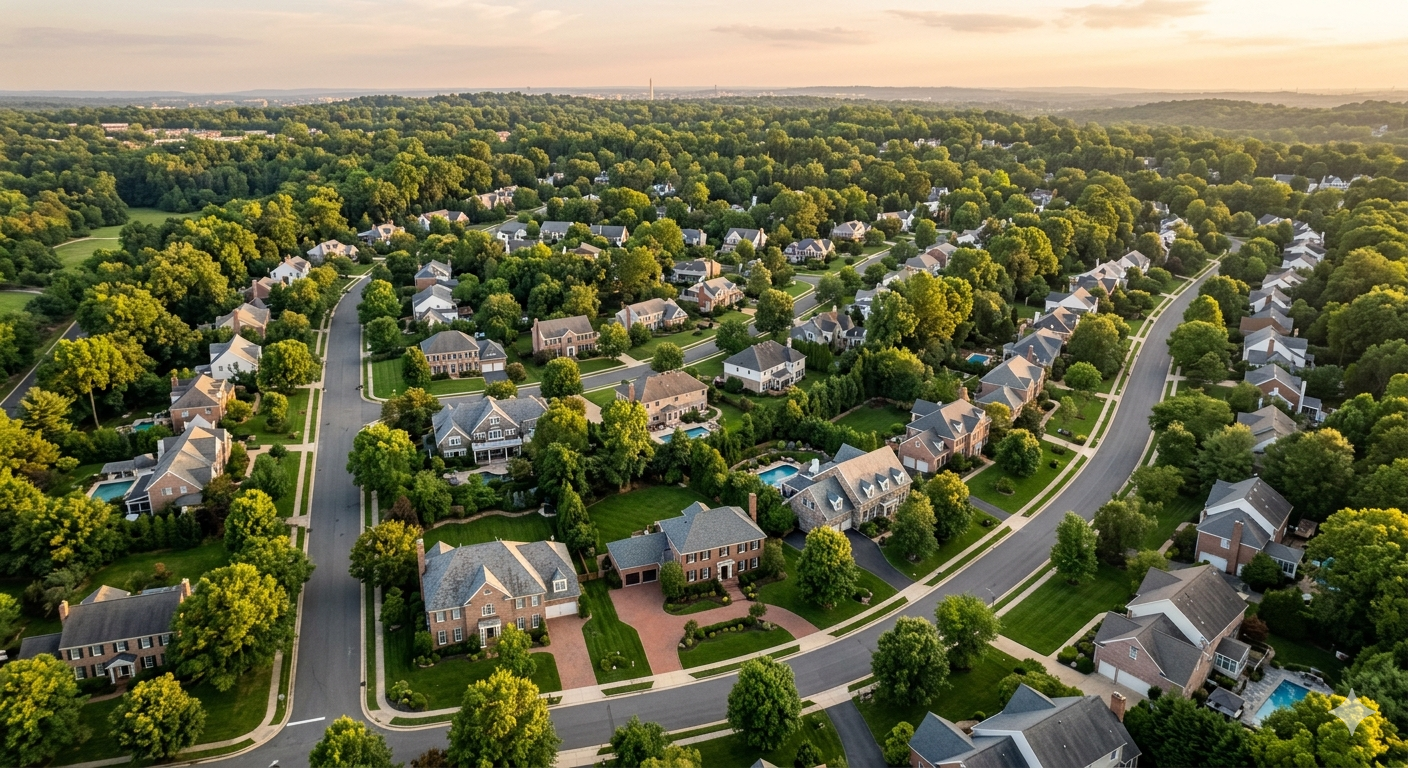
Neighborhoods with space, green infrastructure, and manageable commute times on in-office days have seen consistent buyer interest from hybrid and remote workers across the DC metro area.
External Resources
For data on how remote and hybrid work has evolved since 2020 across the American workforce, Pew Research data on remote and hybrid work trends offers comprehensive national context for understanding the broader shift that continues to shape DC-area buyer behavior.
For buyers considering Northern Virginia communities connected to the Metro system, the Washington Metropolitan Area Transit Authority information on the Silver Line extension provides current route and service details relevant to transit-accessible commuting in the region.
The Final Word
Remote work did not create a temporary spike in demand for certain kinds of homes and neighborhoods. It created a durable shift in what buyers across the DC metro area value and how they make housing decisions. In 2026, those preferences are settled, well-understood, and actively shaping the market from Loudoun County to Northwest DC.
Whether you are buying a home with work-from-home requirements in mind or selling a property that speaks to today’s buyer, I am glad to help you navigate the current DC, Maryland, and Virginia market with the kind of clear, current guidance that leads to strong outcomes. Reach out at mattsold.com to get started.
Frequently Asked Questions
Is remote work still affecting DC-area real estate in 2026?
Yes. Hybrid work schedules remain the norm for a large portion of DC-area knowledge workers, and buyer preferences have adjusted accordingly. Home office space, reliable internet, and larger square footage remain important search criteria for a significant share of buyers in the DC, Maryland, and Virginia market.
What neighborhoods in DC, Maryland, and Virginia are most attractive for remote workers in 2026?
McLean, Great Falls, Bethesda, Potomac, Chevy Chase, Loudoun County communities, and select neighborhoods in Northwest DC continue to attract buyers who work hybrid or fully remote schedules. These markets offer a combination of space, quality, outdoor access, and manageable commute times for the days that require in-office work.
Do DC-area buyers still prioritize home offices?
Yes. A dedicated home office or a room that can clearly function as one is a core requirement for a large share of buyers in the current DC metro market. Homes that lack this feature or do not market it clearly are at a disadvantage in attracting hybrid and remote worker buyers.
How has commute tolerance changed in the DC area because of remote work?
Many buyers who work hybrid schedules are now willing to consider commutes of 45 to 60 minutes or longer because they only make that commute two or three days per week. This has expanded the geographic range of the active buyer market and benefited sellers in communities that were previously considered too far from employment centers.
Does internet speed matter when buying a home in the DC area?
Yes. Reliable broadband or fiber internet has become a non-negotiable for remote and hybrid workers. Buyers are increasingly asking for internet service documentation before making purchase decisions, particularly in properties located in outer suburbs or transitional neighborhoods.
Are DC-area home prices higher in neighborhoods that attract remote workers?
Demand from remote and hybrid workers has contributed to price strength in many suburban communities that offer more space and favorable lifestyle amenities. However, pricing is shaped by multiple factors including inventory, interest rates, and local economic conditions. A current market analysis from a knowledgeable DC-area advisor provides the most accurate picture for any specific neighborhood.
Should I buy a home farther from DC if I work remotely?
It depends on how often you need to commute and your personal priorities. Buyers who work fully remotely have the most flexibility. Hybrid workers should honestly evaluate their office schedule, their tolerance for commute days, and whether the trade-offs in space and price are worth the added travel time on in-office days.
Is the DC-area real estate market good for buyers in 2026?
The DC metro area market in 2026 continues to reflect strong fundamentals including stable employment, high household incomes, and consistent demand. Inventory in desirable neighborhoods remains competitive, particularly in the spring and summer months. Working with a knowledgeable, experienced agent helps buyers navigate current conditions effectively and make competitive offers when the right home becomes available.
How should sellers market their homes to remote and hybrid work buyers in the DC area?
Sellers should explicitly call out dedicated office space in listing descriptions and photography, confirm and advertise internet service options, highlight outdoor areas and nearby parks, and emphasize square footage and functional floor plans. Buyers in this segment are filtering for these features, and marketing language that speaks directly to those priorities improves listing visibility and buyer engagement.
About Matt Cheney
Matt Cheney is a top-producing real estate advisor with Compass in Washington, DC, Bethesda, Maryland, and McLean Virginia, guiding buyers and sellers across DC, Maryland, and Virginia through high-stakes moves, from luxury sales to estates, downsizing, luxury condominiums and divorce-related transactions. With over $780 million in career sales volume and 23+ years of experience, Matt is consistently ranked in the Top 1.5% of agents nationally by RealTrends America’s Best and has been named a Washingtonian Top Agent five years running. He is known for calm, strategic guidance and a straightforward approach to complex and sensitive real estate situations.
Matt Cheney | Compass Real Estate is committed to the principles of the Fair Housing Act and the Equal Opportunity Act. All real estate services are provided without regard to race, color, national origin, religion, sex, familial status, or disability.