

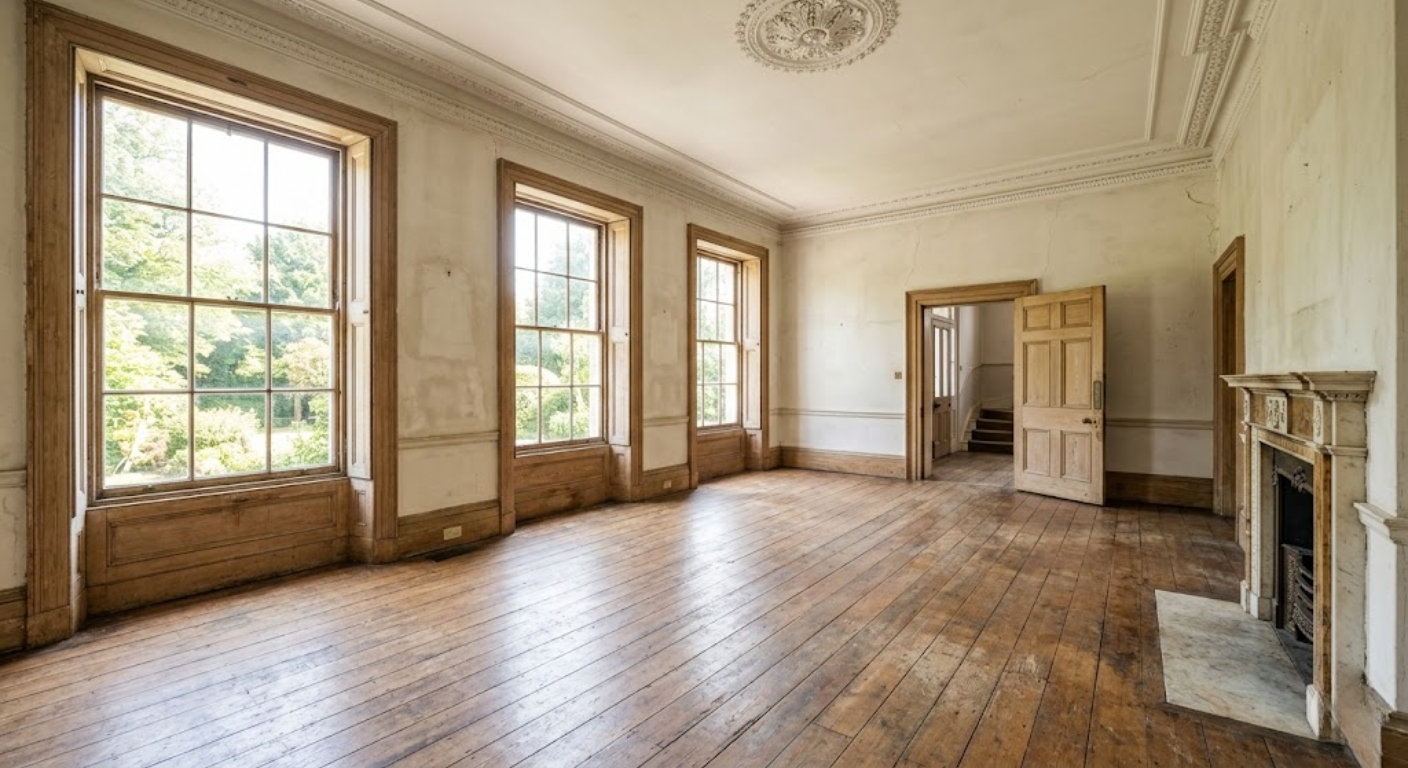
Homes with original architectural character often attract buyers who want to renovate on their own terms.
Not every luxury buyer in Washington, DC wants a turnkey home. Some are drawn to properties that have been deferred, need updating, or carry the kind of architectural character that heavily renovated homes often lose in the process.
Buying a home that needs work at the luxury level is a different calculation than it is at lower price points. The numbers are larger, the renovation market in DC is more complex, and the stakes of getting it wrong are higher. Here is how experienced luxury buyers in DC think about it.
The Difference Between Cosmetic and Structural Issues
The first thing an experienced buyer does when evaluating a fixer-upper is categorize what needs to be done. Cosmetic issues, dated kitchens, worn flooring, paint that has not been updated in years, are generally predictable in cost and scope. They are inconvenient but manageable.
Structural and mechanical issues are a different matter. Foundation problems, failing roofs, outdated electrical panels, deteriorated plumbing, and moisture intrusion in the basement require a much more careful cost estimate before you can know what you are working with. In the luxury segment, these issues can run into six-figure territory, and they affect how a property should be priced relative to the work required.
Before making an offer on a home that needs significant work, getting a thorough inspection, sometimes more than one, is important. A general home inspector can identify most issues. A structural engineer, a roofer, or a mechanical contractor may need to give a separate assessment on specific systems.
How to Estimate Renovation Costs in DC
DC is not a cheap renovation market. Labor costs here are higher than in most comparable cities, and permitting requirements add time and cost to almost every significant project. Buyers who underestimate renovation costs when making an offer often end up in properties where the budget does not hold.
The most reliable approach is to get contractor estimates before you finalize your offer, or at minimum during your inspection period. Having a contractor walk through the property with you and give a rough figure on the scope of work gives you the information you need to negotiate from a realistic position.
For buyers evaluating a luxury home that needs renovation in Washington DC, the math should include not just construction costs but also carrying costs during the renovation period, plus a contingency buffer of roughly 10 to 20 percent of the estimated project cost for items that emerge once walls are open.
How the Market Prices Homes That Need Work
In a competitive market with limited supply, the discount for deferred maintenance or renovation need is often smaller than buyers expect. Sellers know what their properties cost to replace, and they sometimes hold out for a buyer willing to pay close to turnkey prices for a home that is not turnkey.
In a softer market, or when a property has been sitting with significant days on market, buyers have more negotiating room. Understanding current market conditions, specifically how properties in similar condition are trading, is important context before you decide what to offer.
According to data, homes that require significant updating typically take longer to sell and receive fewer offers than comparable move-in-ready properties. That dynamic can work in a buyer’s favor when they are patient and prepared.
What Luxury Buyers Should Clarify Before Offering
There are several things worth understanding before making an offer on a home that needs work. Whether permits were pulled for past renovation work is one of them. Unpermitted work can create complications at resale and sometimes needs to be redone to meet current code. Review the permit history with your agent.
HOA restrictions, if applicable, can also affect what renovation work is allowed on the exterior and sometimes the interior. In historic districts or properties with deed restrictions, renovation scope may be more limited than you expect.
Finally, understand how long you are willing to navigate a construction period. Renovation timelines in DC often run longer than initial estimates. A full renovation of a large single-family home can take a year or more depending on permitting, contractor availability, and the scope of the project. If that does not fit your plan, a home needing significant work may not be the right move regardless of the price.
How Matt Cheney Works with Luxury Buyers on Fixer-Uppers
Matt Cheney has spent over 22 years working in the DC luxury market and understands the specific risks and opportunities that come with purchasing a home that needs renovation. With more than $779 million in career sales volume, he has helped buyers assess the true cost of renovation projects, negotiate prices that reflect realistic work scopes, and avoid purchases where the numbers ultimately did not hold up.
Frequently Asked Questions
Is it worth buying a fixer-upper in Washington DC’s luxury market?
It depends on the property, the price, and the scope of work. When the discount for condition genuinely reflects what the renovation will cost, there can be real value in it. When sellers are pricing as if the home is in better condition than it is, the deal is harder to make work. The key is having accurate cost information before you commit.
How do I estimate what a renovation will cost before I buy?
Get a contractor or two to walk the property with you during your inspection period. A rough estimate from a qualified contractor gives you a realistic range for the project. Factor in a contingency of 10 to 20 percent on top of that estimate for items that surface once construction begins.
Can I negotiate more aggressively on a DC home that needs significant work?
Your ability to negotiate depends on how long the property has been sitting, how motivated the seller is, and what other buyer interest exists. Properties with significant deferred maintenance that have been on the market for a while generally offer more room to negotiate. Homes that just listed typically have less flexibility regardless of condition.
What inspections should I get before buying a fixer-upper?
Start with a general home inspection. Depending on what that surfaces, you may also want a structural engineer, a roofing contractor, a plumber, or an electrician to look at specific systems. The cost of those additional inspections is small relative to what they tell you about what you are buying.
How do renovation timelines affect the purchase decision?
If you are planning to occupy the property during or shortly after renovation, timeline matters a great deal. Full renovations in DC can take a year or longer depending on permitting, contractor availability, and project scope. Factor your personal timeline honestly into whether a significant renovation project makes sense for you right now.
A Closing Thought
Buying a luxury fixer-upper in DC can produce a solid outcome when the math actually works. The key is making sure you understand the full scope and cost before you commit, not after. Approach it with clear eyes, get the right professional opinions during your inspection period, and negotiate from a position grounded in realistic numbers rather than optimism.
Matt Cheney | Compass Real Estate is committed to the principles of the Fair Housing Act and the Equal Opportunity Act. All real estate services are provided without regard to race, color, national origin, religion, sex, familial status, or disability.
About Matt Cheney
Matt Cheney is a top-producing real estate advisor with Compass in Washington, DC, guiding buyers and sellers across DC, Maryland, and Virginia through high-stakes moves, from luxury sales to estate settlements, downsizing, and divorce-related transactions. With over $779 million in career sales volume and 22+ years of experience, Matt is ranked in the Top 1.5% of agents nationally by RealTrends America’s Best. He is known for calm, strategic guidance and a straightforward approach to complex and sensitive real estate situations.