

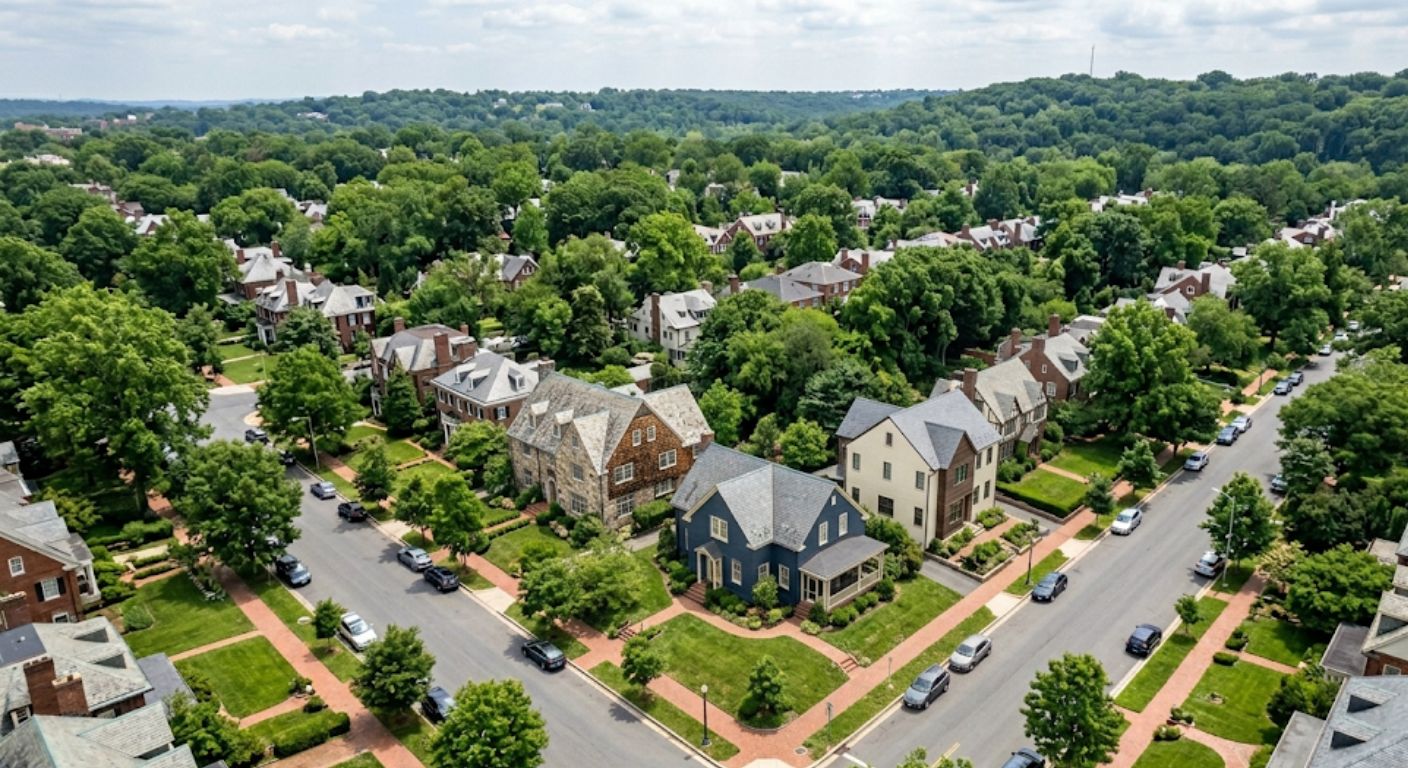
Northwest DC’s residential neighborhoods vary considerably in character, density, and price point, even within a short distance of one another.
For luxury buyers coming to Washington, DC, the neighborhood decision is often the first and most consequential one they make. It shapes everything else: what kind of home is available, what the price per square foot looks like, how much privacy they can realistically expect, and how the property is likely to hold its value over time.
Most buyers have done some research before they start touring, but the DC luxury market has enough variety that the right choice is rarely obvious without a deeper look. Here is how most buyers work through it.
What Luxury Buyers Are Actually Weighing
The priorities vary, but a few themes show up consistently. Proximity to where buyers spend their time is usually near the top. For someone whose professional life centers on Georgetown or Foggy Bottom, the calculus on commute and walkability is different than it is for a buyer who works remotely or travels frequently and cares more about lot size and privacy.
Housing type matters too. Some buyers know they want a standalone single-family home on a real lot. Others are open to a large rowhouse in a historic neighborhood, which is a different experience in terms of outdoor space and layout. Others are looking at luxury condos, which opens different neighborhoods entirely.
The character of the street, the density of the immediate surroundings, and the overall feel of a neighborhood on a weekday afternoon are things buyers often cite after touring that they did not fully account for in their initial research. These are details that come through when you spend time in a place, not just when you look at maps.
How to Compare DC’s Main Luxury Neighborhoods
Georgetown is one of the most recognizable luxury markets in DC. The historic character is strong, the walkability is high, and the neighborhood has shown consistent demand from buyers who want to be close to the waterfront, restaurants, and the social life of a well-established DC address. The housing stock is largely rowhouses and smaller single-family homes, with some larger Federal-style properties available.
Kalorama offers something more private and formal. The housing stock is largely pre-war grand homes and embassies, the streets are less trafficked, and the neighborhood attracts buyers looking for architectural significance and a quieter residential environment.
Chevy Chase DC, Foxhall, Wesley Heights, and The Palisades are all further northwest, with more lot space and a more suburban feel inside city limits. These neighborhoods are popular with buyers who want the DC address but more land and more separation from the density of closer-in areas.
For buyers comparing these options side by side, a review of luxury neighborhoods in Northwest DC covers key differences in price, inventory, and neighborhood character across the main areas buyers consider.
The Role of Inventory and Price Per Square Foot
What is available in a given neighborhood at any specific time has a practical influence on where buyers land. A buyer who wants Georgetown but finds nothing suitable at their price point may end up in Kalorama or Chevy Chase not because they changed their priorities, but because the inventory answered a different question.
Price per square foot varies considerably across DC luxury neighborhoods. Georgetown typically carries a premium for its location and historic character. Further northwest, buyers often get more space for a similar total price. Understanding these differences clearly helps buyers make comparisons that are actually apples to apples.
Research from the National Association of Realtors consistently shows that luxury buyers who work with an agent deeply familiar with the specific submarkets they are considering make more confident decisions and report higher satisfaction with their purchases than those who search more broadly without that expertise.
When to Prioritize Resale Potential
Most luxury buyers in DC are not buying with a five-year flip in mind, but resale considerations are still worth factoring in. Neighborhoods with consistent demand, limited new supply, and strong historical value retention tend to be more resilient through market cycles than those where buyer interest has been more variable.
Georgetown, Kalorama, and Chevy Chase DC have all shown long-term stability in the luxury segment. That does not guarantee future performance, and specific results depend on the property, price paid, and market conditions at the time of sale. But neighborhood track record is worth looking at alongside the current appeal of the area.
Frequently Asked Questions About Luxury Neighborhood Selection in DC
How many neighborhoods should I seriously consider before deciding?
Most experienced buyers narrow to two or three that genuinely fit their priorities, then go deeper on those. Spreading attention across six or eight neighborhoods makes it harder to develop the market feel that leads to a confident decision. Touring multiple properties within a focused area gives you a much clearer sense of value than touring one home in each of many places.
Does it matter which neighborhood I choose for resale purposes?
Neighborhood does matter, but the specific property and price paid matter more. A well-purchased home in a stable neighborhood generally holds value better than an overpaid purchase in a stronger area. The combination of the right neighborhood and a realistic purchase price is what tends to produce the best long-term outcome.
How do I know if I am getting fair value in a DC luxury neighborhood?
Recent comparable sales in the specific neighborhood and price tier are the most reliable benchmark. Price per square foot comparisons across similar properties, days on market for what has sold, and list-to-sale price ratios all inform whether a property is priced at, above, or below where the market is. Your agent should walk you through this data before you make an offer.
What is the best luxury neighborhood in DC for buyers relocating from another city?
There is no single answer to that question, because the right neighborhood depends on what the buyer values, where they will spend their time, and what kind of home they want to live in. Buyers relocating from a dense walkable city often connect quickly with Georgetown. Those coming from a more suburban environment may find Chevy Chase DC or The Palisades a more comfortable fit. Taking the time to tour several areas before committing is always worth it.
About Matt Cheney
Matt Cheney is a top-producing real estate advisor with Compass in Washington, DC, guiding buyers and sellers across DC, Maryland, and Virginia through high-stakes moves, from luxury sales to estate settlements, downsizing, and divorce-related transactions. With over $779 million in career sales volume and 22+ years of experience, Matt is ranked in the Top 1.5% of agents nationally by RealTrends America’s Best. He is known for calm, strategic guidance and a straightforward approach to complex and sensitive real estate situations.
Matt Cheney | Compass Real Estate is committed to the principles of the Fair Housing Act and the Equal Opportunity Act. All real estate services are provided without regard to race, color, national origin, religion, sex, familial status, or disability.