

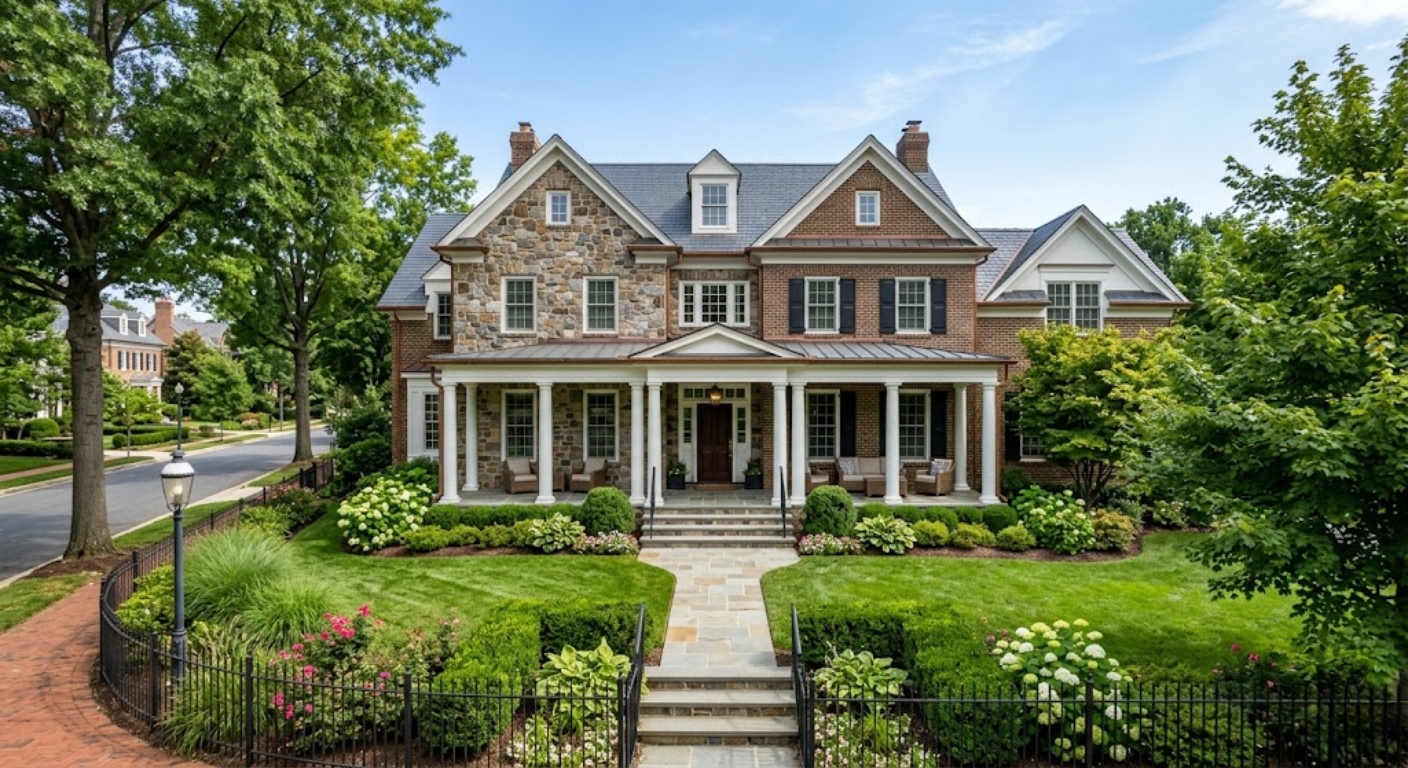
Understanding whether a luxury home is priced correctly in DC requires looking at several signals, not just the list price alone.
Why Luxury Home Pricing Is Harder to Read Than It Looks
At the luxury end of the DC market, pricing a home accurately is genuinely more difficult than it is in other price ranges. There are fewer comparable sales to work from. Every property has a longer list of unique features that affect value. The buyer pool is smaller, which means individual buyer preferences can move the needle more than they would in a broader market. And sellers often have strong opinions about what their home is worth that may or may not line up with what the data supports.
As a buyer, understanding whether a home is priced right helps you make a smarter offer. As a seller, it is the most important variable you control from day one.
Start With Recent Comparable Sales
The most reliable way to evaluate any home’s price is to look at what similar properties have actually sold for recently, not what they were listed at but what buyers actually paid. Your agent can pull a comparative market analysis, a CMA, that shows recent closed sales in the same neighborhood, within a similar size range, and at a comparable condition level.
In the DC luxury market, true comparables can be harder to find than in standard residential markets. If there have been only a handful of sales above $3 million in a given neighborhood in the last six months, those sales tell you something but they do not always paint a complete picture. Your agent should help you interpret what the data shows and where the gaps are.
Watch Days on Market
One of the clearest signals that a luxury home may be overpriced is extended days on market. In the DC luxury segment, a well-priced property in good condition typically generates showing activity and offers within the first few weeks. When a property has been sitting for 45, 60, or 90 days without going under contract, that is telling you something.
It could mean the price is too high. It could mean there is something about the property or its presentation that is limiting interest. It could also reflect a shift in broader market conditions. Understanding which factor is driving the extended time on market matters before you make an offer or reduce a price. Luxury home pricing in DC is something your agent should be able to explain clearly based on current data in your specific neighborhood and price range.
Compare List Price to Asking Price History
If a home has had one or more price reductions since it was listed, that history matters. It tells you that the seller started at a higher number and adjusted after the market did not respond. In some cases, the reduction has brought the price to a reasonable level. In others, even the reduced price may still be above where buyers are willing to go.
Check the original list price, when it was reduced, and how much it was reduced by. Then compare the current price to recent closed sales. If the current price still sits meaningfully above what comparable properties have sold for, the home may still have room to fall before it attracts a serious buyer. If the current price aligns well with recent sales, the reduction may have done its job.
Pay Attention to Price Per Square Foot
Price per square foot is a useful data point, though it has real limitations at the luxury level. Unique features, lot size, condition, and location all affect value in ways that square footage alone cannot capture. That said, if a luxury home in a given DC neighborhood is priced at $900 per square foot when comparable properties have been selling at $750 to $800, that gap is worth understanding before you make an offer.
According to NAR research data, price per square foot trends vary considerably across metro areas and price segments. Local comparable data in your specific neighborhood is more reliable than national or regional averages for evaluating any individual property.
Ask Your Agent for an Honest Assessment
Ultimately, evaluating whether a luxury home is priced right requires local expertise and access to real-time data. If you are working with a buyer’s agent, ask them directly what they think the property is worth based on the comps and what kind of offer they would recommend in this situation. A good agent will give you a clear, honest answer, not just tell you what you want to hear.
If you are the seller and you are not getting the activity you expected, the same question applies. Ask your agent for an unvarnished read on where your home sits relative to current market conditions. The sooner you have that conversation, the better your options are.
Frequently Asked Questions About Luxury Home Pricing in DC
How accurate are online home value estimates for DC luxury homes?
Automated estimates from online tools are often less reliable for luxury properties because there are fewer comparable sales to calibrate the model against, and unique property features are difficult for algorithms to account for accurately. They can provide a rough directional sense, but they are not a substitute for a CMA from a local agent who knows the market.
If a luxury home just had a price reduction, is it a good deal?
Not automatically. A price reduction signals that the seller has adjusted expectations, but whether the current price reflects fair market value depends on what recent comparable sales show. A reduced price that still sits above market is still overpriced. A reduced price that has come in line with comps may represent a reasonable opportunity. Your agent can help you assess the difference.
Should I offer below asking on a luxury home that seems overpriced?
It depends on the situation. If the data supports that a home is overpriced, your offer should be grounded in what comparable properties have sold for, not in the list price. Your agent can help you build an offer that is supported by the comps and positioned in a way that gives you the best chance of a productive negotiation, whatever the response from the seller turns out to be.
About Matt Cheney
Matt Cheney is a top-producing real estate advisor with Compass in Washington, DC, guiding buyers and sellers across DC, Maryland, and Virginia through high-stakes moves, from luxury sales to estate settlements, downsizing, and divorce-related transactions. With over $779 million in career sales volume and 22+ years of experience, Matt is ranked in the Top 1.5% of agents nationally by RealTrends America’s Best. He is known for calm, strategic guidance, bringing clarity and support to clients navigating complex and sensitive real estate situations.
Matt Cheney | Compass Real Estate is committed to the principles of the Fair Housing Act and the Equal Opportunity Act. All real estate services are provided without regard to race, color, national origin, religion, sex, familial status, or disability.