

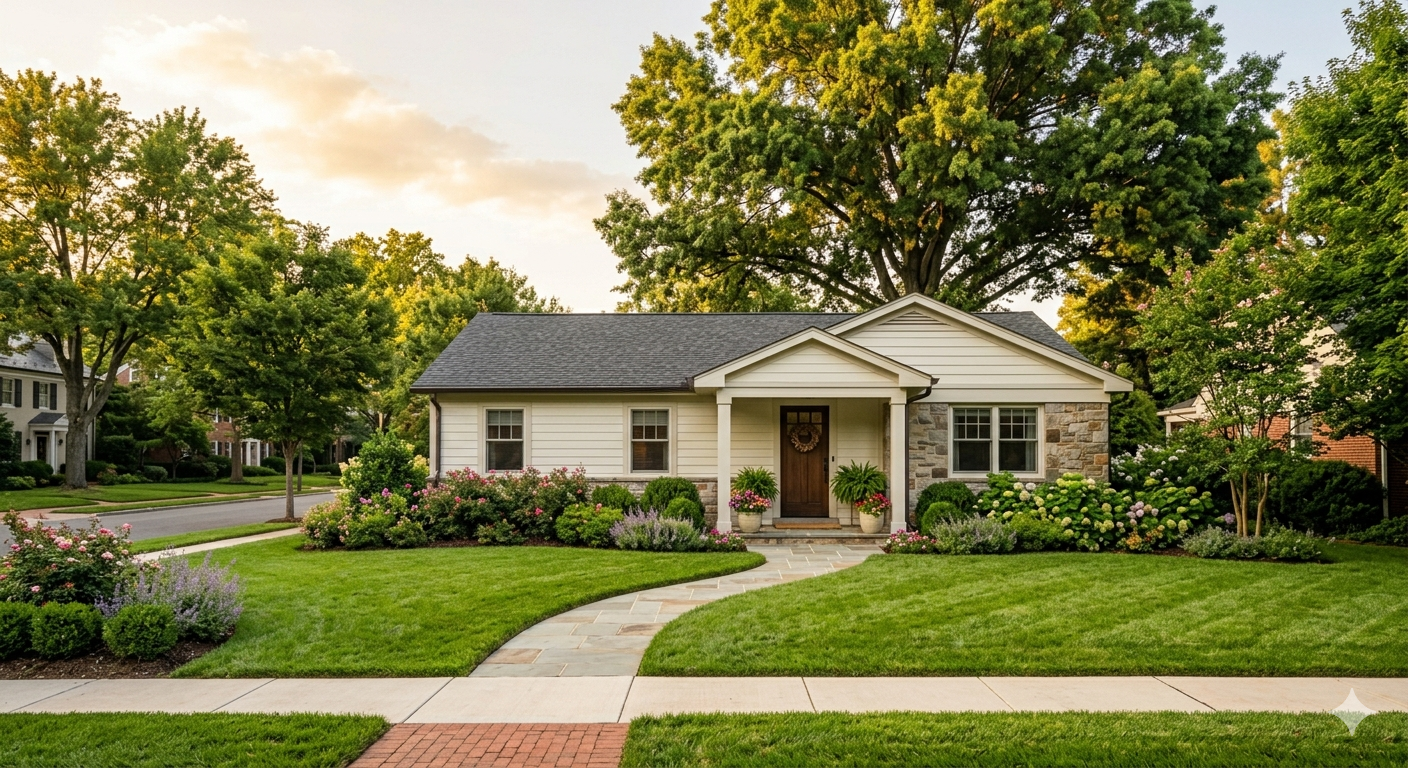
For many DC-area homeowners over 60, the right question is not whether to stay or go, but which choice actually supports the life they want to live next.
A Decision That Is About More Than Just Space
For homeowners over 60 in Washington, DC, Maryland, and Virginia, the question of whether to stay in the family home or downsize into something more manageable is one of the most consequential decisions of the next chapter. It is not purely financial, though the financial side matters enormously. It involves lifestyle, health considerations, proximity to family, what you want your daily life to look like, and what trade-offs you are genuinely willing to make.
Both aging in place and downsizing are legitimate choices. Neither is automatically right. What this guide aims to do is lay out the honest comparison so that DC-area homeowners over 60 can move forward with clarity rather than assumption or anxiety.
What Aging in Place Actually Involves
Aging in place means staying in your current home as you grow older, adapting it as needed to support changing physical needs and lifestyle priorities. For many DC-area homeowners who have lived in their homes for 20 or 30 years, the idea holds deep appeal. Familiar neighborhoods, established relationships, proximity to doctors and communities, and the comfort of a known home all weigh heavily in this direction.
The Real Costs of Staying
Aging in place is not free, and it is not passive. For homes in Bethesda, Chevy Chase, McLean, or Northwest DC that were built in the 1950s, 1960s, or 1970s, the physical plant of the home often requires meaningful adaptation. Single-floor accessibility, wider doorways, walk-in showers or roll-in tubs, stair lifts, and grab bars are among the most common modifications.
These modifications range from modest to significant in cost. A full bathroom conversion to an accessible design can run from $10,000 to $30,000 or more in the DC metro area, depending on the scope and finishes. A stair lift installation typically falls in the $3,000 to $10,000 range. A broader aging-in-place renovation that addresses multiple accessibility points across the home can easily reach $50,000 to $100,000 or beyond for larger properties.
Beyond modifications, the routine costs of maintaining a large, older home do not decrease as homeowners age. Property taxes in Montgomery County, Fairfax County, and the District of Columbia continue at current rates. Maintenance, landscaping, HVAC replacement, roof repair, and other capital expenses remain the homeowner’s responsibility. For households that have transitioned into retirement or reduced income, the carrying cost of a large home can create ongoing financial pressure.
What Aging in Place Offers
Stability is real and meaningful. Many homeowners over 60 who stay in their homes report stronger mental health outcomes, better maintenance of social networks, and a sense of continuity that supports wellbeing. Being in a neighborhood where you know people, where your doctors are nearby, where your routines are established, has genuine value that does not show up on a balance sheet.
For DC-area homeowners who purchased their homes 20 or 30 years ago, staying in place also means living in a home that has likely appreciated substantially. That equity is not liquid while you are in the home, but it provides a financial cushion and remains available through a future sale or a home equity arrangement if needed later.
What Downsizing Looks Like in the DC Metro Area
Downsizing does not mean settling. In the DC metro area, the options for right-sized living at or above 60 are genuinely strong. Whether the goal is a smaller detached home, a condominium in Bethesda or Arlington, a 55-plus active adult community, or a townhome in a walkable setting, the region has good inventory across a range of price points and lifestyle preferences.
What the Numbers Often Look Like
For a homeowner who purchased a four-bedroom home in Chevy Chase, Bethesda, or McLean 25 years ago for $600,000, current values in those markets may range from $1.4 million to $1.8 million or more depending on the property and current market conditions. After paying off any remaining mortgage and covering selling costs and potential capital gains tax implications, many DC-area homeowners in this situation may see substantial net proceeds. These figures are illustrative only. Contact Matt directly for a current market analysis based on your specific home.
That capital can fund a less expensive home outright, eliminating a mortgage payment entirely. It can reduce the financial footprint of housing significantly while increasing monthly cash flow, which matters deeply in retirement. For many households, this calculation alone shifts the decision toward selling.
Where DC-Area Homeowners Over 60 Are Downsizing To
The most common destinations for DC-area homeowners who downsize fall into a few categories. Condominiums in walkable Bethesda and Arlington remain highly attractive for buyers who want urban-adjacent convenience without the maintenance burden of a detached home. Single-level homes or townhomes in established neighborhoods provide space without stairs. Active adult communities in Montgomery County, Loudoun County, and Fairfax County offer social infrastructure alongside lower-maintenance living. Some homeowners choose to leave the region entirely, moving to coastal Virginia, the Carolinas, or Florida, though many who are deeply rooted in the DC area find they prefer to stay closer.
The Lifestyle Shift of Downsizing
Downsizing requires a real process of editing. Decades of accumulated belongings, furniture scaled to a larger home, and sentimental items all need decisions made about them. This is not a trivial undertaking, and for many homeowners it is the most emotionally demanding part of the transition. Planning for this process early and giving it enough time makes it far more manageable.
Once completed, most homeowners who downsize report that the process was harder than expected and the outcome better than expected. A home that fits your current life rather than the life you built 20 years ago tends to feel like a relief rather than a loss.
The Financial Comparison in Plain Terms
Setting aside emotional factors, the financial comparison between aging in place and downsizing comes down to a few core questions for DC-area homeowners over 60.
First, what does it cost you to stay in your current home, both in ongoing expenses and in the capital you would need to invest in modifications? Second, what would your financial position look like after a sale, and what could you afford to purchase in a right-sized home? Third, what would your monthly cost of housing look like in each scenario, factoring in mortgage payments, taxes, insurance, maintenance, and any HOA fees?
Running these numbers honestly with a financial advisor and a real estate professional who knows the DC metro market gives you the clearest picture available. Assumptions in either direction often lead to regret. Accurate numbers lead to good decisions.

Many DC-area homeowners who downsize find that a smaller, well-designed space delivers more freedom and less financial weight than the larger home they left behind.
How a DC-Area Real Estate Advisor Fits Into This Decision
An experienced real estate advisor can tell you what your current home is actually worth in today’s market, what comparable homes are selling for in your target neighborhood or community, and what the selling process would realistically look like in terms of timeline and net proceeds. That information changes the quality of the entire decision.
With over $780 million in career sales volume and 23+ years of experience across Washington, DC, Maryland, and Virginia, I have helped many homeowners over 60 work through exactly this question. Some have decided to stay and make targeted modifications. Others have found that selling and simplifying was the clearest financial and personal decision they could have made. What I can offer is honest, complete information without pressure toward either outcome.
If your household is in the early stages of thinking about right-sizing after the kids are gone, the post on downsizing after kids move out in DC, Maryland, and Virginia at mattsold.com covers the considerations that often come first in that process.
For those closer to a decision about selling, the guide on selling confidently in the DC area at mattsold.com walks through what the current market looks like and how to approach listing a home you have owned for decades.
For homeowners whose properties sit in the luxury segment, understanding what the current market looks like for higher-end homes is important. The post on luxury home sales in the DC metro area at mattsold.com covers what buyers in that market are looking for and how to position a property depending on the home and timing.
For homeowners who are also thinking about estate planning or a future transfer of the property, the post on estate sales and selling an inherited home in DC, Maryland, and Virginia at mattsold.com addresses how these transitions are typically handled. Note: confirm all four internal URLs resolve correctly before publishing.
External Resources
For Homeowners researching the practical side of staying in their current home, AARP resources on aging in place and home modification offer consumer-focused guidance on common adaptations, costs, and planning considerations.
For independent guidance on housing options in retirement, HUD-approved housing counseling services connect homeowners with nonprofit counselors who can review financial options including reverse mortgages, downsizing, and rental alternatives at no cost.
The Final Word
There is no universal answer to the aging-in-place versus downsizing question for DC-area homeowners over 60. The right answer depends on your health, your finances, your family situation, and what you genuinely want the next chapter of your life to look like. What matters is making the decision with accurate information rather than assumptions built on what the home was worth five years ago or what you imagine the process will be like without having explored it.
If you are thinking through this question for your home in Washington, DC, Bethesda, Chevy Chase, McLean, Potomac, or anywhere across the DC metro area, I would be glad to sit down and walk through the numbers with you. Reach out at mattsold.com to start the conversation.
Frequently Asked Questions
Is it better to age in place or downsize in the DC area?
There is no single right answer. Aging in place offers continuity and stability, while downsizing typically reduces costs, eliminates maintenance burden, and unlocks home equity. The better choice depends on your financial situation, health, and lifestyle priorities.
What does it cost to modify a DC-area home for aging in place?
Costs vary widely. Basic modifications like grab bars and handrails may cost a few hundred to a few thousand dollars. A full accessible bathroom renovation in the DC metro area can run $10,000 to $30,000 or more. A comprehensive aging-in-place remodel of a larger home may reach $50,000 to $100,000 depending on scope.
How much equity do most DC-area homeowners over 60 have?
It varies significantly based on when the home was purchased and the neighborhood. Many homeowners who bought 20 to 30 years ago in Bethesda, Chevy Chase, McLean, or Northwest DC have seen substantial appreciation. A real estate advisor can provide a current market analysis to establish what your specific home is worth today.
What are the best places to downsize in the DC metro area?
Popular options include condominiums in Bethesda and Arlington, single-level homes in established Montgomery and Fairfax County communities, and active adult communities across the region. The best choice depends on your lifestyle preferences, proximity needs, and budget after selling your current home.
What tax implications should DC-area homeowners over 60 consider before selling?
The federal capital gains exclusion allows individuals to exclude up to $250,000 in gains and married couples up to $500,000, subject to eligibility. Homeowners over 55 no longer receive an automatic additional exclusion under current federal law, but other planning strategies may apply. This is general information only and not tax advice. Please consult a licensed CPA or tax advisor familiar with DC, Maryland, and Virginia rules for guidance specific to your situation.
Can I sell my home and rent instead of downsizing into another purchase?
Yes. Some DC-area homeowners over 60 choose to sell, invest the proceeds, and rent in a more manageable setting. This eliminates maintenance responsibility entirely and provides maximum flexibility. It also means giving up equity accumulation through homeownership, so the trade-off is worth considering carefully.
How long does selling a home take in the DC area?
Market timing varies, and conditions shift. In recent years, well-priced homes in desirable DC-area neighborhoods have often gone under contract within two to four weeks of listing, with closing following approximately 30 days later. The full process from preparation to closing has typically run 60 to 90 days, though it can be shorter or longer depending on the home and market conditions at the time of listing. Contact Matt directly for a current market analysis reflecting today’s conditions.
Is there financial assistance available for aging-in-place home modifications in DC, Maryland, or Virginia?
Programs have existed at the state and county level in Maryland, Virginia, and DC for qualifying homeowners, and Montgomery County, Fairfax County, and the District of Columbia have each offered grants or low-interest loans for accessibility improvements in recent years. Eligibility criteria vary, resources are sometimes limited, and program availability changes. Verify current offerings directly with each jurisdiction before relying on this information, as it may not reflect the most recent program status.
When is the right time to start thinking about aging in place versus downsizing?
Earlier is almost always better. Many financial advisors recommend beginning this evaluation in your late 50s or early 60s, well before any urgency is created by health changes or market conditions. Having the information and a plan in place gives you more choices and better outcomes than waiting until a decision is forced.
About Matt Cheney
Matt Cheney is a top-producing real estate advisor with Compass in Washington, DC, Bethesda, Maryland, and McLean Virginia, guiding buyers and sellers across DC, Maryland, and Virginia through high-stakes moves, from luxury sales to estates, downsizing, luxury condominiums and divorce-related transactions. With over $780 million in career sales volume and 23+ years of experience, Matt is consistently ranked in the Top 1.5% of agents nationally by RealTrends America’s Best and has been named a Washingtonian Top Agent five years running. He is known for calm, strategic guidance and a straightforward approach to complex and sensitive real estate situations.
Matt Cheney | Compass Real Estate is committed to the principles of the Fair Housing Act and the Equal Opportunity Act. All real estate services are provided without regard to race, color, national origin, religion, sex, familial status, or disability.