

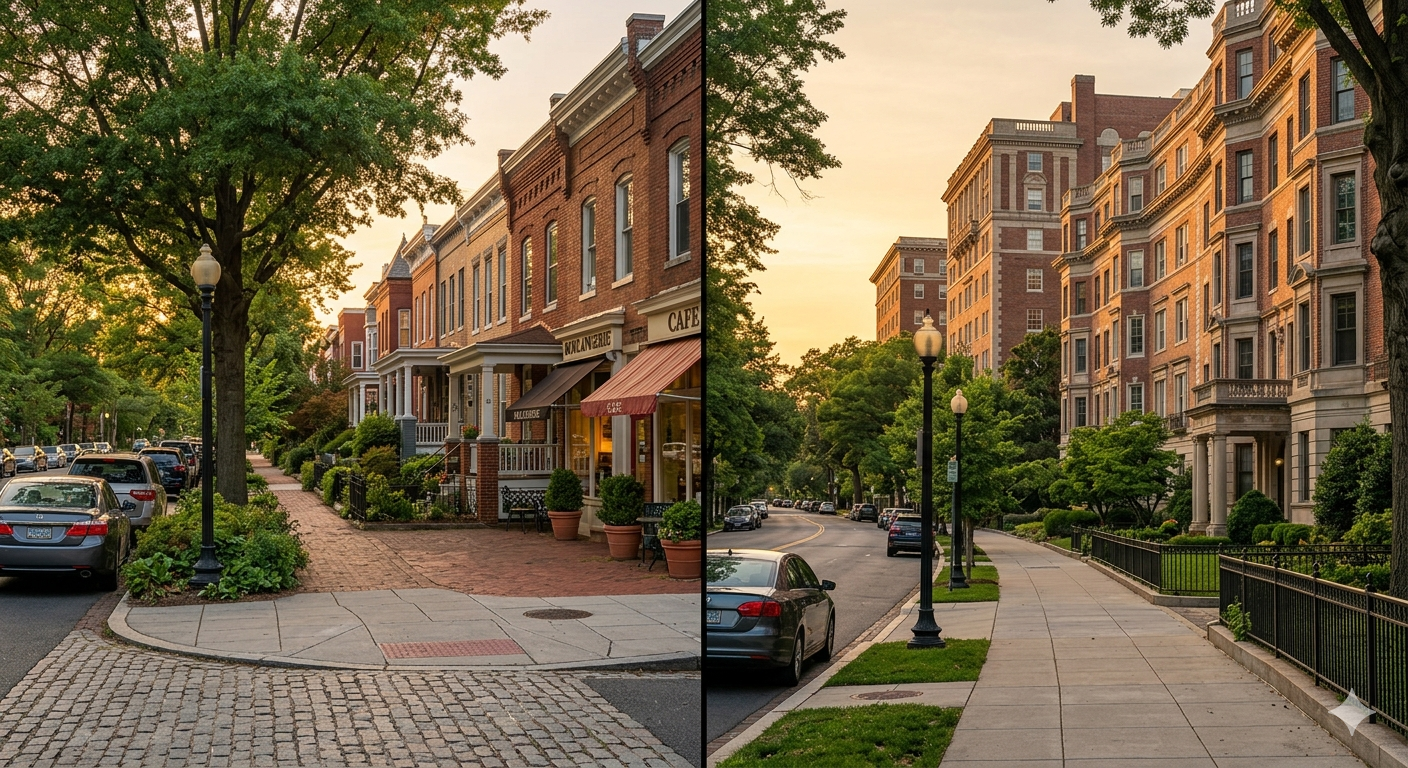
Two iconic Northwest DC neighborhoods offering distinct lifestyle and housing options for your next move
Two of Northwest DC’s most beloved neighborhoods sit just a mile and a half apart, yet they attract very different buyers. Glover Park and Woodley Park both offer tree-lined streets, walkable amenities, and that distinctly DC mix of neighborhood calm with city access. But when it comes to home prices, commute options, school choices, and the overall feel of daily life, the two neighborhoods tell a different story. If you are trying to decide between Glover Park vs. Woodley Park in Northwest DC, this guide will walk you through what each neighborhood actually offers, who tends to thrive there, and what to expect when you buy or sell in either market in 2026.
After more than 23 years working with buyers and sellers across Washington, DC, Maryland, and Virginia, I have seen how much a neighborhood comparison like this matters. The right neighborhood is not just about square footage or price per foot. It is about how you want to live every day.
Getting to Know These Two Northwest DC Neighborhoods
Glover Park sits in the upper northwest corner of the District, just west of Georgetown and bordered by Glover Archbold Park and Whitehaven Park. It is a neighborhood of 1920s brick rowhouses and garden-style apartment buildings tucked into a leafy enclave that feels more like a small town than a capital city. Most of the retail and dining sits along Wisconsin Avenue, giving residents a walkable commercial strip for everyday needs without the crowds and density of Georgetown itself.
Woodley Park occupies a stretch of Connecticut Avenue NW just north of Adams Morgan, anchored at its heart by the Woodley Park-Zoo/Adams Morgan Metro station on the Red Line. The neighborhood is known for its stately Wardman rowhouses and colonial-style homes, its proximity to Rock Creek Park, and the constant low-level hum of energy that comes from being steps away from the Smithsonian National Zoo. Connecticut Avenue provides restaurants, coffee shops, and small businesses in a walkable commercial corridor that feels a touch more established than Wisconsin Avenue in Glover Park.
Both neighborhoods sit in the 20008 zip code, which according to some market indicators saw increased buyer activity in late 2025, reflecting renewed interest in walkable, character-rich areas with limited housing supply. Buyers and sellers should contact Matt directly for a current market analysis with up-to-date data for their specific property and street.
Home Prices: What the Market Looks Like in 2026
Price is often the first variable buyers examine when comparing these two neighborhoods, and in 2026 there is a meaningful gap between them.
Glover Park Home Prices
Glover Park offers one of the most accessible entry points in upper Northwest DC. Condos in established buildings start in the low to mid $100,000s, with updated units ranging from the mid $400,000s to $900,000 depending on size and condition. Rowhouses, which define the neighborhood’s character, typically trade between $950,000 and $1.6 million based on square footage, renovation quality, and bedroom count. The smaller number of detached single-family homes in Glover Park reach from $1.8 million to over $3 million. For buyers who want to be in walkable Northwest DC without paying Georgetown-level prices, Glover Park has long been the logical choice. The neighborhood appeals especially to buyers who are buying their first home in the DC area or who are moving up from a condo and want a rowhouse with outdoor space.
Woodley Park Home Prices
Woodley Park commands a notably higher median price. Recent sales data puts the neighborhood’s median sale price in the range of $1.3 million to $1.5 million, with recent transactions ranging from studio condos under $300,000 all the way to detached colonial homes priced at $3.9 million and above. The Wardman-style rowhouses that give the neighborhood its architectural identity tend to trade between $1.2 million and $2.5 million for well-maintained examples. A recent sale on 29th Street NW closed at $1.66 million, coming in 13 percent above list price after just four days on the market. That kind of result reflects strong underlying demand for the right Woodley Park property at the right price.
The broader price gap between the two neighborhoods is significant and should be factored carefully into any buying decision. That said, value is not just about list price. It is about what you get for the money, how the neighborhood fits your life, and where values are headed over time.
Getting Around: Transit, Walkability, and Commuting
For many DC buyers, proximity to Metro is not just a convenience. It is a condition of the purchase.
Woodley Park and the Red Line Advantage
Woodley Park has a clear transit advantage. The Woodley Park-Zoo/Adams Morgan Metro station sits right on Connecticut Avenue, giving residents direct Red Line access to Dupont Circle, Farragut North, Metro Center, Union Station, and further into Maryland. For buyers who commute downtown or into Maryland suburbs, this walkable Metro access can meaningfully simplify daily life. City buses also run along Connecticut Avenue, providing additional transit options for those who need to travel in directions the Red Line does not serve directly.
Glover Park and Bus-Based Commuting
Glover Park does not have its own Metro station, which is one of the most commonly cited trade-offs for buyers choosing between the two neighborhoods. The nearest Red Line access is at the Woodley Park station, roughly two miles away. Bus routes along Wisconsin Avenue connect residents to Tenleytown on the Red Line to the north, and to Georgetown and points east. For buyers who work primarily in Georgetown or the Embassy Row corridor, this is a minor inconvenience. For those who commute downtown daily by rail, it is worth thinking through carefully before you commit.
Both neighborhoods are reasonably walkable for errands along their respective commercial corridors, and both offer good access to Rock Creek Park and its trail network for cyclists and walkers. The difference in transit access is real, and depending on your commute patterns, it can matter more than the price gap between the two neighborhoods.
Schools in Glover Park and Woodley Park
School boundaries are one of the most important variables in any DC real estate decision, and the picture changes at different grade levels. School boundary information provided here is for general reference only. Buyers should verify their specific address through the DC Public Schools boundary tool at dcps.dc.gov before making any purchase decision, as boundaries can and do change. What was accurate two years ago may not reflect current assignments.
Elementary Schools
Glover Park’s in-boundary elementary school is Benjamin Stoddert Elementary, a well-regarded DCPS school in upper Northwest DC. Woodley Park has access to the highly regarded Oyster-Adams Bilingual School, a dual-language Spanish-English DCPS school that draws strong parent reviews and has consistent performance ratings. Families prioritizing bilingual education or Spanish-language immersion at the elementary level often factor the Oyster-Adams boundary directly into their Woodley Park home search.
Middle and High School
Both neighborhoods feed into the Hardy Middle School service area, though families should verify this directly as boundaries can change. At the high school level, Jackson-Reed High School serves much of Northwest DC and holds an A rating on Niche with a student-to-teacher ratio of 14 to 1. Private school options abound in upper Northwest DC, and many families in both neighborhoods use a mix of DCPS and private enrollment depending on grade level and individual fit.
Neighborhood Character and Daily Life
Price and transit are measurable. Neighborhood character is harder to quantify but often matters most in the long run.
Living in Glover Park
Glover Park has a distinctly residential, close-knit feel that residents describe as suburban calm within city limits. The annual Glover Park Day celebration at the Guy Mason Recreation Center on Wisconsin Avenue draws the neighborhood together each June for food, music, and a community flea market. The porch-front rowhouses and tree-canopied streets lend themselves to impromptu neighbor conversations and a pace of life that feels intentionally unhurried. Wisconsin Avenue provides casual dining, neighborhood services, and quick grocery access without the commercial intensity of the larger DC corridors.
Glover Archbold Park and Whitehaven Park wrap around the neighborhood’s borders, offering walking trails and green space just steps from most front doors. For buyers who are downsizing in Washington, DC and want a manageable, walkable neighborhood with a strong sense of community, Glover Park often rises to the top of the list.
Living in Woodley Park
Woodley Park carries a slightly more urbane energy without losing its residential character. Connecticut Avenue is busier than Wisconsin Avenue, and the presence of the Metro station and the National Zoo means the neighborhood sees more foot traffic from visitors and commuters. That activity translates to a broader restaurant and café scene, with Open City DC, Lillies Restaurant, Han Palace, and Duke’s Counter drawing diners from across the city.
Rock Creek Park is the defining outdoor amenity here. Residents walk to hiking trails, tennis courts, and wooded paths without getting in a car. Washington National Cathedral is less than a quarter mile away, offering one of DC’s most architecturally significant landmarks as a near daily backdrop. For buyers interested in luxury property sales in the DC metro area, Woodley Park’s stately colonials and landmark proximity give it a prestige that registers both in list price and in lasting desirability.
Who Should Choose Glover Park
Glover Park tends to attract buyers who want strong value in upper Northwest DC, a genuine neighborhood community feel, and a quieter pace of daily life. It works particularly well for buyers in the following situations.
Glover Park tends to work well for first-time buyers or buyers upgrading from a condo who want outdoor space, a private porch, and ownership in a coveted DC neighborhood at an accessible price point. It is also a natural fit for buyers who work in Georgetown or the Embassy Row corridor and can manage without direct Metro access. Empty nesters and downsizers often find it appeals to their priorities as well, offering a walkable, well-established neighborhood without sacrificing a genuine DC address. Buyers who treat proximity to parks, green space, and outdoor trails as part of their daily routine consistently find Glover Park worth a close look.
Glover Park is also a neighborhood that tends to hold its value well precisely because of its limited supply, its consistent demand among discerning buyers, and the fact that it sits adjacent to Georgetown without carrying Georgetown prices. For buyers looking at the best neighborhoods for move-up buyers in Northwest DC, Glover Park is consistently worth a close look.
Who Should Choose Woodley Park
Woodley Park tends to draw buyers who prioritize Metro access, a more active street-level environment, and the prestige of a neighborhood with deep architectural roots and strong institutional anchors. The right Woodley Park buyer is often in one of these situations.
Woodley Park tends to draw buyers who commute via Red Line and want to walk to the Metro without compromise. It is also a strong fit for families who want in-boundary access to Oyster-Adams Bilingual School at the elementary level, and for move-up buyers or established professionals who want a stately colonial or Wardman rowhouse with more square footage and architectural presence than what is typically available in Glover Park. Buyers who value a more active neighborhood commercial corridor and the option to walk to restaurants, coffee shops, and services with ease often find Woodley Park to be the better match.
Woodley Park also benefits from its proximity to Rock Creek Park in a way that is hard to overstate. For buyers who treat outdoor access as a daily non-negotiable rather than a weekend luxury, the trail and green space access from Woodley Park is among the best of any urban neighborhood in the entire DC metro area.
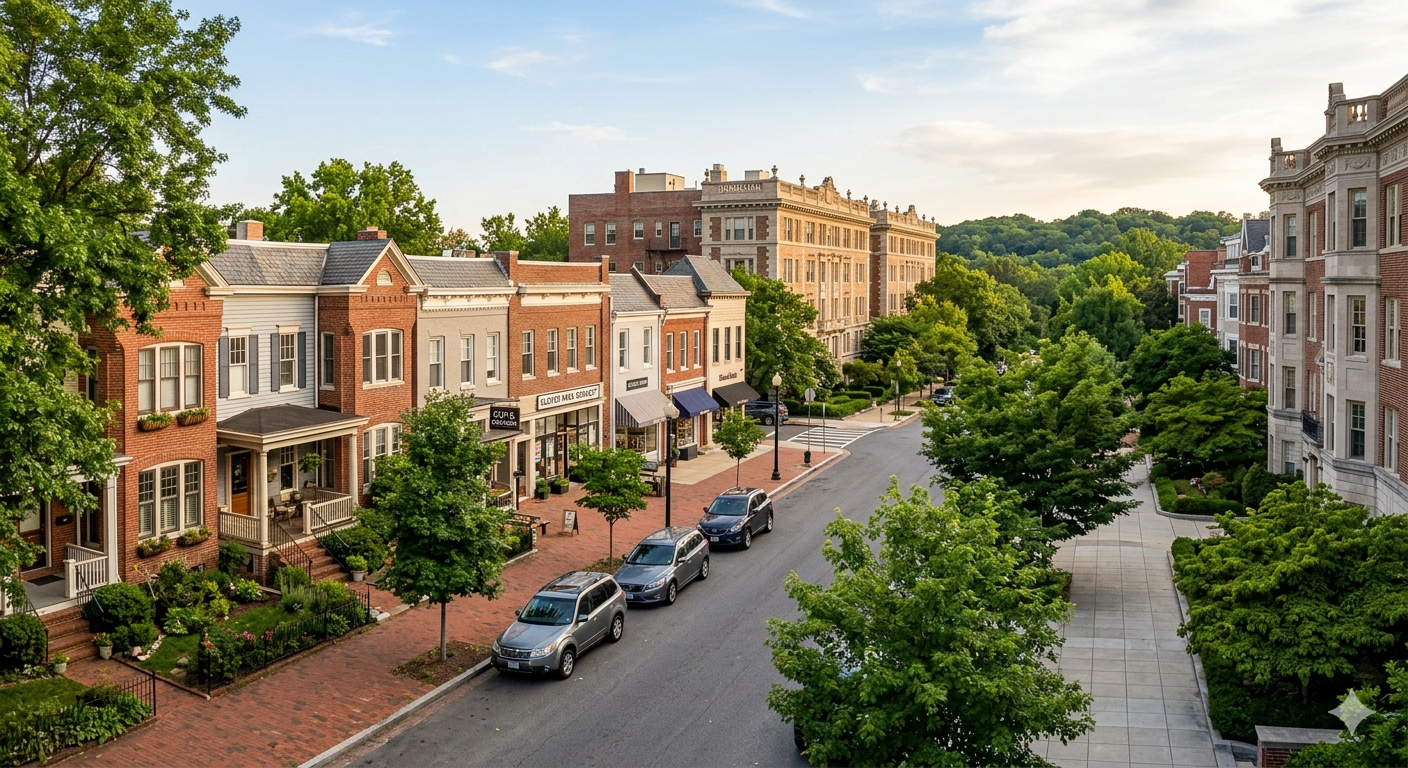
Glover Park and Woodley Park offer distinct living experiences within Northwest Washington DC
What Sellers Should Know About These Two Markets
If you own a home in either Glover Park or Woodley Park and are thinking about selling in 2026, the most important thing to understand is that the broader DC market is rewarding well-priced, well-presented properties and penalizing overpriced ones. Days on market have been lengthening across the metro area, which means sellers who set prices based on the peak activity of prior years rather than today’s real data are sitting on the market longer than necessary.
In Woodley Park, the gap between what sellers expect and what buyers are willing to pay has widened over the past year, with the median sale price down meaningfully from 2024 peaks on some measures. That does not mean it is a bad time to sell. It means pricing strategy matters more than it has in several years. In Glover Park, demand from buyers who cannot quite stretch to Woodley Park prices helps sustain activity, and well-prepared rowhouses continue to attract strong offers.
For sellers in both neighborhoods, the fundamentals remain the same: price accurately based on current comps, prepare the property to show its best, and work with an advisor who knows the specific buyer profile for each street. If you are thinking about selling your home in the DC metro area in 2026, I am happy to walk you through the current data for your specific block and home type.
A Side-by-Side Comparison
To make this easier to use as a reference, here is a direct comparison of the key variables across both neighborhoods.
Home Price Range: Glover Park rowhouses typically range from $950,000 to $1.6 million, with single-family homes reaching above $1.8 million. Woodley Park has a broader range, from condos under $300,000 to large colonials above $3.5 million, with a neighborhood median closer to $1.3 million to $1.5 million.
Metro Access: Woodley Park has a Red Line station on Connecticut Avenue. Glover Park does not have a Metro station, with the nearest access approximately two miles away at Woodley Park.
Elementary School: Glover Park feeds to Benjamin Stoddert Elementary. Woodley Park feeds to Oyster-Adams Bilingual School, a dual-language Spanish-English program.
Commercial Corridor: Glover Park is served by Wisconsin Avenue with a smaller, service-oriented retail strip. Woodley Park is served by Connecticut Avenue with a more active restaurant and café scene.
Neighborhood Vibe: Glover Park leans quieter, more residential, and more community-focused. Woodley Park is slightly more urban, with the energy that comes from Metro access, the National Zoo, and a busier main street.
Outdoor Access: Both neighborhoods offer excellent park access. Glover Park is directly bordered by Glover Archbold Park. Woodley Park has Rock Creek Park approximately one mile away, with trail access easy on foot or by bicycle.
Housing Type: Glover Park offers primarily rowhouses, garden condos, and apartment buildings. Woodley Park has a wider mix including larger Wardman rowhouses, detached colonials, and a range of condo options.
Frequently Asked Questions: Glover Park vs. Woodley Park
Is Glover Park or Woodley Park more affordable in DC?
Glover Park is generally more affordable, with rowhouse prices typically ranging from $950,000 to $1.6 million and a lower overall median than Woodley Park, where the neighborhood median is in the $1.3 million to $1.5 million range.
Does Glover Park have a Metro station?
No. Glover Park does not have its own Metro station. The nearest Red Line access is the Woodley Park-Zoo/Adams Morgan station, approximately two miles away. Bus routes along Wisconsin Avenue connect Glover Park to the Tenleytown station to the north.
What is the best elementary school in Woodley Park DC?
Woodley Park is in the boundary for Oyster-Adams Bilingual School, a DCPS dual-language Spanish-English school that receives consistently strong parent and performance reviews. Families should always verify their specific address using the DC Public Schools boundary tool.
Is Woodley Park a good place to buy a home in DC?
For many buyers, Woodley Park is one of Northwest DC’s most established and desirable neighborhoods, with long-term demand driven by Metro access, school quality, architectural character, and proximity to Rock Creek Park and the National Zoo. As with any DC neighborhood in 2026, accurate pricing and careful due diligence remain essential for both buyers and sellers.
Which neighborhood is better for families, Glover Park or Woodley Park?
Both neighborhoods offer distinct advantages depending on your priorities. Woodley Park’s Oyster-Adams Bilingual School boundary and walkable Metro access may appeal to buyers who prioritize bilingual education and rail commuting. Glover Park’s quieter streets, park borders, and strong community character may appeal to buyers who prioritize neighborhood feel and outdoor access and can manage without a Metro station nearby. Buyers should review current public safety data, verify school boundaries directly with DCPS, and weigh their specific commute patterns before deciding. Individual results vary by property, timing, and market conditions.
What type of homes are in Glover Park DC?
Glover Park is primarily known for 1920s brick rowhouses with front porches, garden-style condos, and small apartment buildings. Detached single-family homes exist but are less common. The neighborhood’s architectural consistency is part of what gives it a cohesive, established character.
What are Wardman houses in Woodley Park?
Wardman houses are a distinctive type of early 20th century rowhouse built largely by developer Harry Wardman, who developed many of Washington DC’s residential neighborhoods including much of Woodley Park. They typically feature colonial or federal-influenced exteriors, wide front porches, and generous interior spaces that blend historic character with practical functionality.
What is the best neighborhood in Northwest DC to buy a home?
The right answer depends on your budget, commute, school priorities, and lifestyle preferences. Glover Park and Woodley Park are both strong choices. Georgetown, Kalorama, Spring Valley, and Wesley Heights are also premier options in upper Northwest DC. A conversation with an advisor who knows all of these neighborhoods deeply is the best starting point.
How long do homes stay on the market in Woodley Park DC?
In Woodley Park, some recent market data has suggested average days on market in the range of 49 to 55 days, though this can vary depending on property type, price point, condition, and timing. Well-priced properties in strong condition may attract offers more quickly. No specific result is guaranteed. Contact Matt directly for a current market analysis with the most recent data for your property type and street.
The Final Word: Choosing Between Glover Park and Woodley Park
Both of these neighborhoods deserve their strong reputations. They are among the most livable, most stable, and most consistently desirable addresses in all of Northwest DC. The choice between them comes down to a handful of practical factors that only you can weigh.
If walkable Metro access is non-negotiable and you want a more active neighborhood corridor with the prestige of stately Wardman architecture, Woodley Park is the stronger fit. If you want a quieter, more intimate neighborhood with excellent value relative to nearby addresses and a genuine sense of community, Glover Park is a compelling choice that buyers often find they love more than they expected.
What both neighborhoods share is limited supply, sustained long-term demand, and the kind of architectural and community character that does not get manufactured. That is why buyers who find the right home in either neighborhood tend to stay for a long time.
If you are weighing these two neighborhoods as part of a buy or sell decision in Washington, DC, I would be glad to share current market data, walk you through recent sales, and help you think through the trade-offs clearly. There is no pressure and no rush. Just clear information and honest guidance.
Contact Matt Cheney at mattsold.com to start the conversation.
About Matt Cheney
Matt Cheney is a top-producing real estate advisor with Compass in Washington, DC, Bethesda, Maryland, and McLean Virginia, guiding buyers and sellers across DC, Maryland, and Virginia through high-stakes moves, from luxury sales to estates, downsizing, luxury condominiums and divorce-related transactions. With over $780 million in career sales volume and 23+ years of experience, Matt is consistently ranked in the Top 1.5% of agents nationally by RealTrends America’s Best and has been named a Washingtonian Top Agent five years running. He is known for calm, strategic guidance and a straightforward approach to complex and sensitive real estate situations.
Matt Cheney | Compass Real Estate is committed to the principles of the Fair Housing Act and the Equal Opportunity Act. All real estate services are provided without regard to race, color, national origin, religion, sex, familial status, or disability.