

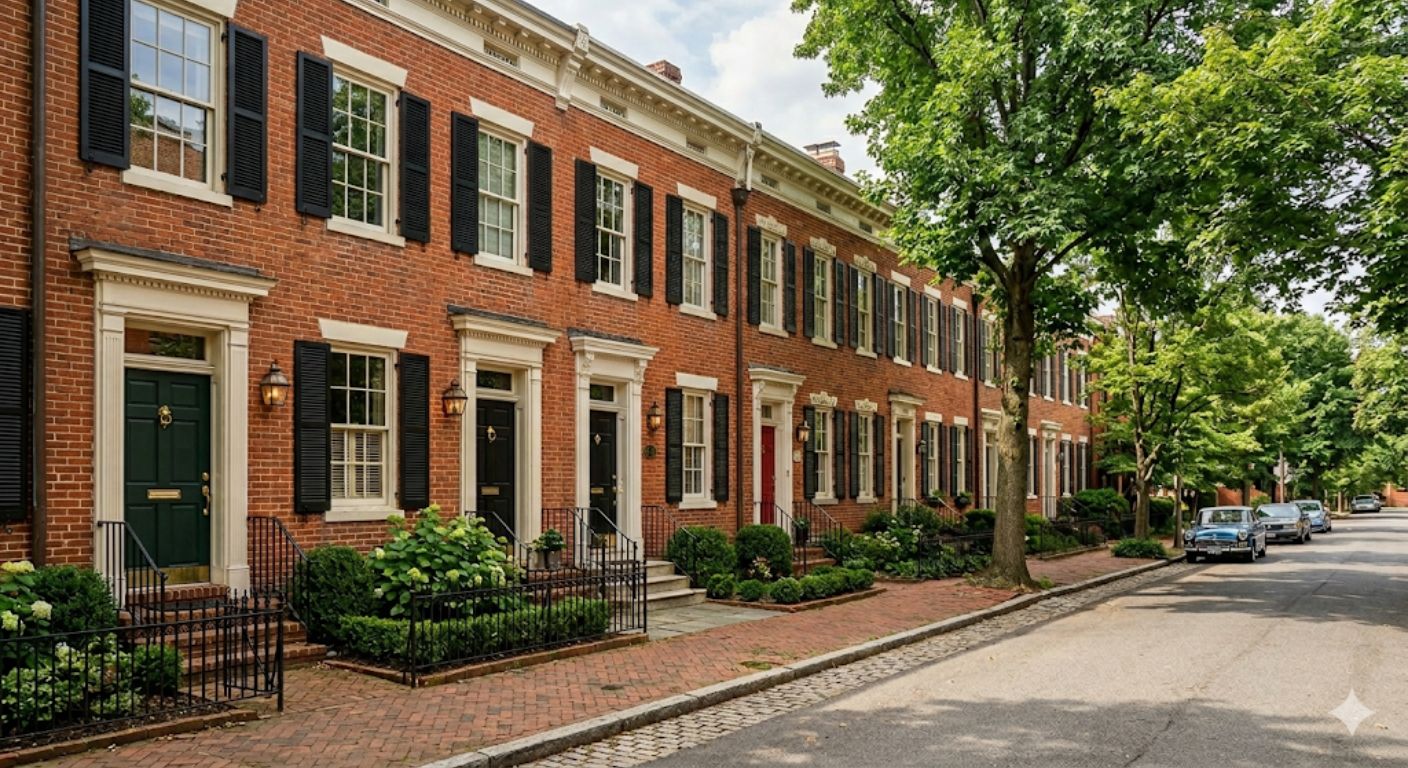
Georgetown townhouses get talked about as a single category, but the reality is there’s a lot of variation block to block, and even house to house. If you’re starting to look in this market, it helps to know what’s typical and what’s worth paying close attention to before you get attached to a specific listing.
Layouts Vary More Than You’d Expect
Many Georgetown townhouses were built long before modern floor plans became standard, which means rooms can be narrower, ceilings can be lower on upper floors, and staircases can be steeper than buyers coming from newer construction are used to. Some homes have been opened up with additions or renovations, while others retain their original footprint.
Neither approach is automatically better. A buyer who wants the character of an untouched historic layout will look at homes differently than a buyer who wants a more open, modern flow. It’s worth touring a range of layouts early so you have a real sense of what feels right, rather than assuming all Georgetown townhouses are interchangeable.
Parking Is Its Own Consideration
On-street parking in Georgetown can be limited, and not every townhouse comes with a dedicated spot or garage. For some buyers this is a minor issue. For others, especially those coming from areas where a driveway is assumed, it’s a bigger adjustment than expected.
If parking matters to your daily routine, it’s worth confirming exactly what comes with a property, whether that’s a private spot, a shared arrangement, or none at all, before making an offer.
What Affects Price in This Market
Beyond square footage, a few things tend to separate price points in Georgetown: outdoor space, even a small patio or garden, condition of mechanical systems in older homes, and proximity to the main commercial corridors versus quieter residential blocks. Two homes that look similar in listing photos can be priced quite differently once you factor these in.
For buyers, this means it’s worth asking what’s driving the price on a specific home, not just comparing per-square-foot numbers across the neighborhood.
You may also like: What are the most desirable neighborhoods for high-end homes in Washington DC, 5 of Washington DC’s Most Walkable Neighborhoods for Everyday Living, and The Dupont Circle Condo Market in 2026: What Buyers and Sellers Need to Know
How Matt Cheney Helps Buyers Navigate Georgetown
With over 22 years of experience and more than $779 million in career sales volume across DC, Maryland, and Virginia, Matt Cheney has worked with buyers across Georgetown’s range of inventory, from untouched historic homes to fully renovated properties. That experience helps buyers understand what they’re actually getting, and what it might take to make a home work for their needs.
If you’re considering Georgetown DC homes for sale, Matt can help you compare options based on layout, condition, and location within the neighborhood. For a broader look at how the DC housing market has been trending, the DC Housing Search resource from the DC Department of Housing and Community Development is a useful starting point.
Frequently Asked Questions
Are Georgetown townhouses a good fit for different buyer profiles?
It depends on the layout and the buyer’s priorities. Some townhouses work well for buyers who need more square footage or finished lower levels, while others suit buyers who prefer a more compact footprint. Touring a range of layouts helps clarify what works for a given situation.
Do Georgetown townhouses require more maintenance than newer homes?
Older homes generally come with more to maintain, especially systems like plumbing, electrical, and roofing. A thorough inspection helps buyers understand what they’re taking on before closing.
Is now a good time to buy in Georgetown?
Timing depends on your personal situation as much as market conditions. An agent familiar with current inventory and recent sales can help you understand where things stand when you’re ready to look.
How does outdoor space affect value in this market?
Even modest outdoor space, like a small patio or garden, tends to be valued highly in a dense neighborhood like Georgetown, and can meaningfully affect price compared to a similar home without it.
Matt Cheney | Compass Real Estate is committed to the principles of the Fair Housing Act and the Equal Opportunity Act. All real estate services are provided without regard to race, color, national origin, religion, sex, familial status, or disability.
About Matt Cheney
Matt Cheney is a top-producing real estate advisor with Compass in Washington, DC, guiding buyers and sellers across DC, Maryland, and Virginia through high-stakes moves, from luxury sales to estate settlements, downsizing, and divorce-related transactions. With over $779 million in career sales volume and 22+ years of experience, Matt is ranked in the Top 1.5% of agents nationally by RealTrends America’s Best. He is known for calm, strategic guidance and a straightforward approach to complex and sensitive real estate situations.