

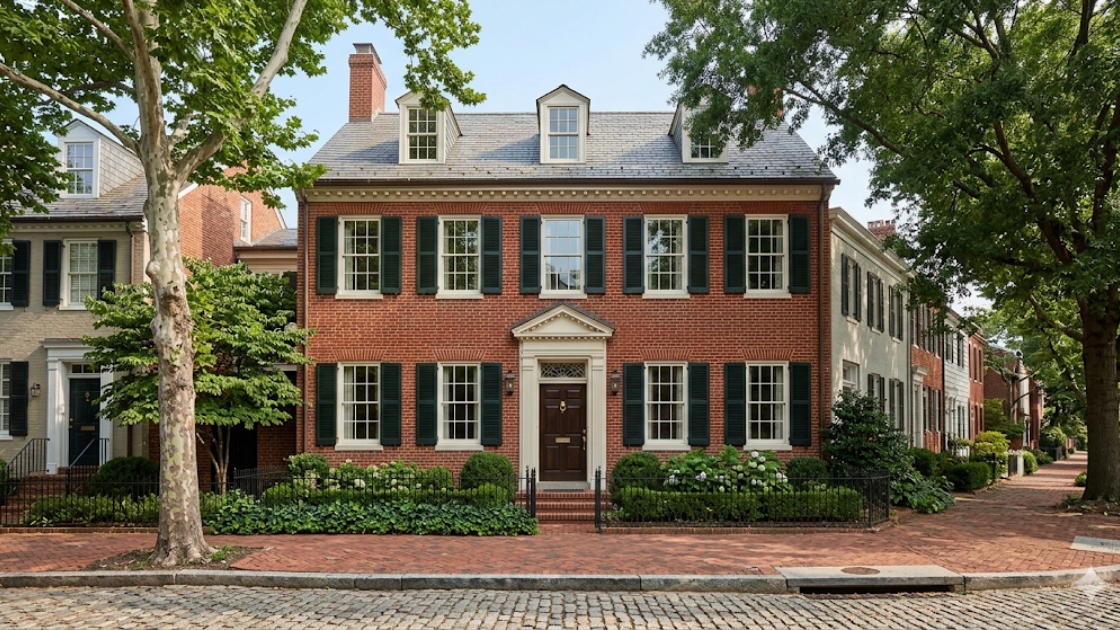
Georgetown’s Federal and Colonial rowhouses contribute to a fixed housing stock that has supported long-term property values.
Georgetown is one of the most recognized residential neighborhoods in Washington, DC, and it has been for a long time. For buyers trying to understand what they’re getting into and for sellers trying to understand what they have, the question that comes up consistently is simple: why does Georgetown hold its value the way it does? The answer isn’t complicated, but it’s worth walking through.
What Georgetown DC Offers That Most Neighborhoods Don’t
Georgetown’s value is built on a combination of factors that are genuinely difficult to replicate. The neighborhood has a fixed housing stock, limited new development, walkability to a strong retail and restaurant corridor, and a physical setting along the Potomac River that no other DC neighborhood can match. These aren’t marketing points. They’re structural characteristics that have shaped demand for decades.
The housing stock in Georgetown is primarily Federal, Colonial, and Victorian rowhouses, along with carriage houses, detached homes, and some larger estates near the water. Most of what’s here was built in the 18th and 19th centuries. The DC Historic District designation limits what can be altered or demolished, which keeps the character of the neighborhood intact. That preservation is part of what buyers are paying for.
Walkability is also a consistent draw. Georgetown has a commercial corridor along M Street and Wisconsin Avenue with restaurants, shops, and services that buyers and residents use regularly. That kind of immediate walkability is harder to find in other parts of the city at a comparable price point.
Georgetown’s Sub-Areas and What Sets Them Apart
Georgetown isn’t a single, uniform market. Buyers and sellers benefit from understanding how the neighborhood breaks down internally, since pricing and demand can vary meaningfully block by block.
The area east of Wisconsin Avenue, sometimes referred to as the East Village, tends to feature a denser concentration of smaller rowhouses and a shorter walk to the retail corridor along M Street. The West Village, west of Wisconsin Avenue toward the university, includes larger lots, some detached homes, and streets that see less foot traffic. Closer to the waterfront, buyers find a mix of converted industrial buildings, condominiums, and homes that trade partly on proximity to the Potomac and the C&O Canal.
Each of these pockets appeals to a different kind of buyer. Someone prioritizing walkability to restaurants and shops may gravitate toward the East Village. A buyer who wants more separation from foot traffic, or a larger footprint, often looks toward the western streets. Waterfront proximity carries its own premium and its own trade-offs, including exposure to seasonal foot and vehicle traffic near the canal path.
Because Georgetown’s market is small, pricing within these sub-areas should be evaluated against very recent, hyper-local comparables rather than neighborhood-wide averages. A property two blocks away can carry meaningfully different value depending on lot size, parking, and proximity to the commercial corridor. Buyers and sellers should confirm current comparable sales for their specific block before setting expectations.
Lot size and off-street parking also vary widely between these pockets, and both tend to move price more than square footage alone. A smaller home with private parking on a quiet West Village street can outprice a larger home closer to the retail corridor, simply because parking is scarce throughout the neighborhood. Buyers should weigh these trade-offs against their own priorities rather than assuming any one sub-area is uniformly “better.” Contact Matt directly for a current market analysis of a specific block or property.
How Georgetown Performs Across Different Market Conditions
One of the things that stands out about Georgetown real estate is how it performs when the broader market slows. It may not always appreciate faster than other neighborhoods during strong markets, but it has often shown more resilience when conditions soften, depending on property type and broader economic factors. Buyers considering Georgetown at this price point should review current market data and verify recent comparable sales directly.
There’s also a consistent buyer pool. Georgetown attracts buyers from within the DC market, as well as buyers relocating from New York, Boston, and other major markets. International buyers have at times been active in this market. Buyers and sellers should verify current demand patterns directly, as market composition can shift.
Pricing in Georgetown tends to be driven heavily by location within the neighborhood, lot or footprint size, condition, and parking. Parking is not a minor consideration here. A home with off-street parking in Georgetown carries a meaningful premium over a comparable home without it. That premium has remained consistent across recent market cycles, though buyers and sellers should verify current comparable sales for exact figures.
What Sellers in Georgetown Should Understand
Selling in Georgetown is not like selling in a higher-volume neighborhood. The market is relatively small, with a limited number of transactions in any given year. That means pricing decisions matter more, because there are fewer opportunities to course-correct if a home comes on the market too high.
Buyers in Georgetown are typically experienced. They’ve usually looked at comparable properties in the neighborhood and across Northwest DC communities. They have a clear sense of value. A home that’s priced accurately and presented well will generate real attention. A home that’s overpriced tends to sit, and a price reduction in a small market is more visible than it would be elsewhere.
Presentation and condition also matter at this price point. Buyers at the upper end of the Georgetown market expect interiors that have been maintained or updated. The historic character of the home is a draw, but buyers still want systems, kitchens, and baths that work well. Homes that balance historic detail with practical updates may improve buyer response depending on the property and current market conditions. No specific result is guaranteed.
You may also like: What are the most desirable neighborhoods for high-end homes in Washington DC, 5 of Washington DC’s Most Walkable Neighborhoods for Everyday Living, and Foxhall vs. Palisades: Which Northwest DC Neighborhood Is Right for You
Preparing to Sell: Staging, Timing, and What the Market Rewards
Because Georgetown’s transaction volume is limited, the preparation that goes into a listing matters more than it might in a higher-volume market. A home that comes on the market underprepared doesn’t just sell for less. It can sit long enough to affect how buyers perceive it, and price reductions are more visible in a small pool of active listings.
Staging in Georgetown tends to work best when it acknowledges the age of the home rather than trying to disguise it. Buyers at this price point are drawn to the historic character, so stripping a home of its original details in favor of a generic, market-wide aesthetic can work against a seller. What tends to perform well is a balance: preserved architectural detail paired with updated systems, kitchens, and baths that signal the home has been properly maintained.
Timing is also worth thinking through carefully. Georgetown’s buyer pool includes a meaningful number of people relocating from other markets, which can make certain windows in the year more active than others depending on school calendars and corporate relocation timing. Because year-to-year patterns can shift, sellers should review current listing and pending activity before settling on a launch date, rather than relying on general seasonal assumptions.
Because inventory is limited, well-prepared Georgetown listings tend to draw serious, informed buyers quickly, which is part of why the preparation phase deserves real attention rather than a rushed timeline. Sellers should also expect a more detailed pre-listing conversation than they might in a larger, more liquid market. That includes a candid look at comparable sales on the same block or street, an honest assessment of what condition issues might come up in a buyer’s inspection, and a plan for how to position any structural quirks tied to the home’s age. Contact Matt directly for a current market analysis and a walkthrough of what your specific property may need before going live.
What Buyers in Georgetown Should Know
If you’re buying in Georgetown, understanding what you’re actually paying for is important. Some of the premium reflects the neighborhood’s character and history. Some reflects the walkability and location. Some reflects parking and lot size. Knowing which of these factors matters most to you helps you evaluate individual properties more clearly.
It also helps to understand the trade-offs. Georgetown is not the right fit for buyers who prioritize square footage per dollar. Homes here tend to be smaller relative to their price than comparable properties in Bethesda, McLean, or Great Falls. What you’re getting instead is location, character, and a neighborhood that holds value in ways that more suburban markets don’t.
Buyer Due Diligence: What the Historic Designation Means in Practice
Due diligence on a Georgetown home goes beyond a standard home inspection. Many of these properties date to the 18th and 19th centuries, and even where systems have been updated, buyers should expect to dig into the history of permits, past renovations, and any deferred maintenance that may not be visible on a walkthrough.
The DC Historic District designation directly affects what a future owner can and cannot change. Exterior modifications, additions, and certain structural changes typically require review by the Old Georgetown Board and the Commission of Fine Arts before a standard DC permit can move forward. This process can add time and cost to a renovation that would be straightforward in a non-historic neighborhood. Buyers planning any exterior work, from replacing windows to adding a rear addition, should build in time for that review before committing to a renovation budget or timeline.
Foundations, chimneys, and original masonry are common areas of concern in homes of this age, as are older electrical and plumbing systems that may have been partially, rather than fully, updated over multiple ownership periods. A qualified inspector with experience in historic DC rowhouses is worth the extra step, since general home inspectors do not always know what to look for in older construction. Buyers should also budget contingency funds beyond the purchase price for renovation costs, since work on historic structures often runs higher than comparable work on newer construction, given the added review process and the specialized materials or techniques some repairs require.
None of this is a reason to avoid buying in Georgetown. It is a reason to go in with clear expectations about the process. Buyers should ask for permit history, any known violations or open permits, and documentation of past renovation work as part of their due diligence. Contact Matt directly to discuss what to look for on a specific property before making an offer.

Georgetown’s location along the Potomac River and C&O Canal is a defining feature that no other DC neighborhood can replicate.
How Matt Cheney Works With Georgetown Clients
Matt Cheney has worked with buyers and sellers in Georgetown throughout his 23+ year career in the DC market, with $79M+ in career sales volume in ZIP code 20007 alone. He brings straightforward guidance on pricing, positioning, and what to focus on during the transaction, without the kind of hype that tends to attach itself to high-profile neighborhoods.
For sellers, that means honest advice about where your home sits in the market and what steps will help it perform. For buyers, it means helping you understand what you’re paying for and what to inspect closely before committing. Contact Matt directly for a current market analysis.
Frequently Asked Questions
Why does Georgetown DC real estate hold its value?
Georgetown’s value is supported by a fixed housing stock, limited new development, historic preservation protections, walkability, and consistent demand from both local and out-of-market buyers. These structural factors have sustained the neighborhood’s appeal across different market cycles.
Is Georgetown DC a market worth evaluating?
Georgetown has historically shown resilience across market cycles, with long-term values supported by limited housing supply, historic preservation, and consistent demand. Buyers should understand that they may often pay a premium for location, character, and walkability rather than square footage. Results vary depending on the property and market conditions. Working with an experienced agent who knows the neighborhood well is important.
What affects home prices in Georgetown DC?
Pricing in Georgetown is shaped by location within the neighborhood, square footage, condition, parking availability, lot size, and overall presentation. Homes with off-street parking consistently carry a premium in this market.
How is the real estate market in Georgetown different from other DC neighborhoods?
Georgetown has a smaller, more specialized market with limited transaction volume. Pricing needs to be accurate from the start, buyers tend to be experienced and informed, and the historic designation shapes what can be changed or renovated.
What should I know before selling my home in Georgetown DC?
Price your home accurately based on recent comps, comparable properties across Northwest DC, and the specific features of your home including parking. Presentation matters, and buyers at this price point will evaluate condition carefully. A smaller market means your listing will get close attention from the buyer pool.
Current Market Context
Market conditions in Georgetown, as in any neighborhood, move over time, and figures that were accurate at one point can become outdated within a year or less. The observations in this post reflect general, long-standing patterns in how Georgetown has historically performed, not a guarantee of how any individual property will perform going forward.
Results vary by property, timing, and market conditions, and no outcome is guaranteed. Buyers and sellers should confirm current data, including recent comparable sales, active inventory, and days on market, before making a pricing or offer decision. Because Georgetown’s market is small, even a handful of closed sales can shift what a given block or price tier looks like month to month, which is part of why relying on dated figures or general neighborhood averages can be misleading. Contact Matt directly for a current market analysis specific to your property or search.
Final Word
Georgetown holds its value because of what it actually is, not because of any particular marketing effort. The combination of historic character, walkability, a fixed housing stock, and consistent buyer demand creates a market that tends to be resilient. For buyers and sellers, understanding those dynamics clearly is what leads to good decisions.
If you want to talk through what the Georgetown market looks like right now and how it fits your plans, contact Matt directly.
About Matt Cheney
Matt Cheney is a top-producing real estate advisor with Compass in Washington, DC, guiding buyers and sellers across DC, Maryland, and Virginia through high-stakes moves, from luxury sales to estate settlements, downsizing, and divorce-related transactions. With over $780 million in career sales volume and 23+ years of experience, Matt is ranked in the Top 1.5% of agents nationally by RealTrends America’s Best. He is known for calm, strategic guidance and a straightforward approach to complex and sensitive real estate situations.
Matt Cheney | Compass Real Estate is committed to the principles of the Fair Housing Act and the Equal Opportunity Act. All real estate services are provided without regard to race, color, national origin, religion, sex, familial status, or disability.
Real estate considerations related to divorce or estate matters involve legal and financial complexities. Consult a qualified attorney and financial advisor for guidance specific to your situation.