

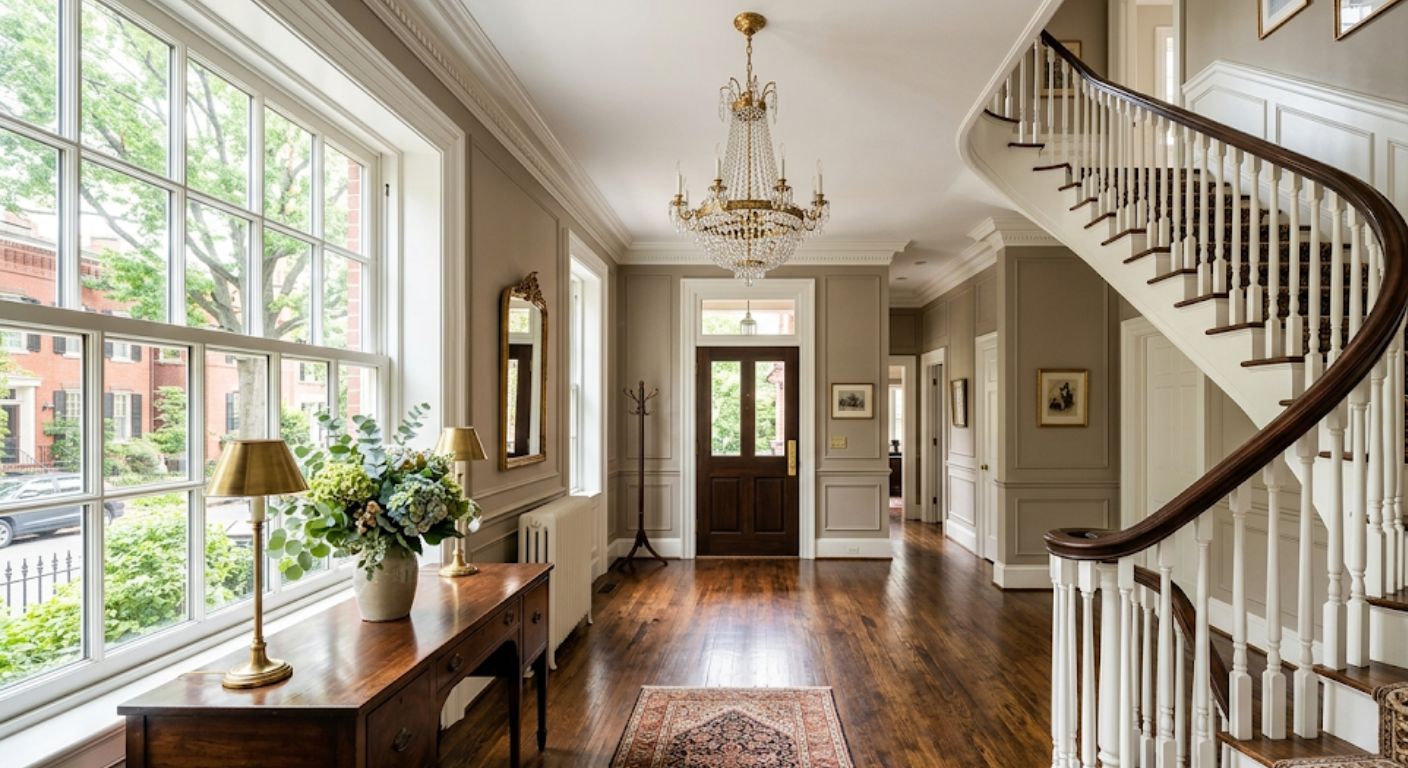
Older luxury homes in DC often have original architectural details worth examining closely during the inspection period.
Buying a luxury home in Washington, DC involves a more involved review process than a standard residential purchase. The properties are larger, older in many cases, more complex mechanically, and often carry features, restrictions, or title considerations that require closer attention.
Understanding what due diligence looks like at the upper end of the DC market helps buyers move through the process with fewer surprises and better-informed decisions.
What Due Diligence Actually Means at This Price Point
Due diligence is the period after an offer is accepted when a buyer has the opportunity to fully investigate the property before the purchase is final. For a standard DC home, this might focus on a general home inspection and a review of property disclosures. For a luxury property, the scope is typically broader.
The size of the home alone means more to inspect. Larger homes have more mechanical systems, more roof and foundation to evaluate, more exterior to assess, and more surface area where deferred maintenance can hide. In older luxury neighborhoods like Georgetown, Kalorama, or Foxhall, many of the homes were built before World War II, which adds additional considerations around systems that may have been updated over the decades.
The Inspection Layer for Luxury Properties
A general home inspection is the starting point, but at higher price points, buyers often bring in additional specialists depending on what the general inspector finds. A separate HVAC specialist, a structural engineer, a roofing contractor, or a specialist in older electrical systems may all be relevant depending on the property’s age and condition.
Buyers should also pay attention to any additions, renovations, or structural changes that have been made to the property over the years. Unpermitted work is not unusual in older DC homes, and identifying it early avoids complications later in the transaction or after closing.
A thorough inspection at this stage is not about finding reasons to walk away. It is about understanding exactly what you are buying and making sure the price reflects the property’s actual condition. For more on what the overall purchase process looks like, this overview of buying a luxury home in Washington DC covers the key steps from offer to closing.
Title and Ownership Review
Title review is a standard part of any home purchase, but luxury transactions in DC can involve more complexity than a typical sale. Properties that have passed through estate sales, have long ownership histories, or have been used as embassies or diplomatic residences may have encumbrances, easements, or restrictions that a buyer needs to understand clearly before proceeding.
Working with a title company experienced in DC luxury transactions is worth prioritizing. A thorough title search and a quality owner’s title insurance policy provide protection against issues that surface after closing.
Understanding Historic Designations and Restrictions
Many of the most desirable luxury properties in DC sit within historic districts. Georgetown, Kalorama, Cleveland Park, and other Northwest neighborhoods have historic preservation requirements that govern what changes can be made to the exterior of a property. These restrictions are not necessarily a reason to avoid a purchase, but buyers should understand them clearly before committing.
The DC Historic Preservation Office maintains records on historic district boundaries and landmark designations that are worth reviewing for any property in a protected area. An experienced buyer’s agent can help interpret what these restrictions mean practically for the property you are considering.
When and Whether to Waive Contingencies
In competitive situations, some luxury buyers consider waiving inspection or financing contingencies to strengthen an offer. This is a decision that depends on the specific property, the level of competition, and the buyer’s risk tolerance. Waiving contingencies removes protections that exist for good reasons. In many luxury transactions, there is enough negotiating room to pursue a strong offer while still maintaining the ability to conduct a proper review.
The right approach depends on the situation. An experienced luxury buyer’s agent can help assess when waiving makes strategic sense and when holding firm on contingencies is the better call.
Frequently Asked Questions About Due Diligence in DC Luxury Real Estate
How long does the due diligence period typically last in a DC luxury purchase?
The inspection and due diligence period in a DC real estate contract is typically negotiated as part of the offer terms. For luxury properties, buyers often request 10 to 15 days or more to allow time for specialist inspections. The timeline depends on what is agreed upon in the contract.
Can I still negotiate after the inspection in a luxury purchase?
Yes. If the inspection reveals material issues, buyers can request repairs, a price reduction, or a credit at closing. Whether the seller agrees depends on the state of the market, the significance of the issues found, and how the offer was originally structured. In a competitive market, the seller has more leverage. In a slower market, buyers typically have more room to negotiate.
What if the home is in a historic district?
Historic district designation affects what exterior changes can be made to the property. Interior modifications are generally not restricted. It is important to understand these rules before buying, particularly if you have renovation plans that would affect the facade, windows, roof, or other exterior elements.
Should luxury buyers waive the appraisal contingency?
At very high price points, appraisals can be challenging because comparable sales data may be limited. Some buyers with significant cash reserves choose to waive the appraisal contingency, but this carries real financial risk if the property does not appraise at the purchase price. This is a decision to make carefully with your agent and your lender or financial advisor.
About Matt Cheney
Matt Cheney is a top-producing real estate advisor with Compass in Washington, DC, guiding buyers and sellers across DC, Maryland, and Virginia through high-stakes moves, from luxury sales to estate settlements, downsizing, and divorce-related transactions. With over $779 million in career sales volume and 22+ years of experience, Matt is ranked in the Top 1.5% of agents nationally by RealTrends America’s Best. He is known for calm, strategic guidance and a straightforward approach to complex and sensitive real estate situations.
Matt Cheney | Compass Real Estate is committed to the principles of the Fair Housing Act and the Equal Opportunity Act. All real estate services are provided without regard to race, color, national origin, religion, sex, familial status, or disability.