

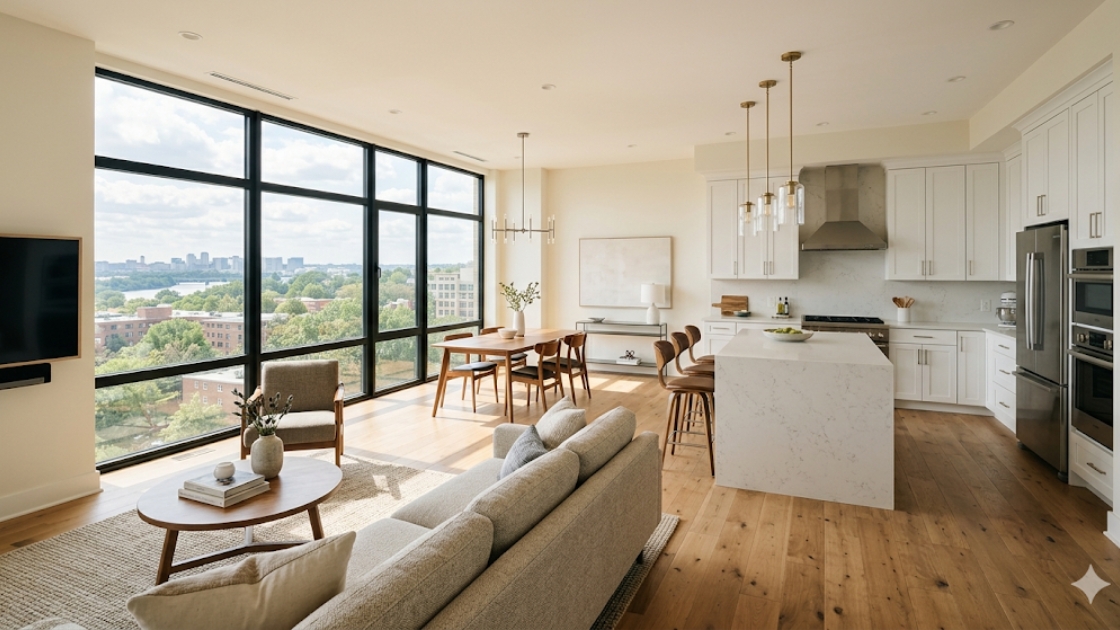
If you are narrowing your home search in Arlington, Virginia, the Clarendon versus Ballston question comes up almost immediately. Both neighborhoods sit along the Orange and Silver Metro lines on the Rosslyn-Ballston corridor. Both are walkable, well-served by transit, and surrounded by restaurants and retail. Both attract professionals, young families, and buyers moving up from smaller condos or relocating from other cities. And yet they feel noticeably different once you start spending time in them. Understanding those differences is what helps buyers make a confident choice rather than settling for whichever listing happened to come up first.
With 23+ years of experience advising buyers and sellers across DC, Maryland, and Virginia and more than $780 million in career sales volume, I have helped many clients work through this exact comparison. Here is what actually distinguishes these two neighborhoods, and how to think about which one fits your life.
The Rosslyn-Ballston Corridor: Context Before Comparison
Clarendon and Ballston are not isolated communities. They are two nodes along Arlington’s Rosslyn-Ballston corridor, a dense, transit-oriented development spine that runs from the Potomac River westward into Arlington’s interior. The corridor was deliberately planned around Metro access, which is why both neighborhoods feel more urban than most of Northern Virginia and why property values along it have often remained competitive across multiple market cycles. Past performance in any market area does not guarantee future results, and outcomes vary depending on property, timing, and individual circumstances.
Understanding this context matters because it shapes what both neighborhoods have in common before you get to the differences. Both Clarendon and Ballston offer walkable access to grocery stores, restaurants, fitness studios, pharmacies, and parks. Both are served by excellent Metro connections that put commuters in downtown Washington, DC in under 20 minutes. Both have seen significant residential development over the past two decades, which means buyers find a mix of older condos and renovated row houses alongside newer high-rise buildings with modern amenities.
The Arlington County government’s ongoing investment in streetscaping, bike infrastructure, and mixed-use development has benefited the entire corridor. What separates Clarendon and Ballston is character, price, and the type of buyer each neighborhood tends to attract.
Clarendon: Energy, Dining, and a Neighborhood-First Feel
Clarendon is the livelier of the two. The neighborhood centers on a stretch of Wilson Boulevard and Clarendon Boulevard that has built a strong reputation among DC-area residents as one of the more recognized dining and nightlife corridors in Northern Virginia, with a mix of long-standing restaurants, rooftop bars, and boutique retail. Long-standing restaurants, rooftop bars, boutique shops, and a Whole Foods at the heart of the neighborhood create a daily environment that feels more like a city neighborhood than a suburb.
This energy is a real asset for buyers who want to walk out their front door into an active, social environment. Young professionals and couples who relocated from urban areas tend to gravitate toward Clarendon because it preserves the pace they are used to while giving them more space and lower prices than comparable DC neighborhoods like Dupont Circle or Logan Circle.
The housing stock in Clarendon reflects its density and desirability. Buyers will find a substantial supply of condominiums, including both newer high-rise buildings and mid-rise conversions in older buildings. Row houses and townhouses are present and tend to be competitive, particularly those with private outdoor space. True single-family detached homes exist in the quieter residential streets north and south of the commercial spine, but they are less common and command a premium.
Clarendon’s walkability score is exceptionally high, and many residents genuinely do not need a car for daily errands or commuting. That quality drives demand consistently, and it means that well-priced inventory in Clarendon tends to move quickly. Buyers need to be pre-approved, decisive, and working with an agent who knows the building and block-level nuances that affect value.
Ballston: A Quieter Core With Serious Amenities
Ballston sits one stop west of Clarendon on the Orange and Silver lines, and the difference in feel is immediately apparent. Ballston has undergone significant redevelopment centered on Ballston Quarter, a mixed-use retail, dining, and residential complex that anchors the neighborhood’s commercial core. The result is a neighborhood that is polished and well-appointed but somewhat calmer in tone than Clarendon’s buzzing restaurant scene.
The Ballston Quarter development brought a new generation of amenities to the neighborhood, including a renovated mall with chef-driven dining, a bowling alley, a fitness center, and entertainment options that give residents a destination without requiring a trip into DC. Ballston’s proximity to the Pentagon and several major technology and defense employers in the immediate area gives the neighborhood a notable professional daytime character. Buyers should independently verify the current status of any university or institutional presence in the area, as institutional affiliations and campus locations can change.
Housing options in Ballston are broadly similar to Clarendon, with a strong supply of condominiums in newer and mid-rise buildings, some townhouses, and limited single-family homes. Ballston has seen newer construction more recently than Clarendon, which means buyers can sometimes find more recently built units with updated finishes and building amenities. The neighborhood also benefits from proximity to Quincy Park and several smaller green spaces, which adds to its livability for buyers with dogs or families with young children.
Price points in Ballston can be slightly more accessible than comparable units in Clarendon, though the gap has narrowed as both neighborhoods have appreciated over the past decade. For buyers who want the corridor lifestyle at a modest price advantage with a slightly quieter ambient environment, Ballston deserves serious attention.
Comparing Home Prices in Clarendon and Ballston
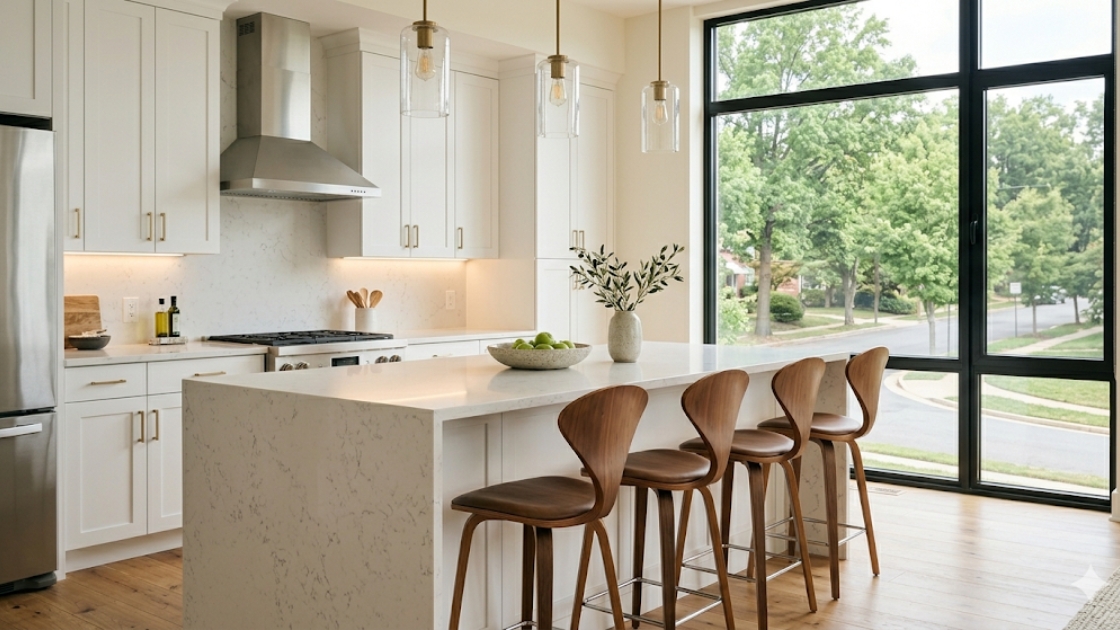
Both neighborhoods command premium prices relative to broader Arlington averages, and relative to what buyers can find in outer Northern Virginia suburbs. Condominium prices in both Clarendon and Ballston have generally started in the $400,000s for smaller one-bedroom units and ranged into the $600,000s to $900,000s for two-bedroom and larger condos with updated finishes or premium views, based on recent market activity. Pricing can shift with market conditions, and buyers should contact Matt directly for a current market analysis before drawing conclusions from any published range.
Townhouses and row homes in both neighborhoods tend to range from the high $700,000s to well above $1 million, with price driven strongly by square footage, outdoor space, parking situation, and proximity to the Metro station. Single-family detached homes in the streets immediately surrounding both neighborhoods can exceed $1.5 million, placing them in the conversation alongside luxury homes in the DC metro area.
Clarendon generally commands a modest premium over comparable Ballston properties, reflecting its stronger dining and retail activation and its slightly longer track record of high demand. The difference is real but not enormous, and a buyer focused on value within the corridor should look at both neighborhoods before making a decision based on price alone.
You may also like: Luxury Real Estate in Arlington, Virginia: What Buyers and Sellers Should Know in 2026, How the Rental Market Affects Home Prices in Bethesda, Arlington, and Northwest DC, and Del Ray, Alexandria: A Neighborhood Guide for Buyers Considering a Move in 2026
Who Buys in Clarendon vs. Who Buys in Ballston
Buyer profiles in these two neighborhoods overlap significantly, but there are patterns worth noting. Clarendon tends to attract buyers who are drawn to the neighborhood’s social energy, who prioritize walkable access to a wide variety of restaurants and nightlife, or who have been renting in the neighborhood and want to buy into the community they already love. First-time buyers stretching into the lower end of the condo market and move-up buyers in Northern Virginia trading a starter condo for a larger unit or a townhouse are both common in Clarendon.
Ballston tends to attract buyers who are slightly more focused on building quality and amenity packages in their condo building, who appreciate the calmer commercial environment, or who have professional connections to Pentagon City, Rosslyn, or the defense and technology corridor that runs through this part of Arlington. Families with young children occasionally prefer Ballston for its proximity to parks and its somewhat less intense nighttime atmosphere.
Both buyer pools are competitive and both neighborhoods attract a high percentage of buyers who are financially well-positioned and motivated. If you are a seller in either neighborhood, presenting your property well and pricing it accurately matters considerably. If you are thinking about selling your home in the DC area, understanding what the active buyer pool in your specific neighborhood values will shape how you prepare and price your listing.
Commute Considerations From Clarendon and Ballston
Both neighborhoods offer outstanding commute access, which is the foundational reason the Rosslyn-Ballston corridor commands the prices it does. The Orange and Silver Line Metro service can put Clarendon and Ballston riders in downtown DC’s Farragut and Metro Center stations in approximately 15 to 20 minutes under typical conditions, with no transfers required. Buyers should verify current schedules and travel times directly with WMATA, as service and timing can vary. Pentagon City, Crystal City, and the National Airport station are all a quick ride in the other direction, which matters for buyers whose work takes them across the river regularly.
Ballston riders sit one stop further from DC than Clarendon riders, which in practice is a difference of two to three minutes of train time. For most buyers, this is genuinely irrelevant. Where it can matter is for buyers who are also evaluating outer Northern Virginia suburbs like Vienna, Virginia real estate, where the commute into DC is longer but the price point is lower and the housing type shifts to larger single-family homes.
Biking infrastructure in both neighborhoods is strong, with the Custis Trail running through the area and connecting to the Mount Vernon Trail along the Potomac. Many residents in both Clarendon and Ballston bike to work into DC or to nearby employment centers, which adds to the genuine walkability and active-living character of the corridor.
Making the Right Choice Between Clarendon and Ballston
The honest answer is that most buyers who are well-suited for one are well-suited for the other. The differences are real but incremental. What ultimately tips the scale is usually one of three things: a specific property that feels right, a slight price advantage at a given point in time, or a personal preference for the livelier atmosphere of Clarendon versus the somewhat more settled feel of Ballston.
What I advise buyers to do is spend time in both neighborhoods on different days and at different times before committing to a search in only one. Walk the commercial streets on a Saturday afternoon and a Tuesday evening. Look at the parks and the side streets. Pay attention to what you notice about the residents you see and the feel of the buildings. That ground-level research often clarifies the decision more efficiently than any data comparison.
Frequently Asked Questions: Clarendon vs. Ballston, Arlington Virginia
What is the difference between Clarendon and Ballston in Arlington, VA?
Clarendon is known for its lively dining and nightlife corridor along Wilson Boulevard, attracting buyers who want urban energy and walkable social access. Ballston has a quieter, more polished commercial core anchored by Ballston Quarter and tends to attract buyers who prioritize building quality and a slightly calmer environment. Both are Metro-connected and walkable.
Which is more expensive, Clarendon or Ballston?
Clarendon generally commands a modest price premium over comparable Ballston properties, reflecting its stronger dining and retail activation. The gap is real but not large, and both neighborhoods are priced at a premium relative to broader Arlington averages. Buyers focused on value within the corridor should evaluate both.
Is Clarendon or Ballston better for families?
Both neighborhoods can work well for families, though Ballston’s proximity to larger parks and its slightly quieter nighttime environment sometimes make it more appealing to parents with young children. Arlington County public schools serve both neighborhoods well, and access to childcare, playgrounds, and recreational facilities is strong in both areas.
How is the commute from Clarendon and Ballston to Washington, DC?
Commute times from both neighborhoods to downtown Washington, DC via Metro are typically 15 to 20 minutes on the Orange or Silver Line. Clarendon is one stop closer to DC than Ballston, a difference of roughly two to three minutes. Both neighborhoods also offer strong bike infrastructure for commuters who prefer cycling.
What types of homes are available in Clarendon and Ballston?
Both neighborhoods offer a strong supply of condominiums in mid-rise and high-rise buildings, townhouses and row homes, and some single-family detached homes in surrounding residential streets. Newer construction is more common in Ballston. Single-family homes in both neighborhoods tend to be limited and competitive.
Is it a good time to buy in Arlington, Virginia in 2026?
Arlington’s corridor neighborhoods have maintained strong demand across multiple market cycles due to their transit access and employment proximity. Whether now is the right time for you depends on your financial position, timeline, and goals. Working with an experienced Arlington area real estate advisor helps you evaluate your specific situation rather than relying on general market headlines.
What are the best streets in Clarendon to buy a home?
Streets north and south of the Wilson and Clarendon Boulevard corridor, particularly in the quieter residential blocks near Key Boulevard and Highland Street, are well-regarded for townhouses and row homes with more privacy. Specific street value varies by block, building age, and parking access.
Is Ballston Quarter a good reason to buy in Ballston?
Ballston Quarter adds genuine convenience and lifestyle value to the neighborhood, offering dining, entertainment, and everyday retail in a walkable setting. It is one factor among many in Ballston’s overall appeal, rather than the sole reason to buy. Buyers should evaluate the full neighborhood picture including commute, building quality, and price.
Should I buy in Clarendon or look further out in Northern Virginia?
This depends heavily on what you prioritize. Clarendon and Ballston offer urban walkability and Metro access at premium price points but with limited home size. Outer Northern Virginia suburbs like Vienna or McLean offer more space, larger lots, and strong schools at different price points and with longer commute times. A good real estate advisor can help you map your priorities against your budget clearly.
Final Thoughts on Clarendon vs. Ballston
Both Clarendon and Ballston represent some of the most consistently desirable real estate in Northern Virginia, and for good reason. The Metro access, walkability, dining, and employment proximity that define the Rosslyn-Ballston corridor are genuine quality-of-life advantages that hold value across market cycles. The choice between the two is ultimately a personal one, shaped by lifestyle preference, housing type, and price flexibility far more than by any dramatic difference in fundamentals.
If you are actively searching in Arlington and want help evaluating specific properties or neighborhoods, I am glad to help. Contact Matt directly for a current market analysis and to talk through what you are looking for and how these two neighborhoods measure up against your priorities.
About Matt Cheney
Matt Cheney is a top-producing real estate advisor with Compass in Washington, DC, guiding buyers and sellers across DC, Maryland, and Virginia through high-stakes moves, from luxury sales to estate settlements, downsizing, and divorce-related transactions. With over $780 million in career sales volume and 23 years of experience, Matt is ranked in the Top 1.5% of agents nationally by RealTrends America’s Best. He is known for calm, strategic guidance and a straightforward approach to complex and sensitive real estate situations.
Matt Cheney | Compass Real Estate is committed to the principles of the Fair Housing Act and the Equal Opportunity Act. All real estate services are provided without regard to race, color, national origin, religion, sex, familial status, or disability.
Real estate considerations related to divorce or estate matters involve legal and financial complexities. Consult a qualified attorney and financial advisor for guidance specific to your situation.